
Nigeria’s House of Representatives approves massive infrastructure financing to build a 1,000-km highway connecting the North-West to the South-West.
Nigeria’s House of Representatives has approved President Bola Tinubu’s request to borrow $516.3 million from Deutsche Bank AG to finance the first phase of the Sokoto-Badagry Superhighway, one of the most ambitious road infrastructure projects in the country’s history.
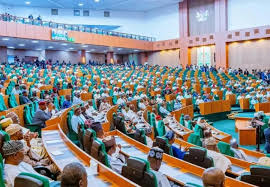
The approval, granted during Tuesday’s plenary in Abuja, follows a presentation by the Deputy Chairman of the House Committee on Aids, Loans and Debt Management, Abdullahi Rasheed. The move clears a critical legislative hurdle for a project that the Tinubu administration has made a centerpiece of its infrastructure agenda.
The loan will fund Sections 1, 1A, and 1B of the superhighway, covering approximately 120 kilometres in the first phase. The broader project spans roughly 1,000 kilometres and is designed to link seven states: Sokoto, Kebbi, Niger, Kwara, Oyo, Ogun, and Lagos, stretching from the border town of Illela in the north to the coastal city of Badagry in the south-west.
The financing terms are notable. The syndicated loan carries a tenure of nine years, including a three-year grace period, with an interest rate pegged at the Chicago Mercantile Exchange SOFR plus 5.3 percent per annum. The deal is backed by a partial risk guarantee from the Islamic Corporation for the Insurance of Investment and Export Credit, an arm of the Islamic Development Bank.
“This highway will fundamentally alter the economics of north-south trade in Nigeria,” said the Chairman of the House Committee on Works, who presented the infrastructure impact assessment. “Goods that currently take three to four days by road from Sokoto to Lagos could move in under 18 hours on a modern superhighway.”
The Federal Government is also expected to provide over N265 billion in counterpart funding to cover land acquisition, compensation, and related infrastructure costs, a significant commitment that underscores the scale of the project.
For Nigeria’s northern states, the highway represents a potential lifeline. The region has long been economically disadvantaged by poor road infrastructure, which drives up the cost of transporting agricultural produce to southern markets and ports. Farmers in Sokoto and Kebbi states, major producers of rice, onions, and tomatoes, currently lose significant portions of their harvest to spoilage during transit. A modern highway could slash those losses and boost farm incomes.
The project also has strategic significance. By connecting Illela, a major border crossing point with Niger Republic, to the port city of Badagry, the highway would create a direct trade corridor linking the Sahelian interior to the Atlantic coast. This aligns with broader West African integration goals and could position Nigeria as the dominant logistics hub in the region.
However, the approval has not been without controversy. Opposition lawmakers have raised concerns about the growing size of Nigeria’s external debt, which has ballooned under successive administrations. The interest rate of SOFR plus 5.3 percent has also drawn criticism, with some analysts arguing that the premium reflects the country’s elevated risk profile and could cost Nigerian taxpayers hundreds of millions in interest payments over the loan’s lifetime.
The House has attempted to address accountability concerns by directing the Ministry of Finance, the Debt Management Office, and the Ministry of Works to submit quarterly reports detailing project implementation and fund disbursement. This reporting requirement is unusual for Nigerian infrastructure projects and suggests lawmakers are aware of the scrutiny the loan will attract.
Construction timelines have not been officially announced, but industry sources suggest that ground-breaking on the first phase could begin before the end of 2026, with completion of the initial 120 kilometres targeted for 2029.
For President Tinubu, the superhighway is more than an infrastructure project. With his formal signal of a 2027 re-election bid already in motion, the highway represents a tangible deliverable that spans multiple geopolitical zones, a strategic asset in a country where infrastructure spending often determines electoral fortunes.