
A series of joint military operations between Nigeria and the United States has dealt what officials on both sides are calling the most devastating blow to the Islamic State West Africa Province (ISWAP) in over a decade of insurgency. Nigeria’s Defence Headquarters announced on Tuesday that an estimated 175 Islamic State fighters have been killed across multiple coordinated strikes in the country’s northeast, along with the elimination of key senior leadership.
The campaign’s centerpiece was the killing of Abu-Bilal al-Minuki, ISWAP’s second-in-command and the man who ran the group’s Al Furqan Office — an entity responsible for managing global operations, coordinating financing, and maintaining communication with the Islamic State’s central command. Al-Minuki had overseen critical operations across the Sahel and West Africa and was considered one of the most operationally significant militant leaders in the region.
The operation unfolded in the early hours of May 16 on a small island in the Lake Chad Basin near Mitile, Borno State. Roughly two dozen operators, including members of U.S. Navy SEAL Team 6, arrived by helicopter with the initial objective of capturing al-Minuki alive. What followed was a three-hour firefight across two islands, during which it became clear that surrender was not forthcoming. Facing the risk of escape, commanders authorized an airstrike on his compound, killing him along with several top lieutenants.
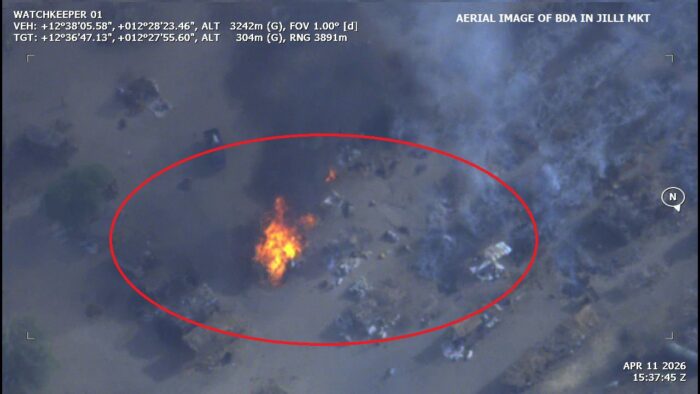
Follow-up operations came swiftly. On May 17, coordinated airstrikes hit a convergence of militants in the Metele area of Borno State, killing more than 20 additional fighters. Over subsequent days, Nigerian and U.S. forces continued targeting militant infrastructure — weapons caches, checkpoints, logistics hubs, and financial networks. Nigeria’s military also confirmed the killing of Abd-al Wahhab, another senior ISWAP figure who oversaw finance, attack planning, and supply logistics. No U.S. or Nigerian personnel were harmed.
U.S. Air Force Gen. Dagvin Anderson praised Nigerian intelligence as “instrumental” in developing the targets over months of preparation. President Bola Tinubu confirmed al-Minuki’s death in a public address and described the operations as a turning point, though he stopped short of declaring victory.
Security analysts note that while leadership decapitation can disrupt coordination and morale, ISWAP’s decentralized network means the group may adapt unless military gains are accompanied by sustained governance and economic development in affected regions. The northeast remains deeply fragile, and whether these tactical victories translate into lasting security will depend on what follows the airstrikes.