

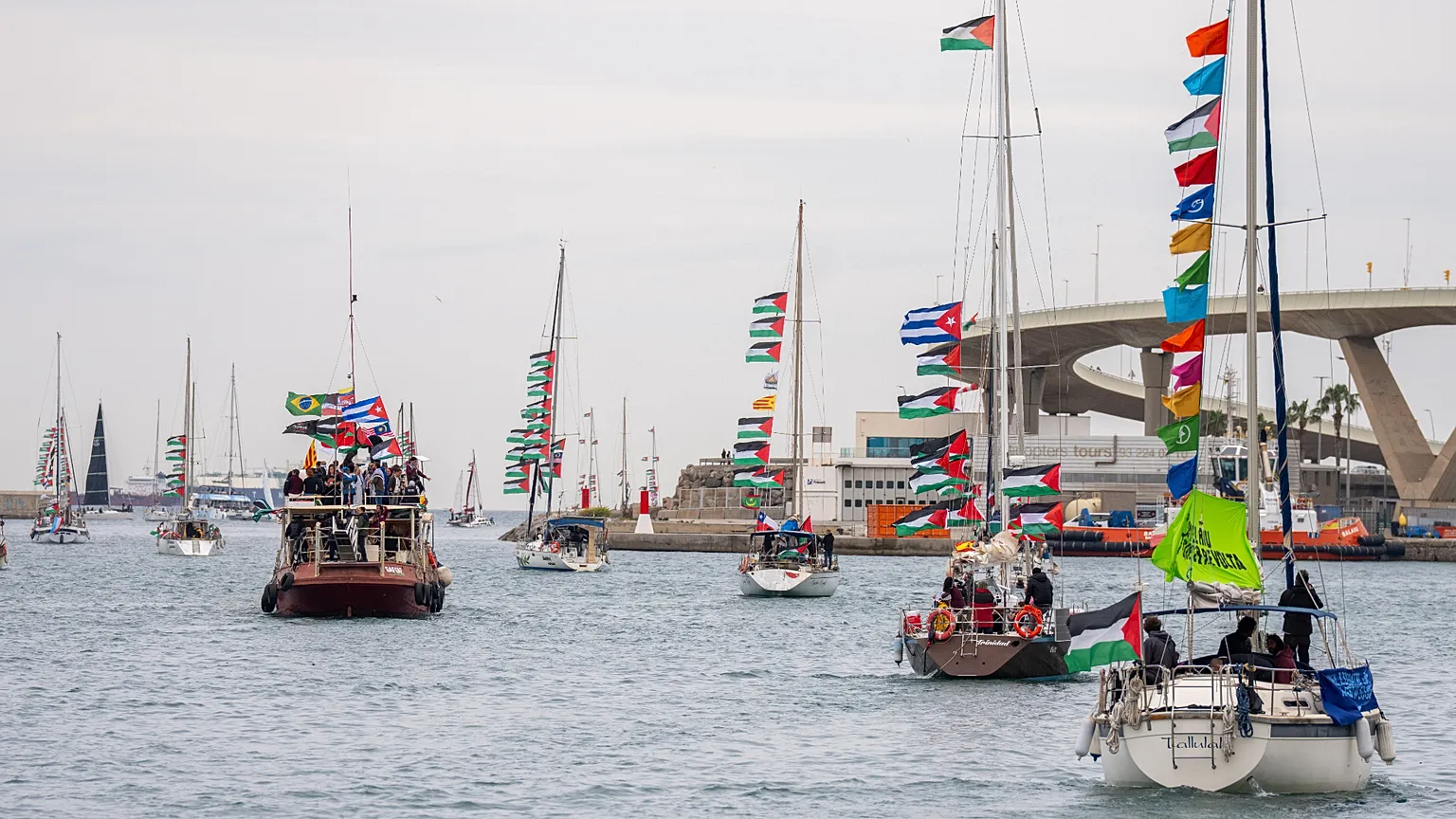
International condemnation mounts after Israeli forces intercept aid ships in international waters near Greece, detaining 168 activists while dozens more vessels vow to continue toward Gaza.
The Mediterranean Sea has become the world’s newest flashpoint. Dozens of boats carrying humanitarian aid are still sailing toward Gaza today, defying an Israeli naval blockade that has drawn fierce condemnation from governments across Europe, the Middle East, and beyond.
The Global Sumud Flotilla — a coalition of activists from more than 40 countries — set sail this week with the stated mission of breaking what organizers call “the illegal siege of Gaza.” Each vessel carries roughly a tonne of food, medical supplies, and essential equipment destined for Palestinian civilians trapped by the ongoing conflict.
But in the early hours of this week, Israeli naval forces launched a dramatic interception operation more than 600 nautical miles from Gaza’s coast, near the Greek island of Crete. According to activists aboard the ships, Israeli soldiers stormed vessels in international waters, smashing engines, destroying communications equipment, and forcibly detaining crew members.
A total of 168 flotilla crew members were transported to Crete after the interception, where they have since disembarked. Two activists remain in Israeli custody and are set to face questioning. Among those detained were journalists from Al Jazeera, adding a press freedom dimension to the already explosive situation.
But the flotilla is far from over. According to the group’s live tracker, 22 boats have been seized so far, while 47 others remain at sea. Organizers confirmed in a statement late Thursday that 31 of the original 53 vessels had reached safe waters and intend to press on toward Gaza.
“We will not be intimidated,” the flotilla’s organizers said. “Our mission is humanitarian, our route is legal, and our determination is unbreakable.”
The international backlash has been swift and severe. Turkey’s Foreign Ministry condemned the seizure as “an act of piracy,” calling on the international community to hold Israel accountable. Spain went further, summoning the Israeli chargé d’affaires in Madrid to deliver what officials described as the country’s “strongest condemnation.”
Germany and Italy expressed “great concern” and demanded the release of all detainees. The interception has also triggered protests in multiple capitals. In Rome, demonstrators gathered outside the Colosseum waving Palestinian flags, while in Athens, crowds chanted outside the Greek foreign ministry.
Israel has defended its actions, arguing that the naval blockade is a legitimate security measure and that the flotilla posed a potential threat. The Israeli military stated that it had warned the vessels to change course before taking action.
The confrontation carries unmistakable echoes of the 2010 Mavi Marmara incident, when Israeli commandos raided a Turkish-flagged aid ship heading for Gaza, killing ten activists. That episode caused a major diplomatic rupture between Israel and Turkey that took years to repair.
This time, the scale is significantly larger. With 47 boats still at sea and organizers vowing to continue, the coming days could see further confrontations in the Eastern Mediterranean. The situation remains fluid, with diplomatic channels working overtime behind the scenes to prevent escalation.
For the millions of Palestinians in Gaza enduring a devastating humanitarian crisis, the flotilla represents both a lifeline and a symbol. Whether the remaining boats reach their destination or not, the Global Sumud Flotilla has already succeeded in one respect: forcing the world to watch.