
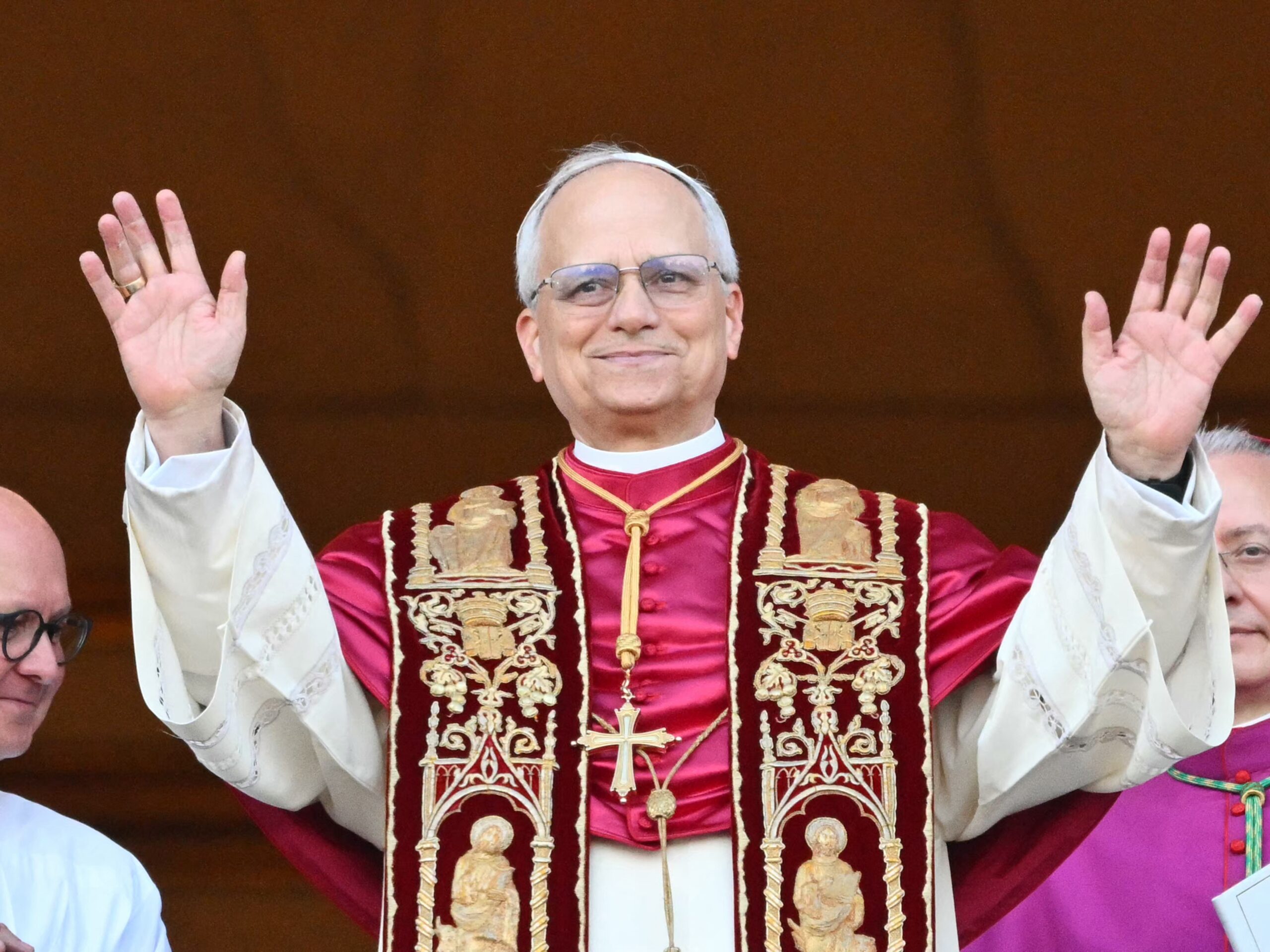
The Vatican confirmed early Wednesday that Pope Leo XIV has been diagnosed with lung
cancer after surgeons at Rome’s Gemelli Hospital removed a portion of his right lung on
Tuesday. The disclosure, released hours ago in an official medical bulletin, marks the most
serious health development of his young pontificate and has sent a jolt through the Catholic
Church of 1.4 billion faithful.
The 71-year-old pontiff had already alerted the world on Sunday, telling pilgrims after the
Angelus prayer that doctors had spotted a “nodule in the lung” during a routine examination and
had advised an “intervention” at what he described as a “very early stage.” On Monday, he
cleared his public schedule. By Tuesday afternoon he was in surgery.
What was initially framed by Vatican communications as a precautionary procedure has now
escalated. The post-operative bulletin states clearly that the pathology confirmed malignancy,
and that doctors are evaluating further treatment options. The Holy See did not disclose the
specific stage or subtype, but noted the growth was “localised” and that the surgical team was
“satisfied” with the outcome.
Leo XIV, the first American-born pope, has been pontiff for just over 17 months. His tenure has
leaned heavily on in-person pastoral work — crowded general audiences, foreign travel, long
handshake lines — a style that will inevitably come under review as he recovers. He is expected
to remain hospitalised for at least a week.
The timing is sensitive. The announcement comes the day the Vatican was due to close a major
Synod of Bishops, which Leo will now miss. Cardinal Pietro Parolin, Secretary of State, is
expected to deliver the closing homily on the pope’s behalf. Behind the scenes, the Roman Curia
is already quietly reorganising the pope’s autumn calendar, including a scheduled trip to Latin
America.
Markets for Vatican-watching are already moving. Prediction platforms that track papal
succession odds saw sharp activity within minutes of the bulletin. Church analysts urge caution:
lung cancers caught at an early, localised stage have significantly better prognoses than
metastatic disease, and modern surgical resection combined with adjuvant therapy can be
curative in many cases.
Still, the Vatican’s choice of language — moving from “nodule” on Sunday to a confirmed
cancer diagnosis on Wednesday — represents a notable shift in transparency, one many
observers have praised. Pope Francis was often criticised for the Vatican’s opaque handling of
his final illness World leaders have begun responding. The White House, Elysée Palace, and the Italian Prime
Minister’s office all issued statements of support within the first hour. In Buenos Aires, Manila,
Kinshasa and Krakow, parishes are already organising prayer vigils for Wednesday evening.
For now, the Church waits. A follow-up medical bulletin is expected Thursday morning Rome
time. The pope, through his private secretary, asked the faithful “not to be anxious” and
reminded them that “the Lord is with us, in sickness and in health.”
What began as a quiet Sunday announcement has become the biggest Vatican story of the year
— and the clock has barely moved past breakfast in Rome.