
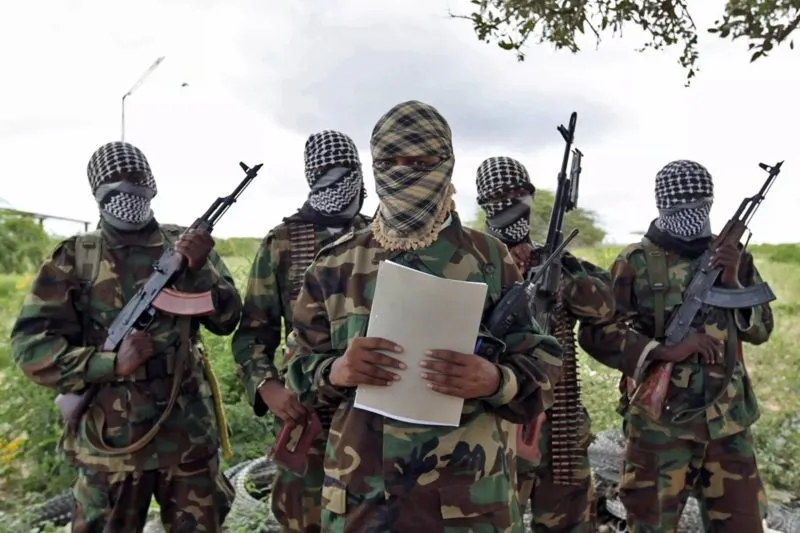
Somalia’s government opened a new front in its long war against Al-Shabaab on Wednesday,
announcing fresh financial sanctions on 10 individuals accused of bankrolling or materially
supporting the Al-Qaeda-linked militant group. The designations, published hours ago,
immediately freeze any assets the named individuals hold inside Somalia and ban every bank,
exchange bureau and licensed business in the country from transacting with them.
The order came from the National Anti-Money Laundering and Countering the Financing of
Terrorism Committee, Somalia’s top financial-crime body. In a short statement, the committee
said the move is meant to “disrupt the group’s funding networks” and tighten enforcement across
the formal and informal financial system — a notoriously leaky space in a country where mobile
money, hawala remittance networks and cash still dominate.
The committee declined to publish the full evidentiary dossier behind the designations, a
decision that has raised eyebrows among some human-rights observers but is standard practice in
counter-terror finance regimes worldwide. Financial institutions must now flag and freeze related
transactions within hours, and must report to the Financial Reporting Center or face legal action
themselves.
The context is a shadow war that has been grinding on for more than 15 years. Al-Shabaab,
which once controlled parts of Mogadishu, has been pushed out of the capital but still holds
swathes of territory in central and southern Somalia and raises tens of millions of dollars a year
— through extortion of truck drivers, informal taxes on livestock markets, charcoal smuggling,
and shakedowns of local businesses. Choking that revenue is widely considered the single most
important task in defeating the group militarily.
The timing is notable. The move comes days after Nigeria’s National Security Adviser Nuhu
Ribadu and the African Union’s Counter-Terrorism Centre warned that extremist networks across
West Africa and the Sahel were “aggressively” adopting cryptocurrencies, AI tools and
encrypted platforms to launder funds and recruit members. Somalia appears to be acting on
exactly that warning.
Analysts tracking the region see today’s announcement as part of a broader regional push. The
African Union mission in Somalia is scheduled to hand over security responsibilities to Somali
forces at the end of this year, and Mogadishu needs to show it can hold territory and starve the
insurgency of cash on its own.
The challenge is enforcement. Several previous Somali sanctions designations have struggled to
bite because of the dominance of unregistered hawala brokers and because named individuals
often operate from abroad, particularly in parts of Kenya, Ethiopia and the Gulf. The committee acknowledged this indirectly, calling on “international partners” to recognise and act on the
Somali list.
Al-Shabaab has not responded, as of early Wednesday afternoon in Mogadishu. The group
almost never acknowledges financial actions against its network, preferring to answer with
violence. Analysts expect the possibility of retaliatory attacks on soft targets in Mogadishu to
rise in the coming weeks.
For ordinary Somalis — who continue to pay the real price of this war in bomb-ripped markets
and roadside IEDs — the question is not whether Mogadishu has the political will to go after
terror finance. The question is whether its banks, phone companies and officials can actually
enforce the order on the ground.
The next move is Al-Shabaab’s.