
The Democratic Republic of Congo is now five months into the worst Ebola outbreak in its
history — and this morning, officials in Ituri province say the frontline has shifted again, to
the streets of Bunia.
More than 4,000 people have died since the virus re-emerged in May, according to figures
circulated by the national health ministry and summarised in regional news bulletins today.
That toll already dwarfs the country’s 2018–2020 outbreak, which was previously
considered the most devastating on record. If the current pace holds, Congolese
epidemiologists warn, the next few weeks could push the death count further still.
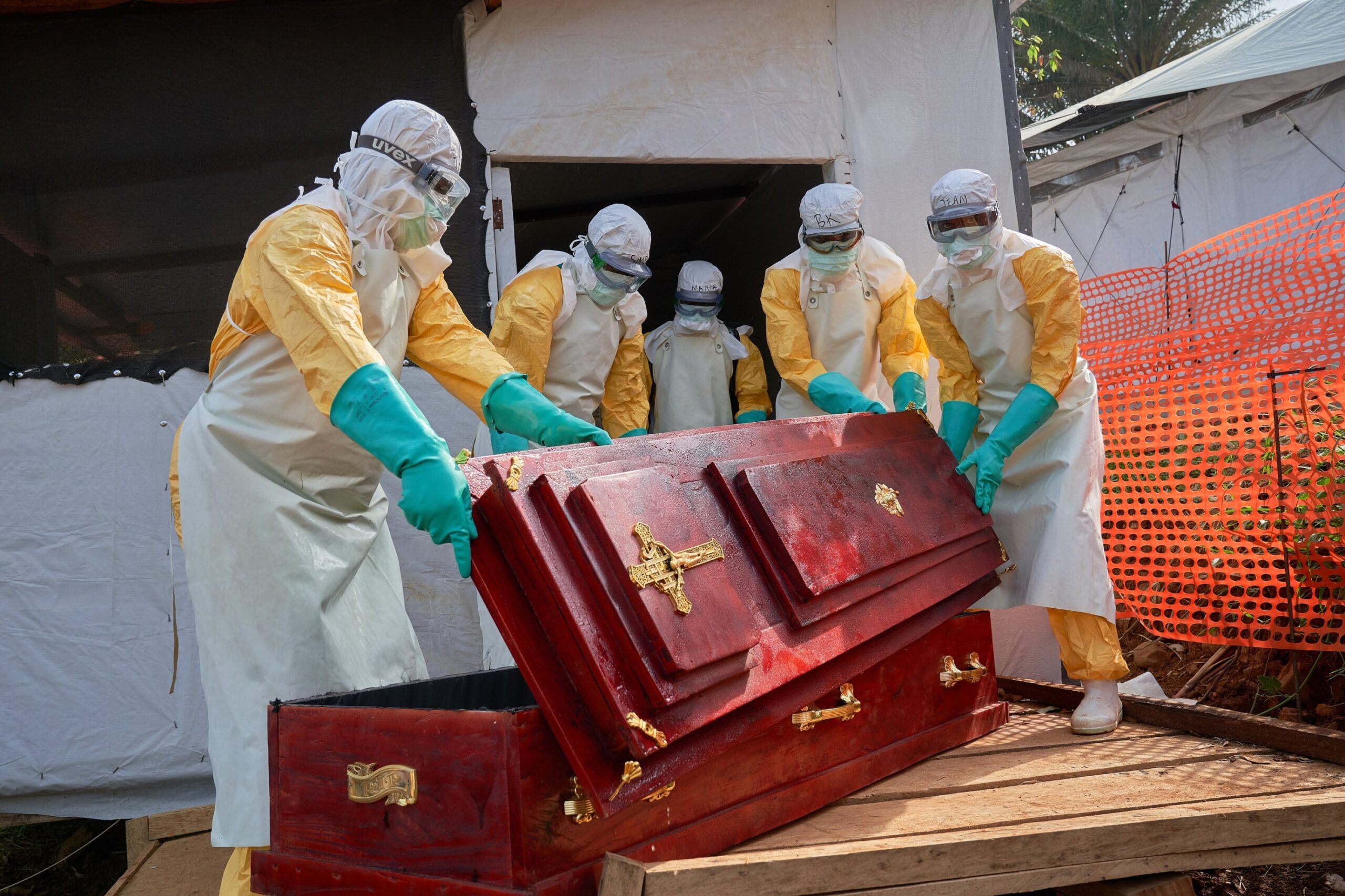
In Bunia, the provincial capital of Ituri, health workers are no longer waiting for patients to
come to them. Teams in protective suits are moving door to door, logging contacts, pressing
families to report fevers, and shepherding anyone with symptoms to isolation units.
‘Community awareness’ is the official line. In practice, it is a race against mistrust.
That mistrust is the stubborn piece of this outbreak. Eastern Congo has lived through two
decades of armed conflict, mass displacement and overlapping epidemics. Many residents
have seen uniformed teams come and go, and some still believe Ebola is a cover for
something else — a political manoeuvre, a Western experiment, a hoax. Every rumour that
spreads translates into hidden cases.
The response is also being run under fire. Parts of Ituri and neighbouring North Kivu remain
contested by armed groups, and health convoys have been attacked in the past. Vaccinators
now travel with security escorts in some zones, and whole villages have been cut off from
vaccine deliveries for weeks at a time.
What is working, officials say, is the vaccine itself. The rVSV-ZEBOV shot — the same
vaccine that eventually turned the tide in 2020 — is again being used in a ‘ring vaccination’
strategy, immunising known contacts of confirmed cases and the contacts of those contacts.
In districts where the ring has held, transmission is slowing.
But the logistics are brutal. Cold-chain storage in rural Ituri is thin. Some clinics have no
reliable electricity. International partners, including WHO and MSF, have surged staff and
equipment, but funding for the response has lagged behind the virus from the start. One senior Congolese official, briefing journalists this week, described the budget gap as
’embarrassing’ for a crisis of this scale.
The economic damage is quietly compounding. Markets in affected towns have thinned out.
Cross-border trade with Uganda has slowed, as officials there tighten screening at crossing
points. Families in rural Ituri — already among the poorest in the country — are losing
wage income because they cannot or will not travel for day labour.
Regional neighbours are watching nervously. Uganda, Rwanda, South Sudan, Burundi and
the Central African Republic all share porous borders with the outbreak zone. So far, no
sustained cross-border transmission has been confirmed, but every delay in Bunia increases
that risk.
For the Congolese government, the political cost is also mounting. President Felix
Tshisekedi’s administration faces questions over why early warning signs in May were not
acted on faster, and why routine Ebola preparedness funding was cut in the preceding year.
Opposition voices have begun to call for an independent review once the outbreak is
contained.
For now, that containment is still a hope, not a result. The next milestone health workers
are watching for is a sustained drop in new cases in Bunia itself. If the door-to-door
campaign holds, officials believe the curve can be broken by the end of the year. If it falters,
2026’s deadliest health crisis in Africa may still be climbing.