
Former Minister of Power Babatunde Raji Fashola has dropped a political grenade into
Nigeria’s long-running fuel subsidy debate, revealing in an interview aired in the past few
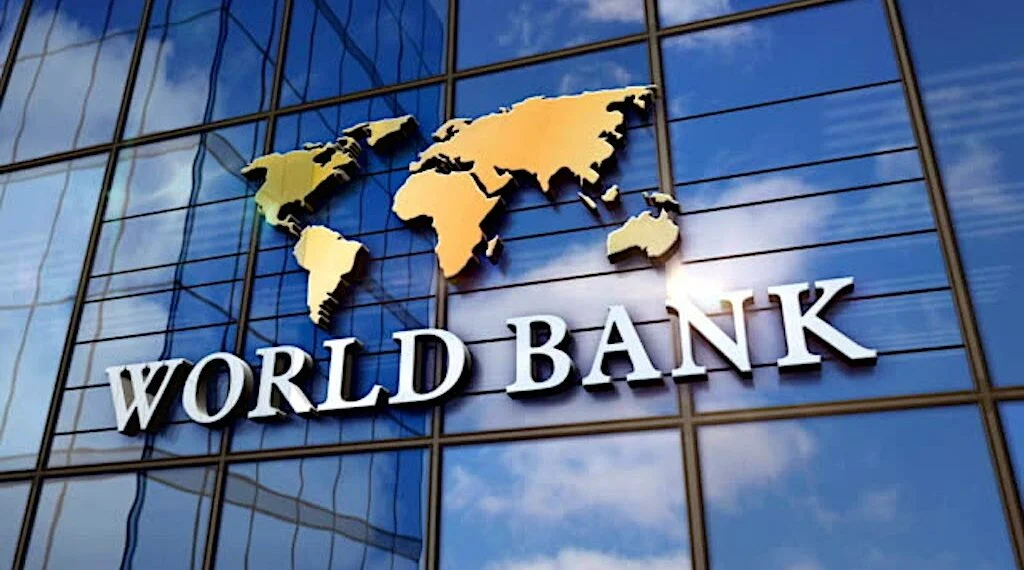
hours that the World Bank directly threatened to cut off financing to the Federal
Government unless petrol subsidies were removed.
‘They told us plainly: no removal, no financing,’ Fashola said, speaking on a widely
circulated morning programme. ‘This was not a suggestion. It was a condition.’ The
remarks, carried first by Leadership newspaper, upend the official narrative that the
subsidy removal announced by President Bola Tinubu on his inauguration day was a
sovereign decision made in Nigeria’s own best interests.
The timing is politically explosive. Nigeria is a year out from the 2027 presidential cycle,
inflation is still biting in every market in every state, and retired police officers are camped
in Abuja demanding pension reform, with activist Omoyele Sowore amplifying their protest.
A sitting former minister now says the single most painful economic decision of the Tinubu
era was imposed from outside.
Fashola was a key figure in the Buhari administration, serving across power, works and
housing, and he is one of the few APC elders with the stature to be heard on this. He did not
say the subsidy removal was wrong. He said the public was misled about why it happened.
‘We should be honest with the people,’ he told the interviewer. ‘The petrol subsidy was not
killed because we chose to kill it. It was killed because our financiers demanded it.’
The World Bank’s role in Nigerian reform is not secret. A $1.5 billion RESET loan tied to fuel
subsidy removal and tax reforms was fully disbursed to the Federal Government, and an
earlier $800 million facility was tied to post-subsidy palliatives for vulnerable Nigerians.
What has never been publicly confirmed, until now, is that the lender used access to those
funds as leverage to force the policy change in the first place.
Reactions inside Abuja have been immediate. Senior figures in the Tinubu government
dispute Fashola’s framing, telling reporters privately that the decision was ‘ours to make,’
even if the World Bank’s financing architecture pointed in the same direction. Opposition
politicians, meanwhile, are seizing on the admission. Peter Obi’s camp issued a statement within minutes calling the revelation ‘proof that Nigeria’s economic sovereignty has been
auctioned.’ A Labour Party spokesperson said Fashola had ‘said the quiet part out loud.’
For ordinary Nigerians, the question is simpler. Pump prices have more than tripled since
May 2023. Transport, food and manufacturing costs have followed. Tinubu’s palliative
framework — cash transfers, CNG conversions, a planned middle-class loan scheme — has
reached a fraction of the households promised. If the removal was never fully optional, the
government’s room to compensate was always constrained.
The business implications are also real. The Central Bank has leaned heavily on the subsidy
removal as proof that Nigeria is ‘reform-committed’ in its pitches to foreign investors. If the
policy is now framed as externally imposed, that narrative weakens at exactly the moment
Nigeria is trying to attract the $50 billion in deep offshore oil investment the president
announced earlier this week. Investors like reform-by-conviction more than reform-byultimatum.
The World Bank has not commented on Fashola’s claim. Its country office in Abuja is likely
to be under pressure to respond today, especially with the Spring and Annual Meetings
cycle ahead and the Bank’s broader Africa portfolio under scrutiny. Historically, the Bank
has described its support as ‘policy-based lending’ tied to ‘reform milestones’ — which,
depending on who you ask, is either exactly what Fashola described or exactly the opposite.
For Tinubu, the next few hours will test whether this story is a one-day embarrassment or a
political turning point. His office has not yet issued a response. If it stays silent, Fashola’s
version becomes the version. If it pushes back, it drags the World Bank into Nigerian
partisan politics less than a year before an election. Either way, the ‘subsidy is gone’ slogan
just became a lot harder to sell on Lagos radio.