

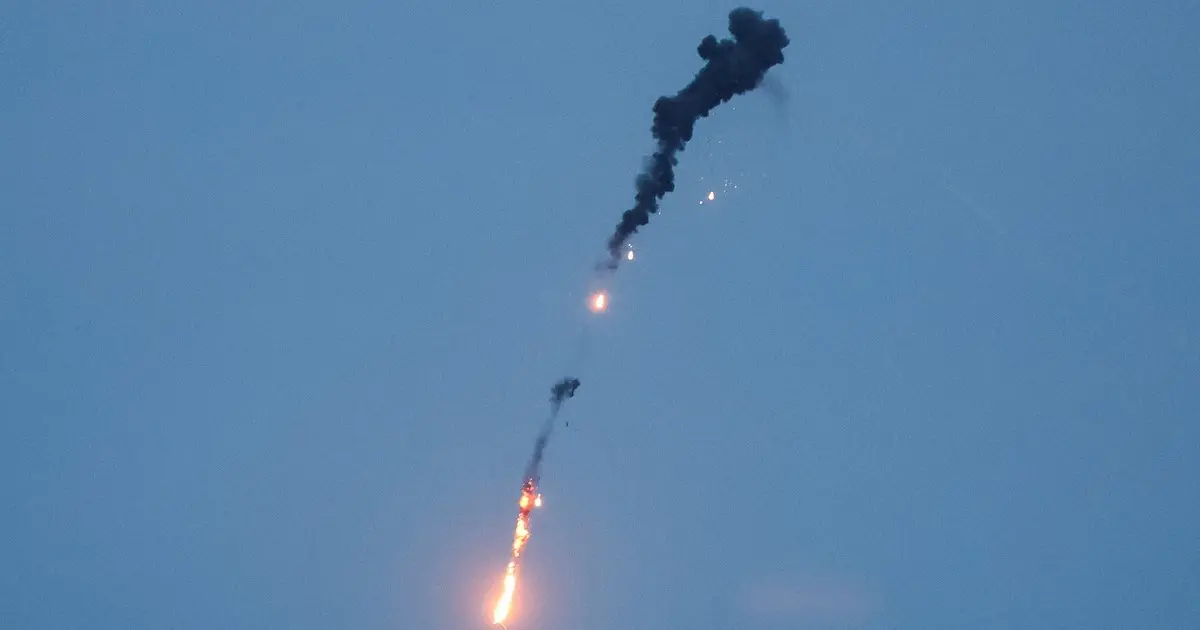
The border between Ethiopia and Eritrea is on fire again. Fresh fighting erupted overnight
around the disputed town of Badme, with drone strikes and artillery exchanges forcing
civilians to flee and triggering urgent emergency consultations in Addis Ababa and across
the Horn of Africa.
In the past several hours, the Ethiopian government formally told the UN Security Council
that Eritrean troops have advanced up to 60 kilometres inside Ethiopian territory, a claim
Asmara rejects. Addis Ababa also accused Eritrea of backing an armed coalition that
includes elements of the Tigray People’s Liberation Front, the group that fought the federal
government to a standstill between 2020 and 2022.
That earlier war ended with a peace deal in late 2022. Eritrea, which fought alongside
federal forces during the Tigray war, was never a party to that peace. Relations between
Addis and Asmara have deteriorated sharply since, and the Badme fighting now risks
pulling the entire Horn back into a conflict whose last iteration killed more than half a
million people.
Badme is not a random choice of battleground. The town was the trigger for the 1998-2000
Ethiopia-Eritrea war, which left more than 100,000 dead. An international boundary
commission awarded it to Eritrea in 2002. Ethiopia refused to hand it over until 2018, when
then-Prime Minister Abiy Ahmed’s government accepted the ruling and reopened the
border. Eight years later, the ground troops are back.
Civilians are bearing the cost immediately. Residents in villages between Badme and
Zalambessa described drone sweeps overnight and small-arms fire at first light. The UN
refugee agency in Addis said it was preparing for a possible displacement of tens of
thousands. Local hospitals in the Tigray regional capital Mekelle have been placed on
emergency footing.
The strategic picture is bleak. Eritrea’s President Isaias Afwerki has spent the past two
years building a regional posture that puts him at odds with both Addis Ababa and the Gulf
powers now deeply invested in the Red Sea. Ethiopia under Abiy has pushed hard for access to the sea, a demand Eritrea treats as an existential threat. The two sides have been inching
toward confrontation for months. This week, that inching stopped.
Regional capitals are moving. The African Union has convened an emergency session of its
Peace and Security Council for later today. Kenya’s President William Ruto has offered
mediation. The United Arab Emirates, which maintains close ties with Asmara and
significant commercial interests in Ethiopia, has reportedly been in contact with both sides
overnight. The United States, distracted by its confrontation with Iran, has issued only a
brief statement calling for ‘immediate de-escalation.’
Inside Ethiopia, the political consequences are landing already. Abiy Ahmed has spent the
past year trying to consolidate a bruised federation ahead of a national election cycle, and a
renewed border war is exactly the shock his critics have been warning about. Tigrayan
politicians are split, with some factions backing federal forces and others reportedly
aligning with the Eritrean advance. The federal government has not yet declared a state of
emergency, but security sources say the option is on the table.
On the Eritrean side, there is near-silence. Asmara’s state media has carried no
acknowledgement of fighting at the border, which is characteristic of how the Afwerki
government handled the 2016 Tsorona clashes. That silence is a strategy, not a sign of calm.
Western diplomats expect Eritrea to continue operating on the principle that what is not
confirmed cannot be negotiated away.
The Horn of Africa has a bitter history of local border skirmishes becoming catastrophic
wars. The Security Council will meet in New York later today. Everyone involved, publicly
and privately, is looking for the off-ramp. Whether there is one left after this week is the
question that will shape the region’s next decade.