
The United States has announced the resumption of its naval blockade targeting Iranian ports and associated shipping while unveiling plans to impose a 20% transit fee on cargo moving through the Strait of Hormuz, marking a dramatic escalation in its confrontation with Iran. (Investing.com)
President Donald Trump said the United States would act as the “Guardian of the Hormuz Strait”, arguing that Washington should be compensated for securing one of the world’s most strategically important maritime chokepoints.
“The U.S.A. will be… known as ‘THE GUARDIAN OF THE HORMUZ STRAIT’… and will be reimbursed, at the rate of 20% on all cargo shipped,” Trump said in a post on Truth Social, adding that implementation would begin immediately. (CBS News)
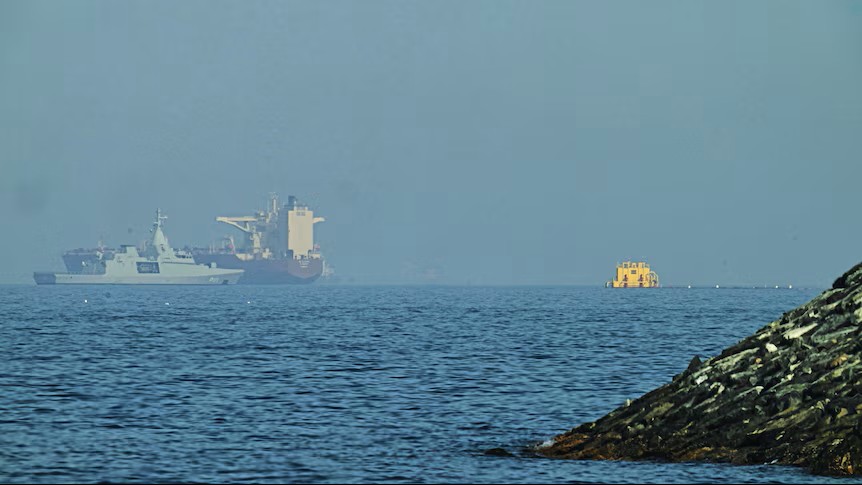
The announcement came as the White House confirmed that U.S. forces were reinstating a blockade on Iranian ports and vessels following the collapse of a temporary understanding reached weeks earlier. The administration said the blockade was intended to prevent Iran from using maritime trade to sustain its military operations while ensuring that commercial navigation through the Strait of Hormuz remained open under U.S. protection. (The Washington Post)
The Strait of Hormuz carries roughly one-fifth of the world’s seaborne oil trade, making any disruption a major concern for global energy markets. The latest U.S. measures immediately heightened uncertainty among shipping companies, insurers and commodity traders, pushing oil prices higher amid fears of prolonged instability in the Gulf. (The Economic Times)
The proposed 20% transit fee drew swift criticism from shipping and maritime industry groups, which argued that charging vessels to pass through international waters would conflict with long-established principles of freedom of navigation. Hapag-Lloyd, one of the world’s largest container shipping companies, described such charges as “fundamentally wrong,” distinguishing them from tolls levied for man-made waterways such as the Suez and Panama canals. (CBS News)
Iran condemned the move, insisting the United States had no legal authority to regulate passage through the international waterway and warning that any attempt to enforce the policy would further inflame regional tensions. Tehran also reiterated that foreign military intervention in the Strait of Hormuz was unacceptable. (euronews)
The measures come amid a renewed surge in hostilities between Washington and Tehran, with both sides exchanging military strikes across the Middle East. U.S. officials have framed the blockade and maritime security initiative as necessary to safeguard international commerce, while critics argue the transit fee risks setting a controversial precedent for one of the world’s busiest shipping lanes. (AP News)
Analysts say the practical implementation of the proposed fee remains uncertain, with questions over how it would be collected, enforced and reconciled with international maritime law. Even so, the announcement underscores the growing strategic importance of the Strait of Hormuz as the U.S.-Iran conflict increasingly spills into global trade and energy markets. (CBS News)