
The Democratic Republic of Congo’s main opposition coalition has suspended planned nationwide protests after President Félix Tshisekedi signaled his willingness to convene an inclusive national dialogue, raising hopes of easing months of escalating political tensions.
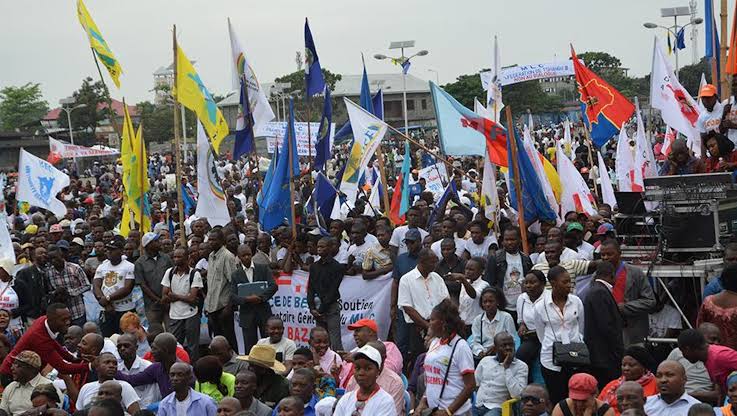
The Coalition Article 64 (C64) announced it was postponing a march scheduled for July 22, which had been intended to demand President Tshisekedi’s resignation over his controversial constitutional reform agenda. The coalition said it was responding to appeals from the country’s leading Catholic and Protestant churches, which urged all sides to give dialogue a chance. (Actualite.cd)
The decision follows a meeting between President Tshisekedi and leaders of the National Episcopal Conference of Congo (CENCO) and the Church of Christ in Congo (ECC). After the talks, the presidency announced that the head of state was prepared to organize an “inclusive, calm and republican dialogue” within the framework of the Constitution. (Actualite.cd)
In a statement signed by its principal leaders, including Martin Fayulu, Moïse Katumbi, Jean-Marc Kabund, Augustin Matata Ponyo and Delly Sesanga, the C64 said postponing the demonstration should not be interpreted as abandoning its demands. Instead, the coalition described the move as a gesture of responsibility aimed at exhausting peaceful avenues before resuming public mobilization if necessary. (Actualite.cd)
The opposition has given President Tshisekedi until August 15 to formally convene the promised national dialogue. It warned that failure to do so could lead to a renewed wave of demonstrations across the country. (Actualite.cd)
Not all opposition figures welcomed the postponement. Some politicians, particularly those operating from exile, argued that delaying the protests risks weakening pressure on the government and questioned whether the presidency is genuinely committed to meaningful negotiations. (Actualite.cd)
The political standoff intensified after Parliament adopted legislation enabling a referendum on a new constitution, a move critics say could allow Tshisekedi to seek a third presidential term by resetting term limits. The government has defended the proposal as a constitutional reform process rather than an attempt to extend the president’s tenure. (AP News)
The constitutional debate has united previously divided opposition parties under the C64 banner and triggered weeks of political unrest. Earlier demonstrations against the proposed reforms resulted in clashes between protesters and security forces, further heightening concerns over the country’s political stability. (AP News)
Religious leaders, who have historically played an influential mediation role in Congolese politics, welcomed the postponement as an opportunity to build consensus. They have urged both the government and opposition to engage in good faith to avoid further polarization as the country grapples with insecurity in the east, a worsening Ebola outbreak and mounting humanitarian challenges. (Actualite.cd)
While the suspension of the planned protests marks a temporary de-escalation, analysts say the coming weeks will be critical. Much will depend on whether the government follows through on its commitment to convene an inclusive dialogue and whether the opposition believes the process offers a credible path toward resolving the country’s deepening political crisis. (Actualite.cd)