
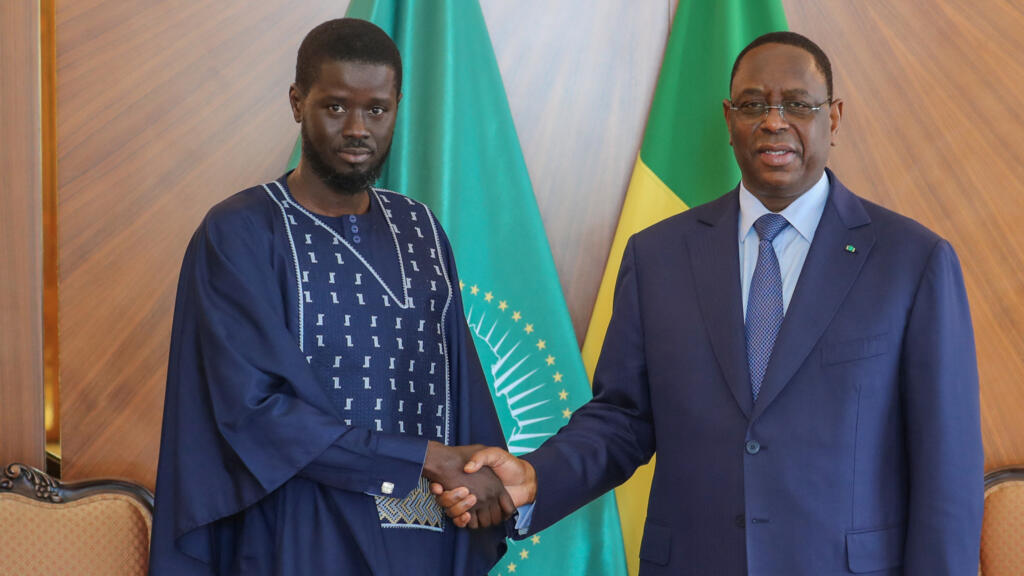
Senegalese President Bassirou Diomaye Faye has endorsed former president Macky Sall’s campaign to become the next United Nations secretary-general, setting aside one of the country’s most bitter recent political rivalries.
Senegal’s Foreign Ministry announced the decision after Faye and Sall met on Friday, saying the president had instructed the government and the country’s diplomatic missions to support the former leader’s candidacy. The endorsement gives Sall the formal backing of his home country, an important boost as he competes for the UN’s highest diplomatic post. (TimesLIVE)
The move represents a striking political reversal for Faye, who won Senegal’s 2024 presidential election as the candidate of a movement that campaigned against Sall’s record. Faye and his political allies accused the former administration of democratic backsliding, mismanagement and using the justice system against opposition figures.
Faye himself was released from prison shortly before the 2024 election, while his political mentor, Ousmane Sonko, had been barred from standing. Their campaign promised a decisive break with Sall’s government and appealed to widespread frustration over unemployment, governance and political repression. (AP News)
Despite that history, the government’s endorsement suggests Faye is willing to separate domestic political disputes from Senegal’s international interests. Supporting a Senegalese candidate for the UN leadership could raise the country’s diplomatic profile and strengthen Africa’s claim to greater representation in major multilateral institutions.
Sall’s candidacy was formally submitted to the United Nations by Burundi in March 2026, rather than by Senegal. UN records confirm that Burundi presented his nomination to the presidents of the General Assembly and Security Council. (United Nations)
Faye’s subsequent endorsement resolves an awkward situation in which a former Senegalese president was campaigning for the UN post without the explicit support of his own government.
Supporters of Sall welcomed the announcement as a sign of national unity and political maturity. Critics, however, questioned how the administration could reconcile its backing with its previous condemnation of Sall’s rule and its promises to hold former officials accountable.
The decision may also create tension within Faye’s political base, particularly among activists who experienced arrests, prosecutions and restrictions during Sall’s final years in power. For them, supporting the former president for a prominent international position could appear inconsistent with the government’s earlier pledge to deliver political accountability.
Sall served as Senegal’s president from 2012 to 2024 and previously chaired the African Union. His supporters point to that experience, along with his international contacts and record in regional diplomacy, as qualifications for the UN role.
The United Nations is selecting a successor to António Guterres, whose second term ends on December 31, 2026. Candidates are assessed through a process involving public dialogues in the General Assembly, but the decisive recommendation is made by the Security Council before the General Assembly formally appoints the next secretary-general. (United Nations)
Faye’s endorsement does not guarantee Sall’s selection, but it strengthens his diplomatic standing and allows Senegal’s embassies to campaign openly on his behalf.
The political impact inside Senegal may be just as significant. After years of confrontation, the endorsement signals at least a limited thaw between the current and former presidents. Whether it develops into broader reconciliation, or remains a pragmatic alliance built around Sall’s UN ambitions, is likely to remain a subject of intense debate.