
President Mahama’s government rejects American health aid after refusing to hand over sensitive national health data, joining a growing African pushback against strings-attached foreign assistance.
Ghana has drawn a line in the sand — and it cost them $109 million.
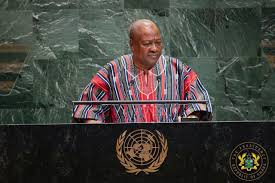
The government of President John Dramani Mahama has formally rejected a proposed health assistance deal with the United States, walking away from five years of funding after Washington demanded access to sensitive national health data as a condition of the agreement.
The decision, which emerged publicly this week, marks one of the most significant acts of defiance by an African government against U.S. aid conditionality in recent memory. It also places Ghana alongside Zambia and Zimbabwe, both of which have raised similar sovereignty concerns about comparable American health agreements.
The proposed deal, negotiated since November 2025, would have delivered $109 million in U.S. assistance to support Ghana’s health system — including disease surveillance, digital health infrastructure, and broader public health coordination.
But the devil was in the details.
According to sources familiar with the negotiations, Washington required Ghana to share detailed health data as part of the arrangement. Ghanaian officials viewed the conditions as excessive, arguing they compromised the country’s data protection laws, constitutional requirements for parliamentary approval, and national sovereignty over its health infrastructure.
The negotiations reportedly started smoothly. Sources described the early stages as “pretty normal dealings and negotiations.” But as the April 24 deadline set by Washington approached, the pressure mounted. “There was a lot more pressure, especially at the end,” one insider told reporters.
Ghana’s rejection did not come lightly. The $109 million represents significant resources for a country still grappling with healthcare challenges across its 30 million population. Walking away from that money sends a powerful signal — but it also leaves a gap.
The failed agreement falls under Washington’s America First Global Health Strategy, a framework designed to overhaul traditional foreign aid. The strategy calls for increased financial contributions from recipient countries, a gradual transition from donor dependency to self-reliance, and — crucially — deeper integration of data and performance tracking systems.
Critics of the U.S. approach argue that the data requirements go beyond reasonable accountability. They say the conditions effectively give Washington access to African citizens’ most intimate health information — disease histories, treatment records, epidemiological data — without adequate safeguards or reciprocity.
For President Mahama, who returned to power promising to protect Ghanaian sovereignty, the decision aligns with his broader political message. His administration has positioned itself as willing to engage with international partners but not at the cost of national autonomy.
The ripple effects could be significant. If other African nations follow Ghana’s lead, it could force a fundamental rethinking of how the United States structures its health diplomacy across the continent. Already, South Africa has struggled with similar negotiations, and several other nations are watching closely.
Health experts are divided. Some praise Ghana’s stand as a necessary assertion of digital sovereignty in an age where data is power. Others worry about the practical consequences — the clinics that won’t be built, the disease surveillance systems that won’t be upgraded, and the lives that may be affected.
One thing is clear: the era of no-questions-asked aid is over. African governments are increasingly scrutinizing the fine print — and sometimes, they’re walking away.
This story is developing. Ghana’s Ministry of Health has not issued a formal public statement on the matter.