
The Senate President says bombings will ‘stop two weeks after elections’ even as the death toll from a military airstrike on a Yobe market climbs past 100 and the U.S. pulls embassy staff from Abuja.
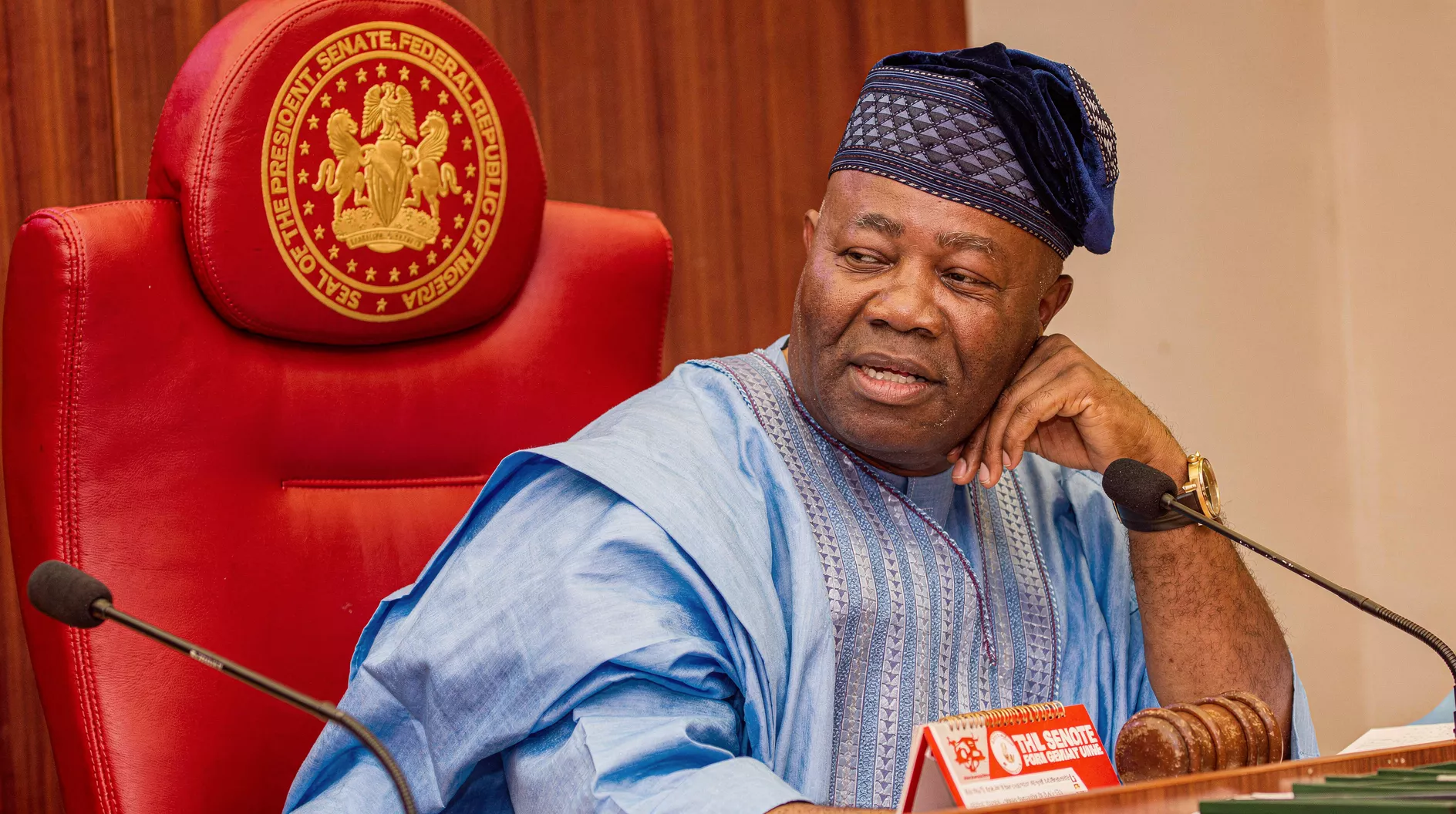
Nigeria’s Senate President Godswill Akpabio delivered a stunning claim on Tuesday that has ignited a firestorm of controversy across the country. Speaking at the commissioning of the new Nigeria Revenue Service headquarters in Abuja, Akpabio declared that the escalating wave of terrorist attacks across Nigeria is a deliberate political conspiracy designed to distract President Bola Tinubu from his reform agenda.
His exact words left little room for ambiguity: the insecurity plaguing the nation will stop two weeks after Tinubu wins the upcoming elections, he told the gathered audience. Politicians, Akpabio alleged, are actively sponsoring the violence to undermine the government. The comments immediately drew sharp criticism from opposition figures, security analysts, and ordinary Nigerians who see the statement as a dangerous trivialization of a crisis that is costing lives daily.
Akpabio’s remarks came barely 24 hours after President Tinubu held closed-door talks at the Presidential Villa with the Chief of Defence Staff, General Olufemi Oluyede, and a French military general. Sources close to the presidency described the meeting as part of an intensified security collaboration, though details of what was discussed remain classified.
The political firestorm unfolds against the backdrop of one of the most devastating incidents of the year. On Saturday, April 11, a Nigerian Air Force strike targeting jihadist positions in Yobe State instead hit the Jilli market, killing what multiple sources now estimate to be between 100 and 200 civilians. The government initially acknowledged a misfire but has since shifted its position, with the Federal Ministry of Information declaring that the strike was deliberate and not indiscriminate — a claim that has only intensified public outrage.
Amnesty International has demanded an independent investigation, noting that the Nigerian military has a documented pattern of labeling civilian casualties as militants. At least 500 civilians have died in similar military misfires since 2017, according to Associated Press tallies. The Jilli incident alone may represent the deadliest single strike in that grim record.
The security situation has deteriorated to the point where the United States has begun withdrawing personnel from Nigeria. On April 8, the State Department authorized the voluntary departure of non-emergency U.S. government employees and family members from the Abuja embassy, citing a deteriorating security situation. American citizens in the capital were advised to consider departing if they did not need to remain for emergency or essential purposes.
The U.S. move came after gunmen attacked two villages approximately 155 miles from Abuja, killing 20 people — an assault that underscored how close the violence has crept to the federal capital. The American military has reportedly deployed MQ-9 Reaper drones to assist Nigerian forces, though questions persist about whether increased military hardware can solve what many analysts see as a fundamentally political and economic problem.
In the northeast, the insurgency that Boko Haram and its splinter factions have waged for over a decade shows no signs of abating. Nearly two million people remain displaced in the region, living in overcrowded camps with dwindling resources.
For many Nigerians, Akpabio’s suggestion that the bloodshed is merely a political tactic feels both insulting and revealing. Whether the violence is politically motivated or not, the bodies are real, the displacement is real, and the growing sense that the government is losing control is impossible to ignore. With elections on the horizon and the security situation worsening by the week, Nigeria faces a critical test of whether its leadership can protect its people — or whether it will continue to explain away their suffering.