

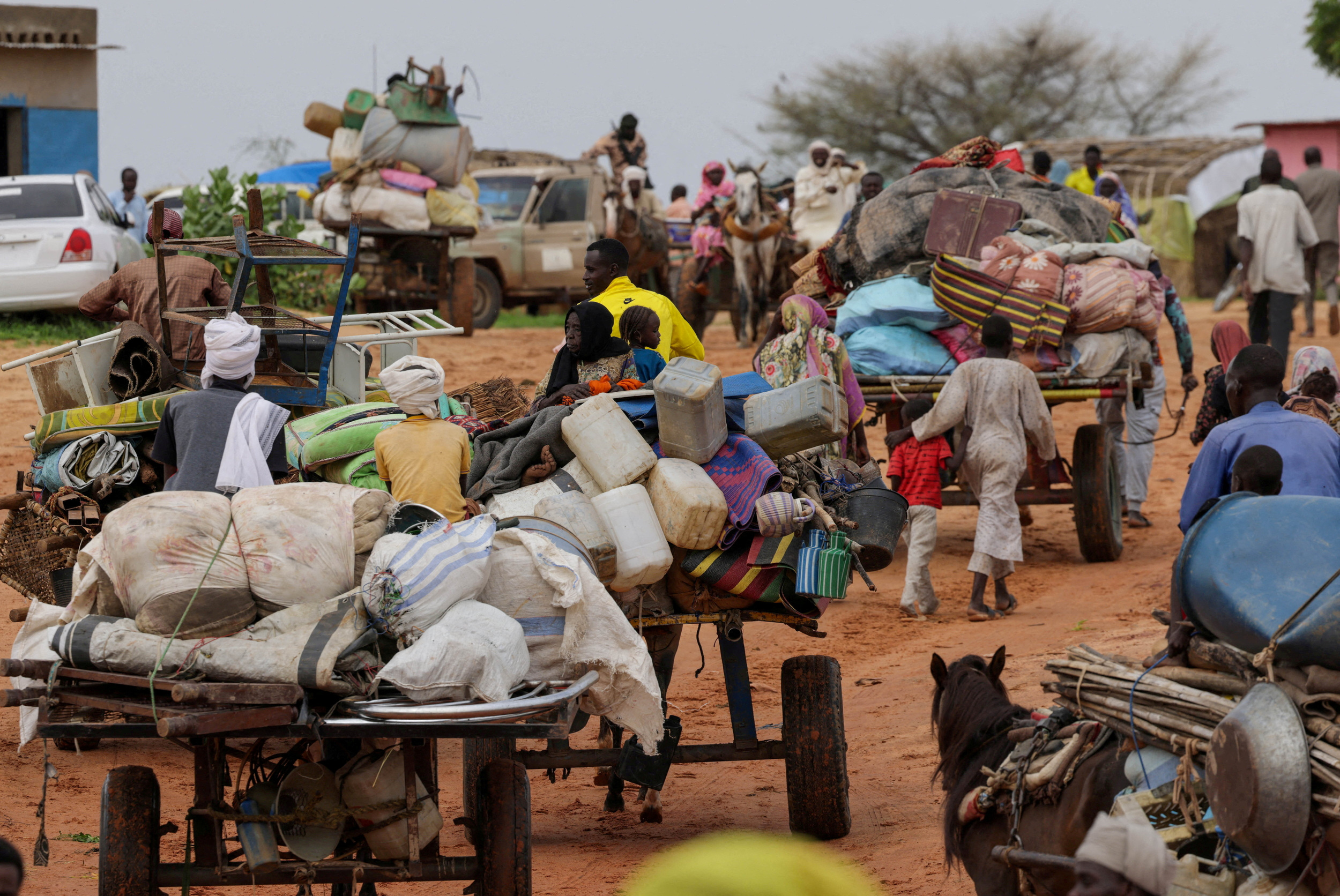
As world leaders gather in Berlin to mark the anniversary, new data reveals 30 million Sudanese need urgent aid and nearly 700 civilians have died in drone strikes in 2026 alone.
Tuesday, April 15, 2026, marks exactly three years since the first shots were fired in Khartoum, plunging Sudan into a civil war that has become the largest humanitarian disaster on the planet. The anniversary arrives not with fanfare but with staggering statistics that should shock the conscience of the international community.
Nearly 30.4 million people almost two-thirds of Sudan’s entire population, including 15.6 million children now require urgent humanitarian assistance. Over 14 million have been displaced from their homes, with more than 4.5 million fleeing across borders into neighboring countries. Chad alone now shelters over 1.3 million Sudanese refugees, making it the primary host nation in the region.
The World Health Organization released a devastating assessment on Tuesday, declaring that three years of conflict have turned Sudan into the world’s largest ongoing health crisis. Disease is spreading unchecked, malnutrition is rising at alarming rates, and access to healthcare has collapsed across vast swaths of the country. Across all 18 states, 37 percent of health facilities remain non-functional.
Perhaps most chilling are the numbers around targeted violence against medical infrastructure. WHO has verified 217 separate attacks on healthcare facilities since the war began, resulting in 2,052 deaths and 810 injuries. A recent drone strike by the Sudanese Armed Forces hit a hospital in East Darfur, killing 70 people, including 15 children a single incident that would dominate global headlines in any other conflict.
Drone warfare has emerged as one of the war’s most devastating features. Human rights organizations report that nearly 700 civilians were killed in drone strikes during just the first three months of 2026. The technology has given both warring factions the Sudanese Armed Forces and the Rapid Support Forces the ability to inflict mass casualties with increasing precision and decreasing accountability.
In Berlin on Tuesday, world leaders convened to mark the grim anniversary with pledges of concrete, time-bound measures to protect civilians and hold perpetrators of serious international crimes accountable. Human Rights Watch issued a direct challenge to the gathered leaders, demanding they move beyond statements and into action.
The humanitarian response remains critically underfunded. Aid agencies report that more than 80 percent of displaced families are skipping meals to survive, while 18 percent of households have been forced to send their children to work. Over four million people are estimated to be acutely malnourished in 2026, a figure that continues to climb as the agricultural sector lies in ruins.
The war, which began as a power struggle between Army chief Abdel Fattah al-Burhan and RSF commander Mohamed Hamdan Dagalo, has long since metastasized into something far more complex. Regional militias, ethnic tensions, and competition over gold and agricultural resources have created a conflict with no clear path to resolution.
As the world’s attention remains fixed on the Iran crisis and European politics, Sudan’s agony continues largely in the shadows. Three years in, the question is no longer whether the international community can end the suffering it is whether it even wants to try.