
Beijing calls the US naval blockade ‘dangerous and irresponsible’ as Chinese ships continue transiting the contested strait, raising the specter of a direct superpower confrontation.
What started as a US-Iran conflict is rapidly becoming something far bigger. China inserted itself squarely into the Strait of Hormuz crisis on Monday, calling the American naval blockade of Iranian ports “dangerous and irresponsible” and warning Washington not to interfere with Chinese shipping through the contested waterway.
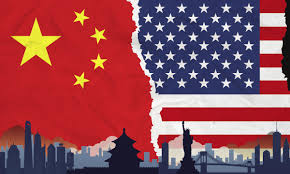
The sharp language from Beijing marks a significant escalation in the geopolitical stakes surrounding the Hormuz standoff. This is no longer a bilateral dispute between Washington and Tehran. It is now a three-way flashpoint involving the world’s two largest economies and a critical Middle Eastern power, with the global oil supply hanging in the balance.
Chinese Foreign Minister Wang Yi, speaking during a meeting in Beijing on Monday, said that blocking the Strait of Hormuz “is not in the common interest of the international community.” He called for “achieving a comprehensive and lasting ceasefire through political and diplomatic means” and warned that the blockade would only intensify contradictions, undermine the fragile ceasefire, and jeopardize navigational security.
But it was Defense Minister Admiral Dong Jun who delivered the most provocative remarks. “Our ships are moving in and out of the waters of the Strait of Hormuz,” he stated bluntly. “We have trade and energy agreements with Iran. We will respect and honor them and expect others not to meddle in our affairs.” He added pointedly that “Iran controls the Strait of Hormuz, and it is open for us.”
The implications of that statement are enormous. If Chinese-flagged or China-bound tankers continue transiting the strait while a US naval blockade is in effect, it forces Washington into an impossible choice: intercept Chinese vessels and risk a catastrophic escalation with a nuclear-armed rival, or let them pass and undermine the credibility of the entire blockade.
China’s exposure to this crisis is not abstract. Roughly 40 percent of Beijing’s crude oil imports pass through the Strait of Hormuz, and China is the single largest buyer of Iranian oil. The blockade threatens to sever both a key supply route and a major trade relationship simultaneously.
Beijing does have some breathing room. China holds approximately one billion barrels in strategic petroleum reserves, enough to cover several months of disrupted supply. But that cushion is finite, and the crisis comes at a particularly bad time for the Chinese economy, which is already navigating the ongoing US-China tariff war and sluggish domestic demand.
At the United Nations, China and Russia vetoed a Security Council resolution aimed at protecting commercial shipping in the strait, arguing it was biased against Iran. China’s UN envoy Fu Cong said that adopting such a resolution while the US was actively threatening Iran’s survival would send the wrong message to the world.
The veto underscores a broader dynamic. China and Russia are increasingly coordinating to counter what they see as American unilateralism in the Middle East. For Beijing, the Hormuz crisis is not just about oil. It is about challenging US dominance over global maritime chokepoints and demonstrating that Washington cannot unilaterally dictate the terms of international commerce.
Some analysts have noted a more provocative dimension to the China-Iran relationship in the strait. Reports suggest the two countries have been exploring mechanisms to conduct oil transactions outside the US dollar system, using the crisis as an opportunity to chip away at dollar hegemony in global energy markets.
For the rest of the world, the danger is clear. A miscalculation in the narrow waters of the Hormuz strait, where American warships and Chinese tankers are now operating in close proximity, could trigger a confrontation with consequences far beyond oil prices. Energy markets are already pricing in the risk, with Brent crude at $102 and WTI at $104 a barrel.
The coming days will be critical. If China’s ships continue to move through the blockade zone unchallenged, other nations may follow suit, effectively breaking the blockade without a shot being fired. If the US Navy does attempt to stop Chinese vessels, the world enters entirely uncharted and deeply dangerous territory.
Either way, the Hormuz crisis has exposed a fundamental reality of 21st-century geopolitics: no major global conflict stays bilateral for long. What began as a US air campaign against Iran has drawn in the world’s second superpower, and the stakes are now existential for the global energy system and the international order itself.