

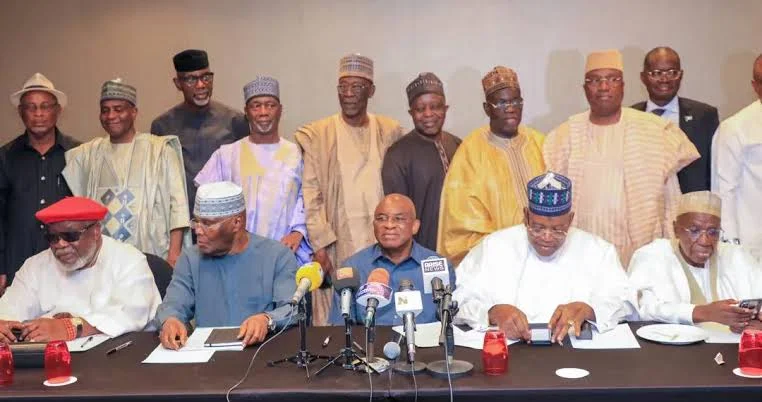
Nigeria’s African Democratic Congress (ADC) has found itself entangled in a protracted and revealing struggle over something as seemingly routine as a party convention venue. What should have been a straightforward logistical exercise has instead become a lens through which broader tensions between opposition forces and the ruling establishment are increasingly visible.
Over recent weeks, the ADC has announced, revised, and in some cases abruptly abandoned multiple proposed venues for its national convention. Party officials cite last-minute withdrawals by facility owners, unexplained administrative hurdles, and, in certain instances, alleged pressure from authorities. While none of these claims have been conclusively proven, the pattern has raised eyebrows among political observers who see echoes of a familiar challenge: the difficulty opposition parties face in organizing freely within Nigeria’s political environment.
ADC leaders have framed the disruptions as more than coincidence. In public statements, they suggest that indirect interference—whether through regulatory bottlenecks, security concerns, or institutional reluctance to host opposition gatherings—has played a role. The ruling government, for its part, has not formally responded to these specific allegations, and there is no official confirmation of involvement. Still, the optics of repeated venue changes reinforce a narrative long advanced by opposition groups: that the political playing field remains uneven.
The stakes are not trivial. Party conventions are critical moments for internal democracy—used to elect leadership, define policy direction, and project unity ahead of electoral cycles. For a party like the ADC, which has sought to position itself as a credible alternative to dominant political forces, the inability to hold a stable, well-organized convention risks undermining both momentum and public confidence.
Beyond logistics, the episode underscores structural challenges. Opposition parties in Nigeria often operate with fewer resources, less institutional backing, and limited access to neutral civic spaces. When combined with bureaucratic friction or perceived political pressure, even routine activities can become flashpoints.
Yet, the ADC’s persistence in pushing forward—rescheduling, renegotiating, and maintaining public communication—also signals resilience. In Nigeria’s evolving democratic landscape, such persistence is itself part of the political contest: a test of whether opposition voices can sustain visibility and organization despite constraints.
As the convention saga continues to unfold, it serves as a microcosm of a larger democratic question: how open is the space for political competition? For the ADC, the answer may shape not just a single event, but its broader credibility as a vehicle for opposition politics in the years ahead.