

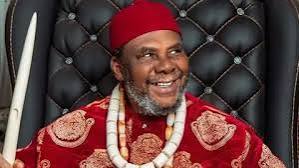
Nollywood has lost its greatest patriarch. Pete Edochie, the voice and face that shaped two
generations of Nigerian storytelling, has died at the age of 79 in Enugu, his family confirmed in
the early hours of Wednesday.
The family statement, posted on Instagram by his son Leo Pete Edochie, said the veteran actor
passed away at 12:30 a.m. on November 25, 2026, after a private battle with prostate cancer.
Funeral arrangements, the family said, will be announced in due course.
He is survived by his wife of more than five decades, Josephine, and their six children — among
them fellow Nollywood actors Yul Edochie and Linc Edochie, both of whom have carried the
family name into contemporary stardom.
For millions across Africa and the diaspora, Pete Edochie was not just an actor. He was the
archetypal African elder, the unquestioned patriarch, the keeper of proverbs and the moral
centre of every scene he walked into. His baritone — slow, deliberate, weighted — became
shorthand for wisdom itself in Nigerian popular culture.
His breakthrough came in 1987, when he was cast as Okonkwo in the Nigerian Television
Authority adaptation of Chinua Achebe’s Things Fall Apart. The role, universally regarded as
definitive, launched him from a successful broadcasting career at the NBC in Enugu into the
heart of the rising Nigerian film industry.
From there came hundreds of roles across what would become Nollywood, the second-largest
film industry in the world by output. Edochie specialised in — and arguably defined — the role
of the traditional ruler, the Igwe, the clan head. From Lionheart to Rattlesnake, The
Prince and the Pauper to The Village Headmaster, his screen presence set the template for
what an elder ought to sound like in African cinema.
National recognition followed. The federal government conferred the Member of the Order of
the Niger (MON) on him in 2003, citing his contribution to arts and culture. He accepted it, with
characteristic economy, as “a duty discharged.”
The tributes have poured in since the family announcement went public. Governor Peter Mbah
of Enugu State described Edochie as “a cultural institution” whose loss will be felt “not only in
Enugu but across the African world.” President Bola Tinubu is expected to issue a statement
later on Wednesday. Legit.ng’s headline captured the mood across Igbo land in three words
that have already spread virally: “An iroko has fallen.”
The iroko tree is one of the great hardwoods of West Africa, revered in Igbo cosmology as
sacred, enduring, and almost impossible to fell. The metaphor is deliberate. In life, Edochie
carried himself with a gravitas that made even the younger Nollywood generation defer to him
on set. His scenes were often shot in single takes.
His influence stretched well beyond acting. He was an outspoken commentator on Nigerian
politics and culture, giving thundering interviews that defended traditional values while
refusing to spare political leaders he saw as failing their people. Clips of his interviews routinely
went viral years after the fact.
For younger Africans who grew up on Africa Magic, YouTube Nollywood channels and Netflix’s
recent slate of Nigerian originals, Pete Edochie was the constant. The accent was Igbo but the
message always felt pan-African. His death closes a chapter in Nigerian popular memory that
began with black-and-white NTA screens and ends on 4K streaming platforms.
Nigeria has lost its elder. Nollywood has lost its father. And Enugu, where it all began and where
it has now ended, is in mourning.