
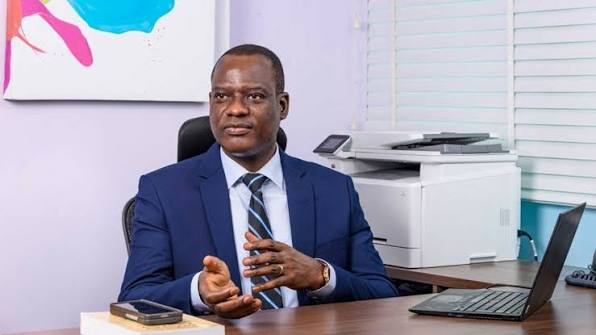
Finance Minister Taiwo Oyedele says reinstating petrol subsidy would drive pump prices past ₦2,000 a litre and push the naira toward ₦3,000 to the dollar — a stark intervention that landed this morning as 2027 campaign pressure builds.
Nigeria’s finance minister, Taiwo Oyedele, has issued one of his sharpest warnings yet
against bringing back the petrol subsidy, telling the country in remarks that dominated this
morning’s front pages that doing so could push the naira sharply weaker and send petrol
beyond ₦2,000 per litre within months.
Oyedele’s intervention lands at a politically charged moment. Organised labour has renewed
its threat of industrial action, opposition figures are circling the subsidy question as a 2027
campaign cudgel, and Nigerian households continue to absorb one of the most painful costof-living squeezes in a generation.
The minister’s case is blunt. Reinstating the subsidy, he argued, would gut government
revenue, risk a sovereign credit downgrade, raise borrowing costs, trigger capital flight and
further deplete foreign exchange reserves. In the government’s own scenario modelling, the
exchange rate could approach ₦3,000 per dollar within months, with pump prices climbing
even as the subsidy ostensibly made petrol ‘cheaper.’
That counterintuitive logic — that subsidy makes fuel more expensive, not less — is the heart
of the administration’s defence of its 2023 removal. The argument is that when government
borrows to prop up pump prices, the resulting fiscal strain weakens the currency, and a
weaker naira raises the landed cost of imported fuel faster than the subsidy can offset it.
Critics are unmoved. Labour leaders point out that the removal has already delivered historic
inflation, that Nigerians were promised relief measures that have been patchy at best, and that
the administration is now using fear of currency collapse to shut down a legitimate policy
debate. Expect that framing to intensify as the 2027 campaign machinery warms up.
The macro picture gives both sides ammunition. The naira has clawed back some ground
from its post-devaluation lows, inflation has eased from its peak, and FX inflows have
improved. But food prices remain brutal, SMEs are still cycling through diesel generators at
punitive costs, and the political patience for ‘reforms are working, trust us’ is wearing thin.
Markets, for their part, read Oyedele’s message as a signal that the Tinubu administration has
no intention of reversing course regardless of the political heat. Nigerian eurobonds have
been firm in recent sessions, and bank equities have benefited from the clearer macro
signalling, even as domestic consumer stocks remain under pressure.
The subplot is political. President Bola Tinubu’s team is calculating that the economic story
will have turned decisively by late 2026 and early 2027, enough to blunt the subsidy attack
line. Oyedele, widely regarded as the administration’s most credible economic communicator,
is being deployed accordingly — not just to defend policy, but to pre-empt a reversal that
organised labour and opposition parties will keep pushing.
For ordinary Nigerians, the calculation is colder. A warning that reinstating subsidy would
push petrol past ₦2,000 is not reassurance when petrol already sits at historically painful
levels and transport, food and school fees have followed it up the hill. The administration’s
bet is that stability now is worth the pain; the counter-bet is that the pain is the story.
What to watch next: whether labour follows through on strike threats in the coming weeks,
whether the Central Bank signals any shift at its next policy meeting, and whether the 2027
opposition coalition can turn ‘bring back subsidy’ from a rallying cry into a coherent fiscal
plan. For now, Oyedele has drawn his line — and dared his critics to cross it.