

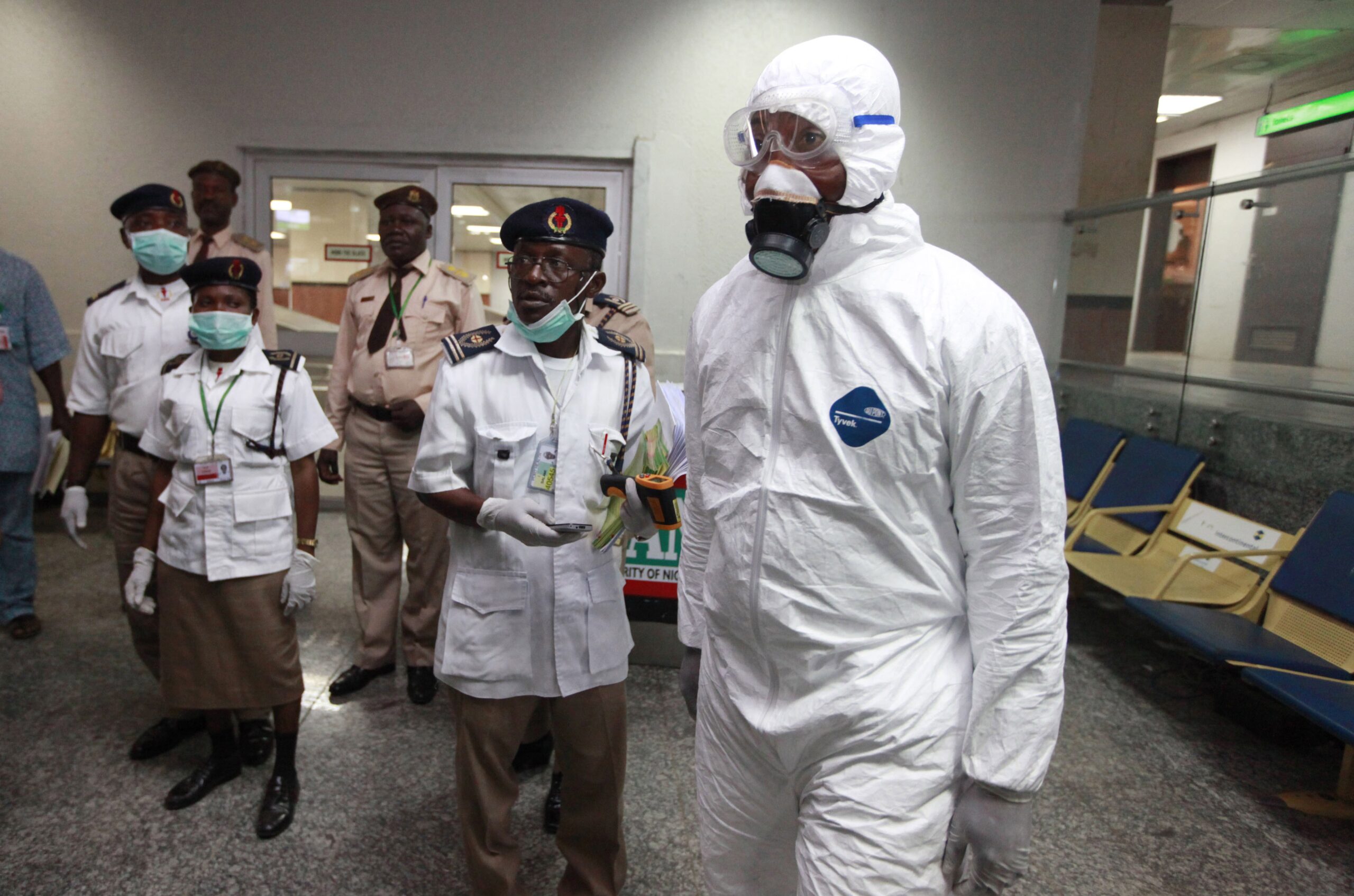
Nigeria has officially confirmed its first case of Ebola in the current regional outbreak. The
patient, a woman who recently travelled into the country from Uganda, tested positive overnight
and is now in isolation at a private hospital in the Federal Capital Territory, authorities said this
morning.
Health officials have begun contact-tracing 44 people identified as having been in close
proximity to the patient since her arrival. The Federal Airports Authority of Nigeria (FAAN) has
activated heightened screening protocols across all international terminals, with temperature
checks and travel-history questionnaires being reimposed at Nnamdi Azikiwe International
Airport and Murtala Muhammed International Airport in Lagos.
Nigeria becomes the latest country caught in a spreading regional outbreak. Kenya has already
recorded nine confirmed infections. The virus — a filovirus with historical case fatality rates of
up to 50 percent in untreated cases — has been circulating in East and Central Africa for months,
with Uganda identified as the current epicentre of the Zaire strain now causing most cases.
For Nigerian health authorities, this is not uncharted territory. In 2014, Nigeria contained an
imported Ebola case in Lagos within weeks — a response that is still cited internationally as a
model of rapid public-health action. The Nigeria Centre for Disease Control and Prevention
(NCDC) has leaned heavily on that playbook today: index-case isolation, aggressive contact
tracing, port-of-entry screening, and a public communications push urging anyone with
symptoms and recent travel history to call the 6232 toll-free line.
The political backdrop makes the moment more sensitive. The Tinubu administration is already
managing a stretched health budget, ongoing insecurity in the north, and a tense pre-election
atmosphere ahead of the 2027 polls. The federal government is expected to issue a formal
statement later today; sources inside the Presidential Villa say an emergency inter-ministerial
meeting was convened in the early hours.
State governments are already moving. Lagos State’s health commissioner has reactivated the
state’s emergency operations centre, a step not taken since the COVID-19 response. Rivers, Kano
and Kaduna have each announced hospital-level readiness drills. The private hospital treating the
index patient has not been publicly named, in line with standard NCDC confidentiality practice,
but is understood to be a tertiary facility in Abuja with existing infectious-disease isolation
capacity.
Nigerian carriers and foreign airlines have begun reviewing boarding protocols for passengers
originating from Uganda, Kenya and Rwanda. No flight suspensions have been announced, and
the Minister of Aviation has urged airlines not to pre-empt WHO guidance. Travellers from affected East African countries can expect longer processing times at Nigerian airports in the
coming days.
Public reaction has been swift and anxious. Nigerian social media lit up within an hour of the
NCDC announcement, with “Ebola” trending nationally on X by sunrise. Memories of the 2014
scare — and more recently the long COVID-19 lockdowns — are fuelling genuine worry, but
also a wave of misinformation that health officials are already trying to counter.
Dr Jide Idris, Director-General of the NCDC, has urged calm. “One imported case is not an
outbreak,” he said in a brief statement. “We have the systems, the trained personnel, and the
laboratory capacity. What we need from the public is honesty about recent travel and symptoms,
and strict adherence to hygiene protocols.”
Experts broadly agree that Nigeria’s chances of containing a single imported case are good,
provided tracing holds and no secondary transmission has already occurred. The next 21 days —
the maximum Ebola incubation window — will tell the story. For now: no community spread
confirmed, one patient in isolation, 44 contacts being tracked, and a country watching its airports
with new eyes.