

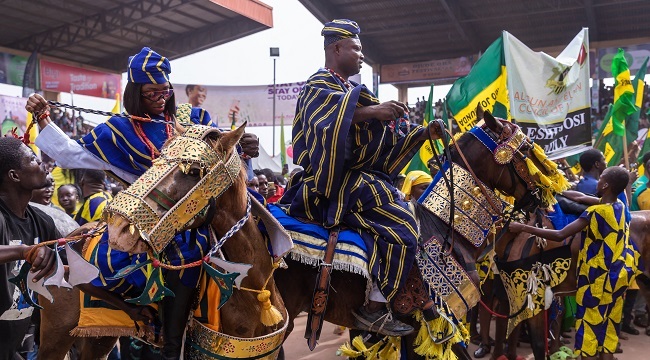
Thousands of people gathered in Ijebu-Ode, Ogun State, as the annual Ojude Oba Festival was celebrated in grand and colorful fashion, showcasing the richness of Yoruba culture and tradition.
The festival, which takes place shortly after the Eid-el-Kabir celebration, drew indigenes, tourists, cultural groups, and dignitaries from across Nigeria and beyond. Participants appeared in elaborate traditional attire, with horse-riding displays, music performances, and cultural processions adding excitement to the event.
One of the highlights of the festival was the parade of age-grade groups, known locally as “Regberegbe,” who paid homage to the Awujale and Paramount Ruler of Ijebuland. The groups displayed coordinated fashion, cultural pride, and community unity during the procession.
The Ojude Oba Festival has grown over the years into one of Nigeria’s most recognized cultural events, attracting increasing attention for its blend of tradition, tourism, and social celebration. Colorful aso-oke fabrics, beads, drumming, and traditional dances dominated the atmosphere as attendees celebrated Yoruba heritage in vibrant style.
Speaking during the event, community leaders emphasized the importance of preserving cultural identity and passing traditional values to younger generations. They noted that the festival continues to serve as a symbol of unity, respect for tradition, and peaceful coexistence among the people.
Business activities also received a boost as vendors, fashion designers, photographers, and local entrepreneurs benefited from the influx of visitors attending the celebration.
Tourism stakeholders described the festival as an important cultural asset capable of promoting Nigeria’s image internationally and strengthening local economic development through cultural tourism.
Security personnel were deployed around key areas to ensure a peaceful and orderly celebration, while organizers praised participants for maintaining the spirit of unity and respect associated with the festival.
The annual event remains a significant cultural landmark for the Yoruba people and continues to stand out as a vibrant expression of history, royalty, and communal pride.