
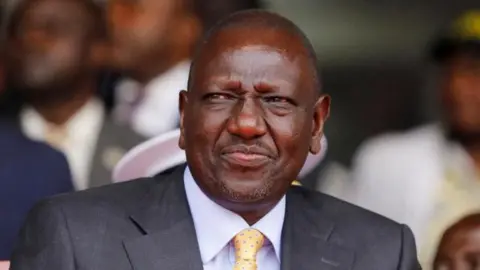
At 11am local time on Tuesday, Kenyan President William Ruto stood before a packed
chamber in Dodoma to do something no Kenyan head of state has ever done before: deliver a
formal address to the Tanzanian Parliament. It is one of the rarest diplomatic gestures in
international affairs, reserved for foreign leaders considered exceptionally close partners, and
the symbolism is enormous.
Ruto landed in Tanzania on Monday for a two-day state visit at the invitation of President
Samia Suluhu Hassan, who received him at State House in Dar es Salaam with full military
honours. The two leaders held bilateral talks before Ruto’s convoy made the inland trip to
Dodoma, the legislative capital, for Tuesday’s address.
On paper, the visit is about brotherhood and East African Community integration. In practice, it
lands at a moment when both governments need each other for hard, unglamorous reasons –
and when the regional power balance in East Africa is visibly shifting.
Three big files sit on the table. First, the proposed regional oil refinery in Tanga, a project
Kenya, Uganda and Tanzania have been pushing as a way to reduce Africa’s exposure to
imported refined products. The Iran-Israel war in the Gulf has ripped that project off the back
burner. Kenya temporarily waived national fuel quality standards last week as Hormuz tanker
traffic collapsed, and a Tanga refinery now looks less like a vanity infrastructure project and
more like an economic insurance policy.
Second, bilateral trade. Trade between the two neighbours has crossed $1 billion annually but
is repeatedly dragged down by non-tariff barriers – phytosanitary disputes, border closures,
surprise tariffs on Kenyan beef, Tanzanian rice and cement. Both presidents are expected to
announce a new joint mechanism to flag and remove such barriers in real time.
Third, regional politics. Ruto’s posture as East Africa’s most active diplomatic player has rattled
some of his neighbours. Uganda’s Yoweri Museveni recently expressed displeasure over what
he sees as Nairobi’s attempt to dominate EAC institutional appointments, and there have been
tensions with the Democratic Republic of Congo over the M23 conflict. Speaking to a foreign
legislature is a soft-power flex that bypasses those frictions and locks Tanzania in as a partner.
Not everyone at home is comfortable. Kenyan opposition MP Mark Mwenje publicly urged Ruto
to “exercise caution” before the address, warning that any commitments made on the floor of a
foreign parliament could become binding political baggage. Critics also note the optics of a
Kenyan president addressing a foreign legislature while his own relationship with Kenya’s
parliament has been strained over tax policy and constitutional amendments.
President Suluhu, for her part, is using the visit to project Tanzania as the region’s emerging
stabilising force ahead of her expected re-election bid later this year. The Tanzanian
government has spent weeks preparing Dodoma – flags lining boulevards, security beefed up,
a delegation of top East African Community officials in attendance.
What to listen for in the speech itself: any concrete language on the Tanga refinery, a timeline
for removing named non-tariff barriers, language on the EAC’s role in DRC peace efforts, and
any reference to a possible joint African Union position on the Iran-Hormuz crisis – which is
now affecting fuel availability across the region.
Style aside, the larger story is that two of Africa’s biggest economies are moving from rivals to
deliberate partners in real time. For 30 million East Africans who cross the Kenya-Tanzania
border for work, school, healthcare and trade every year, that shift is more than diplomatic
theatre. It is the difference between waiting two days at Namanga and waiting two hours.