
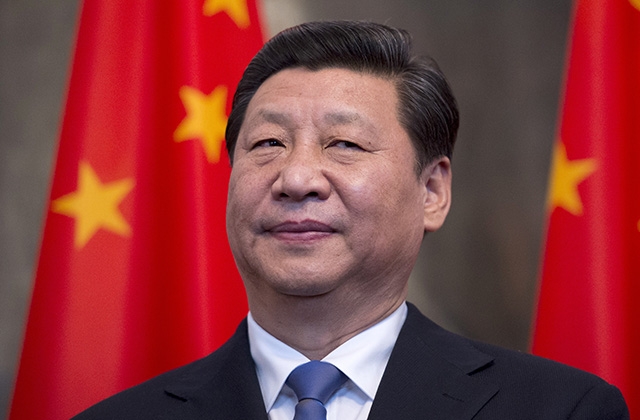
Wang Yi presses Tehran to halt fighting and reopen the Strait of Hormuz, justone week before Trump’s high-stakes summit with Xi.
BEIJING — In one of the most consequential diplomatic moves of the two-month-old
Iran war, Chinese Foreign Minister Wang Yi on Wednesday morning publicly called for a
“comprehensive ceasefire” during talks with Iran’s top diplomat Abbas Araghchi in
Beijing.
The meeting, which began in the Chinese capital just hours ago, marks Araghchi’s first
foreign trip since the U.S.-Israel air campaign against Iran erupted on February 28. It
also lands at a knife-edge moment in global geopolitics: U.S. President Donald Trump is
due in Beijing on May 14 and 15 for a summit with President Xi Jinping that is now
expected to be dominated by the war.
“We believe that a comprehensive ceasefire is urgently needed, that a resumption of
hostilities is not acceptable, and that it is particularly important to remain committed to
dialogue and negotiations,” Wang told reporters after the talks. He added that China
was “deeply distressed” by the conflict.
Just as significant was what Wang said about the Strait of Hormuz, the narrow
waterway through which roughly a fifth of the world’s oil passes. He urged both Iran and
the United States to reopen it “as soon as possible,” signaling that Beijing — itself the
largest buyer of Iranian crude — wants the chokepoint cleared of mines, drones and
stranded tankers immediately.
Notably, China’s call to reopen Hormuz was absent from the readout that Iran’s foreign
ministry posted on Telegram, hinting that Tehran is not yet ready to publicly commit to
standing down at sea.
The Beijing visit comes after Trump announced overnight that he was pausing the U.S.
effort to guide stranded vessels out of the strait, while keeping the American naval
blockade of Iranian ports in place. Secretary of State Marco Rubio has separately said
U.S. combat operations inside Iran are over and that the focus has shifted to
negotiations.
For Tehran, this trip is as much about optics as outcomes. By touching down in Beijing,
Araghchi is signaling to Washington that Iran is not isolated and still has powerful
friends willing to host its top diplomat at a moment when the Islamic Republic is bruised,
sanctioned and short on oil revenue. China, in turn, is positioning itself as the
indispensable mediator — a status it has been cultivating since brokering the 2023
Saudi-Iran rapprochement.
Analysts say the choreography is unmistakable. Beijing wants to walk into the Trump-Xi
summit holding what it can frame as a peace card, presenting itself as the only major
power that talks to all sides — Tehran, Riyadh, even Washington — without
preconditions.
There are still major unknowns. Hardliners inside Iran’s Revolutionary Guards have
publicly opposed a permanent ceasefire while U.S. forces remain in the Gulf, and Israeli
officials have said they reserve the right to strike again if Iran reconstitutes its
enrichment program. A “comprehensive” ceasefire, in other words, is not the same thing
as a durable one.
Still, Wednesday’s meeting has changed the temperature. For the first time since late
February, the world’s second-largest economy is openly demanding that the guns fall
silent — and doing so in a room with Iran’s foreign minister sitting across the table.
Whether Trump arrives in Beijing next week to seal that ceasefire, or to upend it, is now
the single biggest question in global politics.