

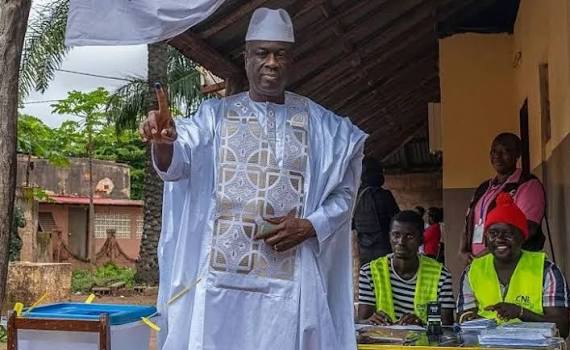
Guinea-Bissau has approved a new constitution that significantly expands the powers of the presidency, setting the stage for changes to the way the West African country is governed.
The new constitution strengthens the authority of the president over key areas of government and reshapes the relationship between the executive and other state institutions.
The move comes against a backdrop of years of political instability in Guinea-Bissau, a country that has struggled with repeated power struggles between presidents, governments and parliament. The political tensions have often disrupted government and contributed to concerns about the strength of democratic institutions.
Supporters of the constitutional changes argue that a stronger presidency could provide greater stability and allow governments to make decisions more efficiently. They say clearer executive authority could help reduce the institutional disputes that have repeatedly paralysed the country.
Opponents, however, have raised concerns about the concentration of power in the presidency. They warn that giving the head of state greater authority could weaken parliamentary oversight and reduce institutional checks and balances.
The constitutional changes are therefore likely to become an important issue in Guinea-Bissau’s political debate, particularly as the country prepares for its next phase of political transition.
Guinea-Bissau has a long history of military involvement in politics. Since independence from Portugal in 1974, the country has experienced coups and attempted coups, as well as frequent changes of government.
The latest constitutional reform is expected to be closely watched by regional and international partners, including the Economic Community of West African States (ECOWAS), which has repeatedly called for stronger democratic governance and political stability in the region.
For many citizens, the central question will be whether the new system can deliver greater stability without undermining democratic accountability.
The government says the constitution is intended to strengthen the functioning of the state. Critics will be watching to see how the expanded presidential powers are exercised in practice.
The approval of the new constitution consequently represents more than a legal change. It could reshape Guinea-Bissau’s political system and determine how power is distributed between the presidency, parliament and other institutions in the years ahead.