
Ghana’s gold export numbers released today confirm what West African commodity traders have
been whispering about since the summer: the country’s small-scale and artisanal gold sector is no
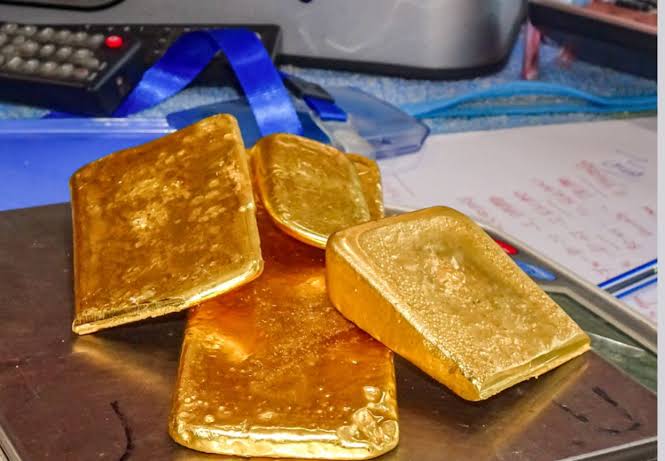
longer the shadow industry it was five years ago. Total gold exports hit $11.6 billion over the last
reporting period — up more than 50 percent year-on-year — with artisanal and small-scale
production accounting for over 40 percent of the volume. For a country whose economy was in
IMF-programme recovery three years ago, the figure is transformational.
The arithmetic matters. In 2021, Ghana’s central bank had foreign reserves that covered barely
three months of imports and a currency, the cedi, in freefall. The restructuring programme
imposed by the IMF in 2023 required Accra to find durable, non-dollar sources of foreignexchange earnings. Cocoa, the traditional engine, was in disease-driven decline. Oil was
constrained by ageing fields. Gold — specifically, the hundreds of thousands of artisanal miners
the state had historically treated as a nuisance — turned out to be the answer.
The policy shift arrived with Ghana Gold Board (GoldBod), the state regulator set up last year
with a single mandate: route all small-scale gold sales through a licensed government buyer, pay
in cedi at a price pegged to the London fix, and settle the dollar leg into the central bank’s
reserves. GoldBod CEO Sammy Gyamfi, speaking to miners and press this morning, said the
organisation now expects to deliver $6 billion in central-bank dollar inflows by year-end and
reach the $12 billion annual run-rate from next year.
The transformation on the ground is visible. In the Western Region’s Tarkwa district, previously
informal buying posts have been replaced by GoldBod offices with assay equipment, biometric
registration for miners, and SMS-based cedi payments. Smuggling across the Ivorian and
Togolese borders — a chronic drain on the sector — has shrunk, by GoldBod’s own accounting,
by more than 60 percent year-on-year. Not everyone is pleased. Private buying houses that for
decades served as the middlemen between artisanal miners and Dubai or Mumbai refineries have
had their margins squeezed, and some have moved operations to Mali and Burkina Faso. Chinese
nationals, who had dominated illegal “galamsey” operations in southern Ghana, have been
pushed out by a combination of enforcement and the better prices offered through formal
channels.
The macroeconomic payoff is already being felt. Ghana’s cedi has become the second-best
performing currency in Sub-Saharan Africa this year. The central bank’s reserves cover more
than four months of imports — the healthiest reading since 2019. Sovereign Eurobond yields
have tightened sharply, and Fitch’s August upgrade of Ghana’s long-term rating cited “the
structural improvement in gold-sector formalisation” as a key driver.
The political capital in these numbers is also real. President John Dramani Mahama’s
government, which campaigned in 2024 on the promise that galamsey — the illegal mining that
has devastated rivers and forests — would be ended “not through police raids but through better
prices” has found a slogan that is landing. Rural miners now receive, on average, 92 percent of
the international spot price via GoldBod, compared with 68 to 75 percent through the old buying
houses. The difference, multiplied across the sector, is what has transformed personal incomes in
dozens of mining towns.
The risks are real too. A sustained fall in global gold prices would evaporate the margin that
makes the whole machinery work. Environmental damage from mercury-intensive artisanal
methods remains severe, and the government’s promised rehabilitation funds have been slow to
disburse. And the political temptation to raid the gold receipts for off-balance-sheet spending
ahead of the 2028 election cycle is one the IMF resident representative in Accra has flagged
privately with Finance Ministry officials.
But today, in a continent where governments more often announce commodity booms than
deliver them, Ghana has done something unusual. The numbers are audited, the regulator has a
track record, and the country is now, by any sensible measure, the gold-formalisation case study
every other African mineral economy — from the DRC to Zimbabwe to Tanzania — is studying.