
Burkina Faso’s military-appointed parliament has unanimously adopted a sweeping new
penal code that restores the death penalty, a dramatic reversal that lands less than a decade
after the West African nation abolished capital punishment under its last civilian
government.
The revised code reintroduces execution as a possible sentence for high treason, terrorism,
espionage, parricide and — in a provision drawing international alarm — the import of
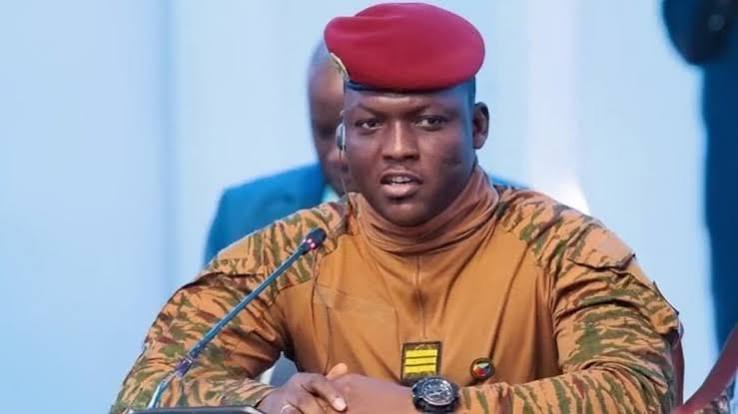
expired or prohibited products. Lawmakers aligned with the junta of Captain Ibrahim
Traoré pushed the bill through without a single opposing vote, framing it as a response to
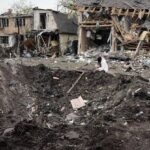
the jihadist insurgency that has displaced more than two million people and now controls
or contests roughly 40 percent of national territory.
Justice Minister Edasso Rodrigue Bayala defended the move as ‘a justice that responds to
the deep aspirations of our people,’ arguing that only the harshest sanctions can deter the
fighters laying siege to northern towns. ‘We are at war,’ he told state television after the
vote. ‘Our penal code must reflect that reality.’
Human rights groups reacted within hours. Amnesty International called the reinstatement
‘a profound step backwards for human rights in West Africa’ and warned that broad, loosely
defined offences such as ‘espionage’ and ‘high treason’ have historically been used against
journalists, opposition figures and civil-society activists under military rule. Human Rights
Watch said the measure ‘threatens to entrench a climate of fear’ already tightening around
critics of the junta.
Burkina Faso last carried out an execution in 1988 and formally abolished capital
punishment in 2018 under President Roch Marc Christian Kaboré, who was overthrown in
the first of two coups in 2022. Since Traoré seized power that September, authorities have
postponed scheduled elections, dissolved the independent electoral commission, expelled
French and United Nations forces, and sharply curtailed media freedoms.
Diplomats in Ouagadougou say the death-penalty vote is also a message to regional
partners. Burkina Faso, Mali and Niger, now bound in the Alliance of Sahel States, have
steadily peeled away from the Economic Community of West African States (ECOWAS),
rejecting its calls for a democratic timetable. Reinstating capital punishment positions the Sahel alliance even further from the regional bloc, which has urged member states to
abolish executions.
The security backdrop remains dire. Jihadist groups linked to al-Qaeda and the Islamic State
have intensified operations in recent weeks, with convoys ambushed on the Dori-Kaya road
and fuel shortages biting into the capital. Residents in Ouagadougou queue for hours at
petrol stations, and the price of staples has climbed sharply as supply routes buckle.
Legal analysts note that the code still faces constitutional review, but with the
Constitutional Council also reshaped by the junta, few expect meaningful pushback. If it
clears that stage, Burkina Faso will become the fourth African country in a decade to reverse
an abolitionist position, a trend that worries continental bodies like the African Commission
on Human and Peoples’ Rights.
For ordinary Burkinabè, the vote lands as another signal of how far the country has drifted
from its 2015 democratic opening. ‘They are telling us the state can kill again,’ said a civilsociety organiser in Bobo-Dioulasso, speaking anonymously for fear of reprisal. ‘And they
are telling us we cannot ask why.’