
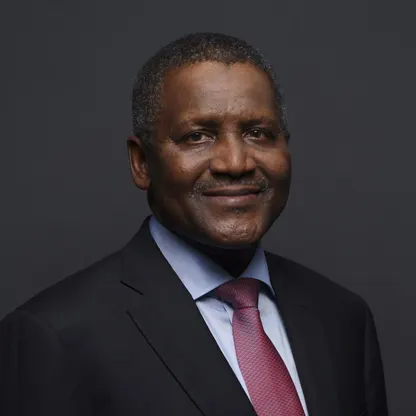
Africa’s richest man just made his boldest cross-border move yet. In an announcement that
rippled across the continent’s markets this morning, the Dangote Group confirmed it has
acquired a roughly 25 percent stake in the Kenya Pipeline Company for about $327 million,
buying out a large block of publicly held shares earlier floated when the Kenyan
government divested 65 percent of KPC through a landmark IPO.
The deal, which Aliko Dangote himself trailed on social media before the group released a
formal statement at dawn, instantly makes the Nigerian industrialist the single largest
private shareholder in one of East Africa’s most strategic pieces of energy infrastructure —
a 1,342 km pipeline network that moves petrol, diesel, jet fuel and kerosene from Mombasa
to Nairobi, Eldoret and onward into Uganda, Rwanda, South Sudan and the eastern DRC.
For Dangote, the logic is almost brutally simple. His 650,000-barrel-a-day refinery in Lekki
now has stable Nigerian crude flows and surplus refined product looking for markets. A
quarter-share of the Kenyan pipeline gives his group a seat at the table on where that
product goes once it leaves West Africa — and crucial influence over tariffs, storage access
and the throughput priority his cargoes receive at Mombasa.
The announcement caught Kenya’s political class off guard. KPC shares, which had traded in
a narrow band since listing, jumped more than 11 percent on the Nairobi Securities
Exchange within the first hour of trading as retail investors scrambled to position alongside
the Nigerian billionaire. A Treasury spokesperson in Nairobi welcomed the inflow as ‘proof
that Kenya’s privatisation strategy is drawing serious long-horizon capital’.
Not everyone is celebrating. Opposition figures in the Kenyan parliament are already
demanding a review of whether a single foreign shareholder should wield that much
influence over a state-strategic asset. ‘A pipeline is not a mall,’ tweeted one MP within an
hour of the announcement. ‘This needs a security review, not just a Treasury thank-you.’
Analysts expect the matter to land before a parliamentary committee within days.
In Lagos, the reaction was quite different. Business commentators framed the deal as the
clearest sign yet that Nigerian capital — long dependent on its own domestic market — is
now actively hunting continental infrastructure. Dangote’s cement arm already operates
across more than a dozen African countries; his push into fertilisers, sugar and now downstream petroleum logistics is turning the group into something closer to a pan-African
industrial platform.
Energy-sector insiders also point to a quieter dimension: Ethiopia. With Addis Ababa
increasingly reliant on imports routed through Djibouti and growing talk of alternative
corridors via Kenya, control inside KPC could, over time, position Dangote to shape a crossborder refined-products artery that has never had a dominant private player before.
Financially, the price tag is notable but not extravagant. At roughly $327 million for 25
percent, Dangote is valuing KPC at just over $1.3 billion — a discount to some analyst
models that put the pipeline’s true asset base closer to $1.6 billion. Observers say he has
effectively paid for strategic optionality rather than raw yield.
The deal also sends a subtle signal to African markets more broadly. For years,
infrastructure assets on the continent have been sold to Gulf sovereign wealth funds,
Chinese state firms or Western pension vehicles. A Nigerian industrialist taking a quarter of
a Kenyan pipeline is, in geopolitical terms, a continental story. Several West African officials
privately told reporters this morning they expect similar moves across the region in the
coming year.
For ordinary Kenyans, the practical question will be fuel pricing. Dangote has made his
name in Nigeria partly by publicly challenging fuel importers and pushing down prices at
the pump. Whether that playbook travels across borders — and whether Kenyan regulators
will let it — is now one of the most interesting business questions in Africa.