

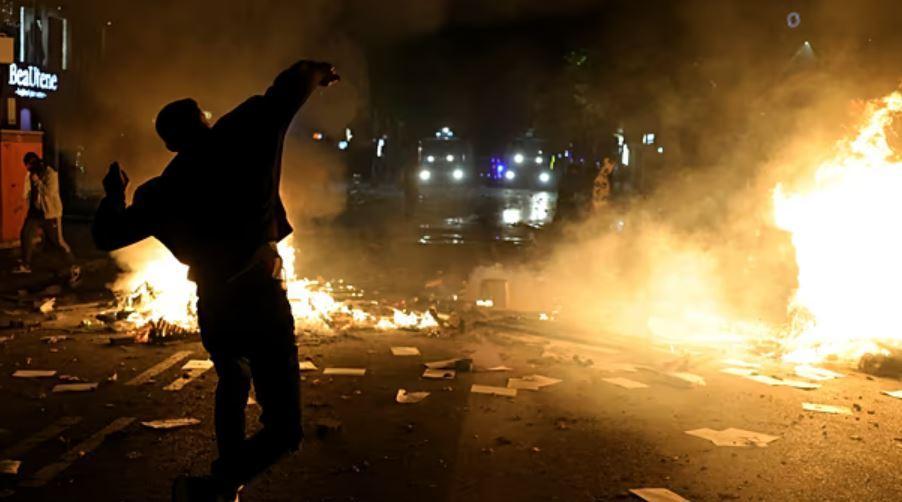
France woke on Monday to its worst domestic security crisis in years. In a single day of
unrest, authorities arrested roughly 2,400 people as waves of violent protests tore through
cities, with rioters setting public buildings alight and looting shops in multiple regions.
President Emmanuel Macron condemned the violence in a statement issued hours ago, calling
the scenes ‘intolerable’ and vowing that the state would respond with the ‘full force of the
law.’ The French government moved quickly from political messaging to operational
response.
Prime Minister Sébastien Lecornu instructed local prefects overnight to consider imposing
curfews in the worst-affected zones, a dramatic escalation that has not been seen in France at
this scale since the 2023 banlieue riots. Interior ministry officials confirmed reinforcements
have been deployed, with gendarmerie units sent to flashpoints in and around major urban
centers.
The scale of Saturday’s arrests — 2,400 in roughly 24 hours — surprised even veteran
observers of French protest cycles. Government sources briefed overnight that detainees
include minors, repeat offenders known to intelligence services, and individuals suspected of
coordinating attacks on public buildings via encrypted messaging apps.
The economic damage is already mounting. Business associations warned early Monday that
insurance claims from torched vehicles, looted retail outlets and vandalised administrative
buildings could run into hundreds of millions of euros. Several town halls and at least one tax
office were reported burned.
Markets reacted swiftly. The CAC 40 opened lower on Monday, with retail and insurance
stocks leading losses. The euro slipped against the dollar in early European trading as traders
weighed the political risk of a prolonged instability episode on the eve of a tense budget
negotiation in parliament.
The protests sit at the intersection of several unresolved tensions: cost of living pressure,
immigration debates and anger over proposed pension and welfare reforms. Analysts caution
that while triggers may look familiar, the speed and geographic spread of this weekend’s
violence point to a more diffuse, networked movement than the yellow vests of 2018.
Opposition leaders have seized the moment. Marine Le Pen’s National Rally accused the
government of ‘losing control,’ while left-wing France Unbowed blamed Macron’s policies
for the explosion of anger. Both sides are pressing for emergency parliamentary debate this
week.
Internationally, EU partners are watching closely. Berlin and Brussels have called for calm,
mindful that any sustained instability in France would ripple into the eurozone economy and
complicate the bloc’s unified posture on Ukraine, trade and defence.