
Paraguay is facing its worst financial and political crisis in years after the central bank took control of Ueno Bank, a fast-growing digital lender used by a majority of the country’s adults. The takeover has frozen the savings of millions of ordinary customers, trapped hundreds of millions of dollars in public funds and set off a political storm that has reached President Santiago Peña.
On Tuesday, 3 November, the Central Bank of Paraguay (BCP) announced that it had placed Ueno Bank into a formal resolution process, following a unanimous board decision taken on 2 November. Regulators said accounting adjustments had shown the bank’s solvency ratio had fallen to less than half of the legal minimum, amid heavy lending to companies linked to its owners.
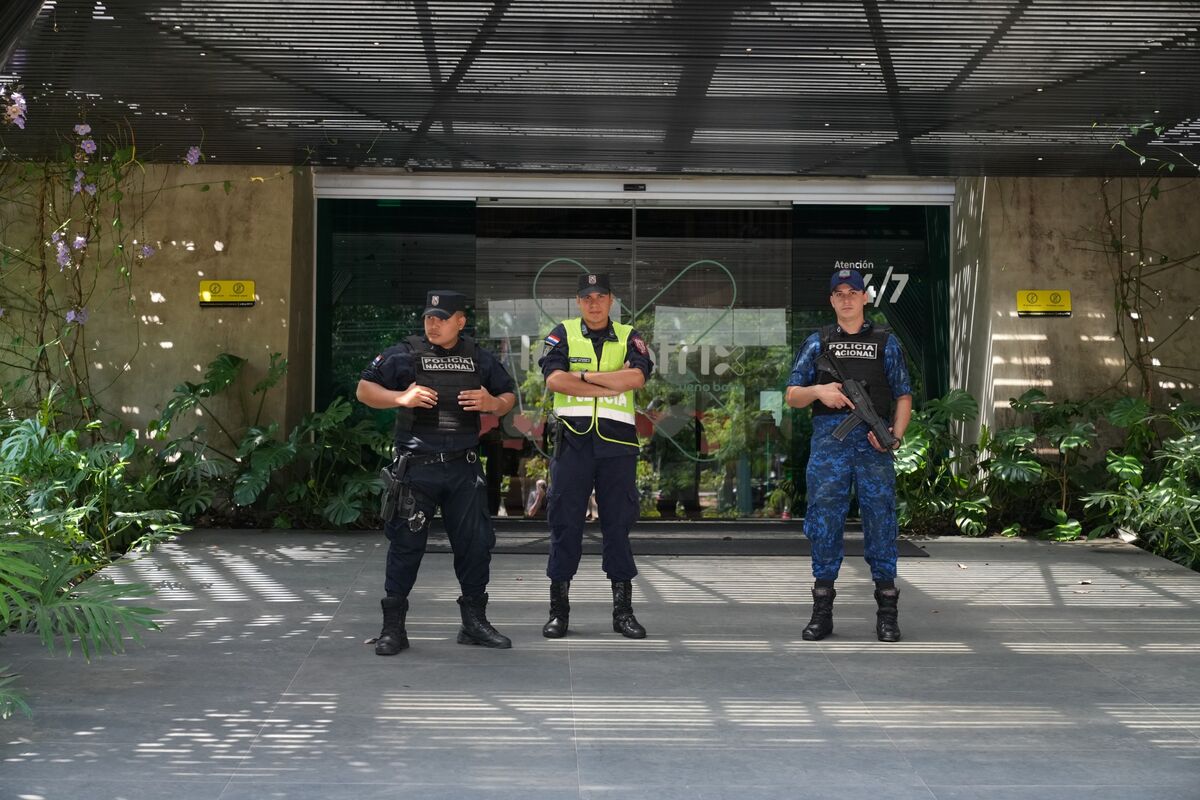
The move came just a day after Ueno publicly denied reports that authorities were preparing to activate deposit-protection measures. Once the takeover was announced, customers found they could not see their balances, withdraw money or use their cards. Police stood guard outside a branch in Asunción as depositors protested.
Then-central bank governor Carlos Carvallo described the intervention as the result of several months of technical work. He said it began in June, when bank supervisors found signs that Ueno was lending to companies tied to its controlling group, Grupo Vázquez.
The scale of the damage
Ueno was no niche player. It reported 2.94 million customers as of June 2026, about 60 to 63 percent of Paraguay’s adult population, and about 2.6 million depositors.
Public money is caught up too. Around US$380 million belonging to the state social security institute, IPS, is trapped at the bank. That includes funds connected to roughly 32,000 pensioners. Money belonging to the national electricity company, ANDE, and the Itaipú binational dam is also affected. IPS says pensions will still be paid on time and that it is moving affected pensioners to another bank.
The shock has spread across the financial system. The securities regulator suspended withdrawals from 13 mutual funds managed by five firms that held Ueno-linked assets, and trading in Ueno bonds was halted. Acting central bank president Liana Caballero said about 3 million new accounts were being opened at once across the banking system as former Ueno customers rushed to other banks, overwhelming digital platforms.
Will depositors get their money back?
Most will. Paraguay’s Deposit Guarantee Fund covers up to 228.3 million guaraníes (about US$38,000) per depositor, equal to 75 minimum wages. Preliminary central bank estimates suggest this fully protects about 97 percent of Ueno’s depositors. The remaining 3 percent, people with larger balances, may struggle to recover anything above that limit, depending on how much is raised from the bank’s assets.
As a first step, the central bank says depositors will receive up to 10 million guaraníes (about US$1,700) each, minus any debts they owe Ueno, with smaller savers first in line. Reports differ on timing. Some outlets say payouts could begin as early as Friday, 6 November, while others report that accounts will stay frozen for at least 15 days.
President Peña has said he will work with Congress on a law to speed up payments from the guarantee fund.
Arrests and seized assets
Prosecutors have opened a criminal investigation, based on a complaint from the central bank, into alleged breach of trust and other offences. Eight Ueno executives and directors have been detained, including founder and first vice-president Federico Vázquez and bank president Juan Manuel Gustale. Investigators are focusing on loans to companies linked to the bank’s owners.
A court has also ordered precautionary seizures of assets belonging to directors and shareholder companies, including Grupo Vázquez. The seized assets include about US$70 million and 1.62 trillion guaraníes. The central bank requested the freeze to stop assets being sold off during the resolution process.
The political fallout
At President Peña’s request, Carvallo resigned as head of the central bank. Critics had questioned how closely the regulator supervised Ueno, and Liana Caballero is now leading the institution on an interim basis. Peña also cancelled a planned trip to an Ibero-American summit in Madrid so he could stay in the country.
The crisis is especially sensitive because of Peña’s past links to the bank’s parent company. He was a shareholder in Ueno Holding and says he sold those shares in April 2025. Ueno’s leadership has said he owned shares in the holding company, not in the bank itself. Opposition lawmakers are now pushing impeachment proceedings against Peña and Vice-President Pedro Alliana.
Warning signs had been building for weeks. In mid-October, the Association of Banks of Paraguay, which represents 14 private lenders, asked the central bank to report on the solvency of institutions that had received special facilities during merger processes. Lawmakers from both the ruling party and the opposition also urged Peña to replace the central bank’s board.
Is the wider banking system at risk?
The government and the central bank insist this is an isolated case and not a sign of wider stress in the banking system. Even so, analysts say the episode is putting pressure on Paraguay’s sovereign bonds and on its reputation as a stable place to invest.
Paraguay has been here before. In 1995, a financial crisis brought down more than half of the country’s banks, and the collapse of Banco Alemán in 2002 left thousands of savers out of pocket. The way authorities handle Ueno’s depositors in the coming days will go a long way towards deciding whether confidence holds this time.