

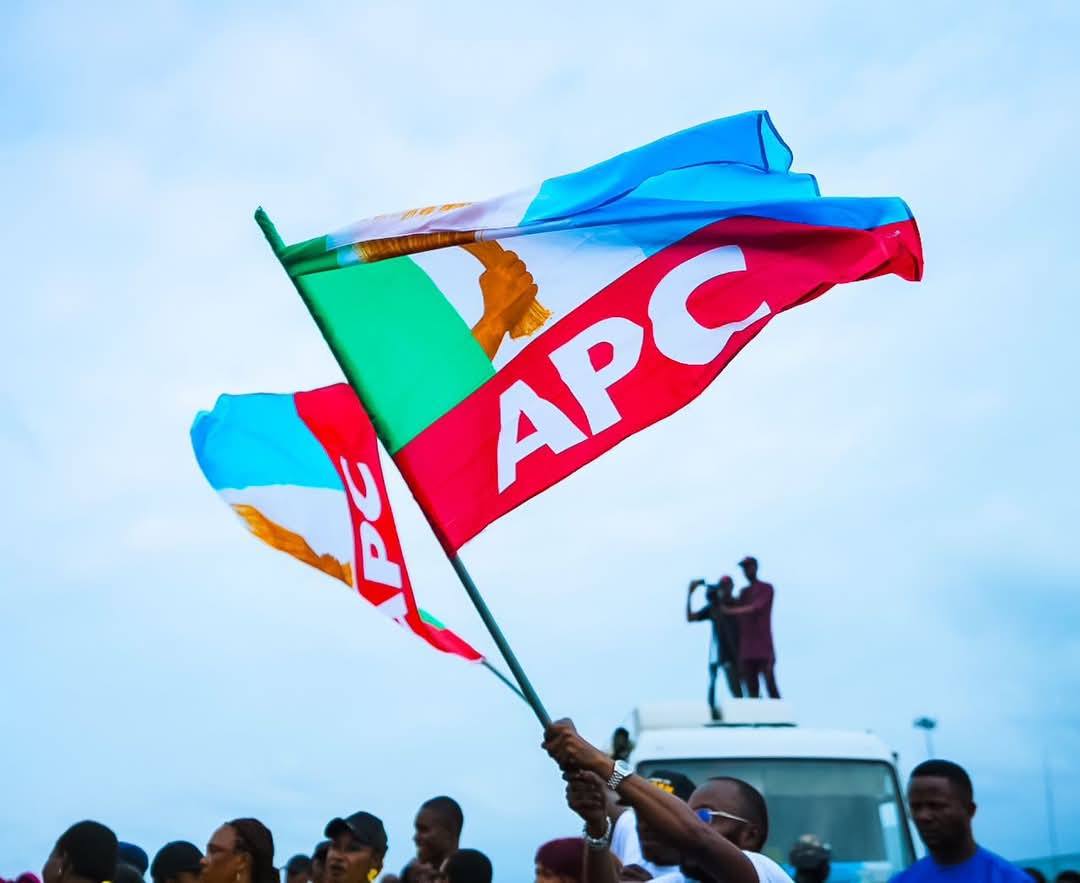
Over the weekend of May 16–17, 2026, the All Progressives Congress (APC) held one
of the most consequential rounds of internal voting since Bola Tinubu became its
standard-bearer in 2023 — and by Sunday night, the political furniture in several of
Nigeria’s most influential federal constituencies had been completely rearranged.
The headline numbers tell only part of the story. Across roughly two dozen states, sitting
members of the House of Representatives — including some of the chamber’s most
senior figures — failed to retain their party tickets. The losses were not concentrated in
any one zone. They cut across Edo, Delta, Plateau, Kebbi, Jigawa, Imo, Lagos, Kwara,
Benue, Ekiti and Cross River. The pattern is unusual enough that party insiders are
calling it the largest weekend purge of APC incumbents in the party’s history.
The marquee casualty was Professor Julius Ihonvbere, the Majority Leader of the
House of Representatives, who lost the APC primary for Owan Federal Constituency in
Edo State. Ihonvbere managed only 1,005 votes against former Commissioner for
Mining Andrew Ijegbai, who took 3,695. A sitting Majority Leader rejected by his own
party in a primary is a once-in-a-decade event in Nigerian politics; the message it sent
to other APC members of the National Assembly was immediate.
Next was Nicholas Mutu in Delta’s Bomadi/Patani Federal Constituency. Mutu has held
the seat continuously since 1999 — 27 unbroken years, longer than any other current
member of the House. He sought an eighth term. He lost by 14,000 votes to 1,093 to
Basil Ganagana, a margin so wide that it functions less as a defeat and more as a
public eviction. Local APC stakeholders had protested for weeks against another Mutu
candidacy. The primary delivered exactly the outcome they had demanded.
In Plateau, the high-profile Yusuf Gagdi, representing Pankshin/Kanke/Kanam, failed to
secure a third term, losing to John Tongshinen in a contest that left no doubt about the
direction of the local APC base. In Edo’s Oredo Federal Constituency, the incumbent Eseosa Iyawe was defeated by former Commissioner for Education Dr Paddy Iyamu
(7,088 votes). In Kebbi’s Jega/Gwandu/Aleiro constituency, Mansur Musa Jega lost his
ticket through a consensus arrangement that produced former Comptroller-General of
the Nigeria Correctional Service Jafar Ahmed Jega instead. In Jigawa, four of nine
incumbents failed to retain tickets. In Imo, four sitting lawmakers lost their return bids to
new aspirants.
Not everyone was on the losing side. Speaker of the House Abbas Tajudeen survived.
So did Deputy Speaker Benjamin Kalu, and Yusuf Buhari, son of the late former
president. Lagos Assembly Speaker Mudasiru Obasa secured his ticket. In Rivers,
Wike-aligned aspirants — including state Assembly Speaker Martins Amaewhule —
swept the federal contests, a result that quietly reshapes one of the country’s most
volatile political battlegrounds.
So what does it all mean for 2027?
First, the obvious. The APC base is more restless than the public messaging from Abuja
has suggested. Tinubu himself spent the weeks leading up to the primaries urging
consensus, telling party leaders politics is “not a do-or-die” affair and instructing them to
hold primaries wherever consensus failed. The fact that so many incumbents — many
of them allies of state governors, party heavyweights, and federal officials — were
nonetheless overturned by delegates suggests the consensus machinery is no longer
guaranteed to produce the results party elites want.
Second, the legal blowback. Aggrieved lawmakers are already threatening litigation.
Parallel primaries were reported in Edo, with conflicting result sheets surfacing on
Saturday. Niger State saw protests over imposition. In Osun, party leaders spent
Monday urging calm as fresh disputes emerged. Each contested primary is now a
potential lawsuit, and INEC has historically had little patience for ambiguity in candidate
lists.
Third, and most important for 2027 strategy: defections. Nigerian outlets including The
Sun and ThisDay have reported that aggrieved APC aspirants began discreet
negotiations weeks ago with the Peoples Democratic Party, the Labour Party, and the
African Democratic Congress (ADC). Some who spent tens of millions of naira on
nomination forms now face the choice of accepting defeat or crossing the aisle. History
suggests many will cross. Analysts are openly comparing the moment to the realignments of 2015 and 2019, when mass defections substantively altered the
National Assembly’s composition.
The timing layers on additional pressure. Just days ago, Oyo Governor Seyi Makinde
declared his own 2027 presidential candidacy and unveiled a PDP–Allied Peoples
Movement alliance. Whether or not that alliance holds — Wike has already rejected it —
Makinde’s pitch is precisely the message displaced APC aspirants will hear: that there is
room outside the ruling party.
There is also the question of which faction inside the APC the weekend benefited most.
The wave of incumbent losses did not appear to be coordinated from a single command
centre. Some defeats lined up with governors’ preferences, some did not. In Rivers, the
results clearly strengthened Wike. In Edo, the upset of Ihonvbere appears to weaken
the federal legislative leadership the Speaker has built. Each state will be working
through its own internal arithmetic this week.
Senate primaries follow on Monday, May 18. Governorship primaries on Thursday, May If the weekend pattern repeats at those levels, the APC will not just be picking
candidates — it will be deciding whether the coalition that delivered Tinubu the
presidency in 2023 can still hold itself together for 2027.
For now, the party is publicly framing the weekend as evidence of internal democracy
and delegate sovereignty. Privately, senior figures are working the phones, trying to
settle disputes before they escalate into court filings or party-switching announcements.
The opposition, meanwhile, sees a recruitment opportunity it could not have
manufactured on its own.
The next 96 hours will tell us a great deal about what kind of campaign 2027 actually
becomes.