
Brazil has a new old president. Overnight into Monday, electoral authorities certified that Luiz Inacio
Lula da Silva had defeated incumbent Senator Flavio Bolsonaro in a bruising second-round vote, giving
the 80-year-old Workers’ Party veteran a fourth, non-consecutive term in the Planalto Palace.
The final tally from the Superior Electoral Court: 51.79% to 48.21%, a margin of roughly 4.4 million
votes out of more than 120 million cast. The result caps one of the tightest, most polarized races in
Brazilian history and reverses the first round, which Flavio Bolsonaro had carried 47.03% to 45.16% just
three weeks ago.
No candidate who lost the first round had ever come back to win the runoff since Brazil restored
democracy in 1989. Lula just broke that streak.
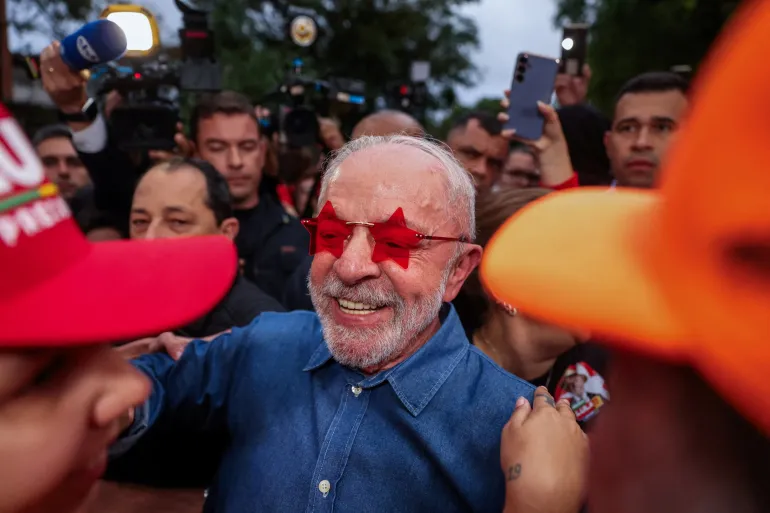
Addressing a sea of red flags in Sao Paulo in the early hours of the morning, Lula thanked voters, called
for national reconciliation and pledged to govern ‘for the 215 million Brazilians, not just the ones who
voted for me.’ He pointed to hunger, deforestation in the Amazon and the cost of living as his first-order
priorities, and signaled he would move quickly to restore relations with the European Union and reset ties
with Washington.
Flavio Bolsonaro – son of the former president and heir to his father’s hard-right movement – refused to
recognize the result. In a short, combative statement from Brasilia, he claimed, without evidence, that the
vote had been ‘manipulated’ and said his legal team would challenge results in several states. International
observers from the OAS and the EU have so far described the vote as orderly and transparent.
Markets are bracing for turbulence. The real weakened sharply against the dollar in early Asian trading,
and Brazilian ADRs listed in New York are set to open under pressure, with investors trying to price in
both the political uncertainty and Lula’s expected push for a more interventionist fiscal stance. Iron ore
and soy futures ticked higher on expectations of warmer ties with Beijing.
The geopolitical stakes are big. Washington had quietly watched the race as a referendum on US
influence in Latin America, with the Trump administration seen as close to the Bolsonaro camp. A Lula
presidency revives the BRICS-friendly axis, strengthens the push for a common South American currency
conversation, and complicates US pressure campaigns on Venezuela and Cuba.
At home, Lula inherits a divided Congress, a restless military, and a Supreme Court still weighing cases
against members of the Bolsonaro family. He will be sworn in on January 1, 2027. Whether the losing
side accepts the handover peacefully – or whether Brazil sees a repeat of the January 2023 attacks on
government buildings – is now the question hanging over Brasilia.
For now, Lula has done what almost no one in Brazilian politics thought possible six months ago: he has
come back from political exile, from prison, from a near-fatal first-round deficit, and reclaimed the
presidency. Again.