
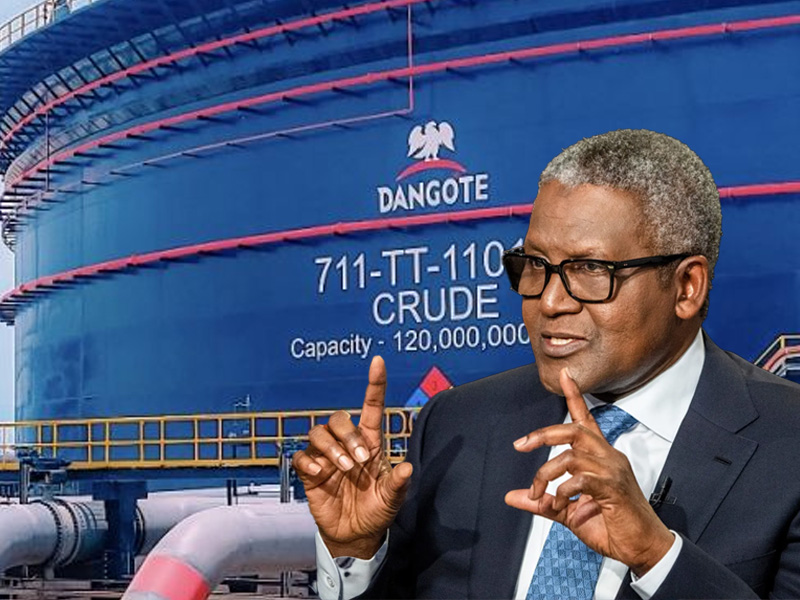
With less than 24 hours left on the clock, Africa’s most-watched share sale just delivered its biggest
headline yet. Dangote Petroleum Refinery, the sprawling 650,000-barrel-a-day complex outside Lagos,
has posted a $4.73 billion net profit for the first nine months of 2026 — a complete inversion of the
$117.2 million loss it reported in the same period a year earlier.
Revenue hit $22.48 billion. EBITDA climbed to $5.52 billion. Operating cash flow swung to $3.68
billion. And perhaps most striking for a project that was long whispered about as a cash-burning white
elephant, the balance sheet flipped from $1.73 billion of net debt to $650.8 million of net cash.
All of this landed just before Monday’s final push on the refinery’s initial public offering, which the
Nigerian Securities and Exchange Commission has already extended by 14 days. The window now closes
on Tuesday, October 27. Dangote is seeking to raise roughly $1.6 billion through the sale of 4.1 billion
shares, and the latest book-building updates suggest demand is comfortably oversubscribed.
If priced at the top of the range, the listing on the Nigerian Exchange would be the single largest IPO in
the country’s history and one of the largest Africa has ever seen. It would also hand Aliko Dangote,
already Africa’s wealthiest man, a public market valuation that locks in his position as the dominant
industrialist on the continent.
The business story behind the numbers is simple and brutal. Dangote Refinery is now processing crude at
close to its design capacity, selling diesel, petrol, jet fuel and polypropylene into West and East African
markets that for decades depended on imports from Europe and Asia. Refining margins — the gap
between crude prices and refined-product prices — widened sharply through 2026 as European refiners
cut capacity and demand for African fuel grew.
The IPO is not just a corporate event. For Nigeria, it is a stress test of whether the country’s capital
markets can actually absorb a trade of this size without the Central Bank or the sovereign wealth fund
stepping in. For West Africa, it is a bet on whether a privately owned, vertically integrated refinery can
rewire the continent’s energy map.
Not everyone is cheering. Fuel importers who have lost ground to Dangote complain that pricing power is
now concentrated with a single player. Independent marketers in Nigeria have accused the refinery of
squeezing margins. Trade unions in neighboring countries worry about job losses at smaller national
refineries unable to compete with Dangote’s scale.
There are also open financial questions. The IPO prospectus flags continuing concerns about related-party
transactions within the Dangote Group, feedstock supply risk given Nigeria’s own crude production
shortfalls, and foreign exchange exposure on dollar-denominated debt still on the books.
But at $4.73 billion in profit, those concerns are easier to swallow. In nine months the refinery has made
more money than many of Africa’s largest listed companies make in a decade. Hedge funds in London
and sovereign wealth managers in the Gulf have reportedly put in heavy orders alongside Nigerian retail
investors clamoring for a piece.
Tuesday night, when the IPO book finally closes, Dangote may well walk into Wednesday morning as the
head of a public company valued above most of the Nigerian banking sector combined. For a project that
was two decades in the making and nearly bankrupted its builder in the process, that would be a
remarkable finish.