

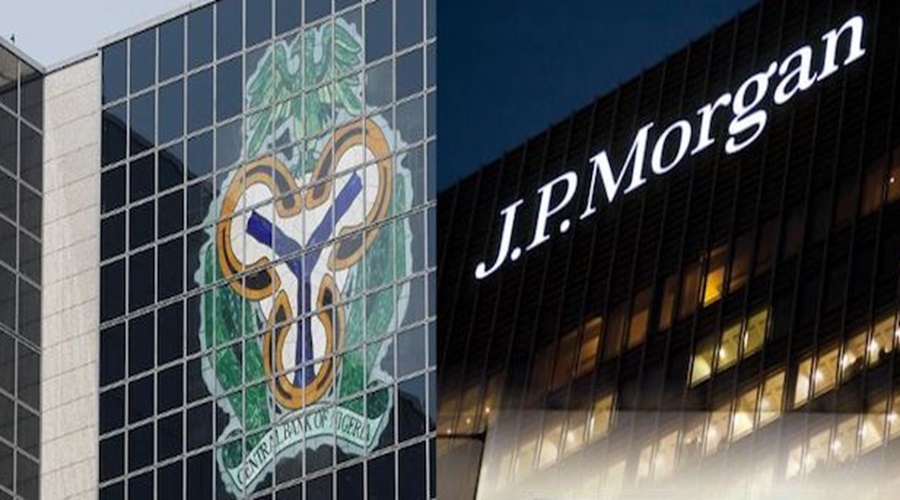
JPMorgan Chase is quietly putting its chips on Nigeria. In briefings this morning, Central Bank of Nigeria
officials confirmed that the Wall Street giant has lodged a N50 billion recapitalisation deposit with the
regulator — one of the last regulatory hurdles standing between it and a full merchant banking licence in
Africa’s largest economy.
At current exchange rates, that is around $38 million, and it aligns exactly with the CBN’s new capital
floor for merchant banks under its sweeping 2024 recapitalisation framework. The deposit is held in
escrow with the central bank, as a sign that JPMorgan is serious enough — and well-capitalised enough
— to operate at the top tier of the Nigerian financial system.
Dapo Olagunju, JPMorgan’s managing director for West Africa, revealed the plan at the Nigeria-Asia
Financial Connectivity Dialogue in Singapore earlier this month, where he said the bank is targeting
approval before the end of 2026 or at the latest early 2027. People familiar with the process say the CBN’s
final sign-off is now expected within weeks, not months.
This is a big deal. Although JPMorgan has had a representative office in Lagos for years, a merchant
banking licence will let it do things it has not been able to do onshore: raise local deposits above a
minimum threshold, lend in naira, finance major infrastructure and energy deals directly, run a trade
finance book, underwrite debt and equity issuances, and plug Nigerian corporates and the federal
government directly into its global payments rails.
What it still will not do is run a retail bank. Nigeria’s merchant banking rules deliberately keep foreign
entrants away from branches, ATMs and consumer deposit accounts. JPMorgan will not be competing
with GTCO or Zenith at the retail counter. It will be competing with them, and with Stanbic and Rand
Merchant, in the much more lucrative world of corporate and government mandates.
The timing is political as well as commercial. President Bola Tinubu’s economic team has made attracting
foreign capital a signature pitch since the painful 2023 subsidy removal and currency float. A JPMorgan
licence lets the administration point to real, named, triple-A inflows — not just portfolio flows that come
and go with the next Fed meeting.
There are also strategic implications for the naira. JPMorgan’s willingness to post N50 billion in a volatile
currency environment is itself a vote of confidence in CBN Governor Olayemi Cardoso’s efforts to
stabilise the exchange rate and clear the backlog of unmet dollar demand. It will not single-handedly fix
the naira, but in the quiet language of global finance, it is a signal.
For the rest of the Nigerian banking industry, the message is mixed. On one hand, a global bank entering
means better pricing, deeper markets and the technology lift that comes with it. On the other, Nigerian
merchant banks will suddenly be competing for the biggest-ticket deals against a balance sheet many
multiples larger than their own. Expect fee wars, aggressive hiring of senior Nigerian bankers from the
local houses, and a redrawing of the league tables.
There is also an African picture here. JPMorgan has been slowly building out across the continent —
Kenya, South Africa, Ivory Coast — and a Nigerian merchant banking licence slots in as its single most important beachhead. Lagos becomes the regional nerve centre for payments, trade finance and corporate
advisory covering ECOWAS.
The N50 billion is parked. The paperwork is in. The signal from today’s briefing is that the CBN is ready
to move. Early 2027, if not sooner, Nigeria’s banking skyline is about to add a very recognizable new
building