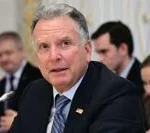

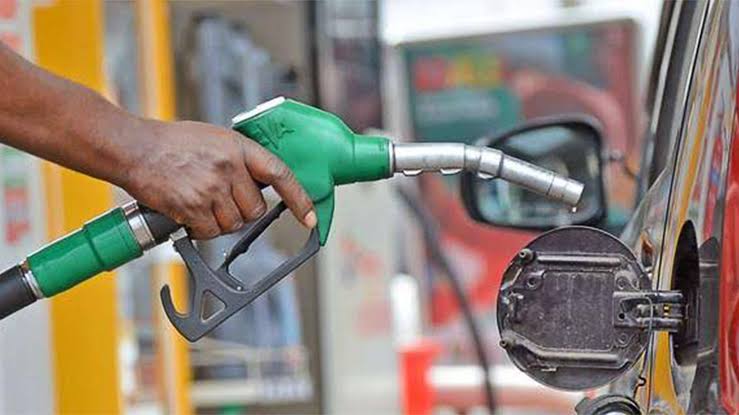
President Bola Ahmed Tinubu has definitively ruled out any return of the fuel subsidy,
delivering his sharpest rejection yet of a policy reversal that opposition figures and labour leaders
have been floating with increasing noise ahead of the 2027 election cycle. In remarks reported in
the last several hours, the president compared bringing the subsidy back to asking Moses to lead
the Israelites back to Egypt — a biblical frame that landed with his base and infuriated his critics
in roughly equal measure.
The timing matters. The naira, which had steadied through the summer, has slipped against the
dollar in the last fortnight on the back of the global oil price pressure triggered by the Middle
East crisis, and queues have reappeared at some petrol stations in Lagos, Abuja and Port
Harcourt. For millions of Nigerians, the May 2023 “subsidy is gone” announcement that marked
the opening act of the Tinubu administration remains the single most painful policy of their
lifetimes. The question of whether to bring it back has quietly become the organising issue of
early 2027 positioning.
The president’s answer, delivered directly to supporters and clipped onto every Nigerian political
feed by late morning, was unambiguous. There is no path back. Not under this government. Not
negotiable. Tinubu went further and accused former Vice President Atiku Abubakar, who has
publicly flirted with pledging a subsidy restoration, of showing “serious ignorance” of basic
economics. The APC spokesperson Dele Alake followed up within the hour, denying any
softening of policy and dismissing the renewed subsidy talk as “campaign fiction.”
The economic argument the government is making is familiar but worth restating because the
price pressure is real. In 2022, the final full year of the subsidy, Nigeria spent an estimated ₦4.3
trillion keeping pump prices below the import cost of petrol — roughly a quarter of the federal
budget. That spending did not reach the poorest Nigerians in proportion to their fuel use. It
financed smuggling across the Benin, Niger and Cameroon borders, subsidised the fleets of
businesses and the vehicles of wealthier Nigerians, and left the Nigerian National Petroleum
Company (NNPC Ltd) carrying the kind of balance-sheet damage that constrained every other
reform the government wanted to pursue.
What has replaced it is a lower-cost but politically brittle regime. The pump price now floats,
more or less, with the Dangote refinery and NNPC Ltd setting the pace. The federal government
has rolled out a cash-transfer programme for the poorest households and a CNG conversion
scheme for commercial vehicles. Both are visibly behind schedule. The National Economic
Council and state governors have asked, in letters leaked to the business press this month, for an
acceleration of the gas conversion rollout before the dry season bites.
The political backdrop is louder than the economics. The Labour Party, parts of the PDP and
sections of the NLC have treated the possibility of a subsidy return as the organising demand of
their 2027 campaigns. Tinubu’s rejection today — framed in religious language that will play
well in the north and in the Yoruba south-west — is a bet that Nigerians who hated the removal
in 2023 will still, in 2027, prefer the government that owns the reform to the government that
would have to reverse it twice.
For investors, this is the sentence they wanted. Nigerian Eurobond yields had been drifting wider
on the back of the renewed subsidy chatter; the market reads today’s remarks as the clearest
signal yet that the fiscal line will hold. For ordinary Nigerians, the message is harder. Petrol is
not getting cheaper. The transfer programme is uneven. And the president has told the country, in
the plainest possible terms, that there is no going back.
What to watch over the next 72 hours: whether NNPC Ltd adjusts pump prices downward on the
back of a softer global oil print this week, whether the gas conversion programme gets a public
re-launch with new timelines, and whether the Labour Party makes the subsidy pledge the
official centrepiece of its 2027 platform. Each of those answers will shape how durable Tinubu’s
line turns out to be.