
Gambian President Adama Barrow has declared his country’s worsening electricity crisis a national
emergency — a dramatic escalation announced this morning as protests over rolling blackouts
spread across Banjul and the surrounding urban belt.
It is a rare admission of failure from a sitting African leader three months out from a presidential
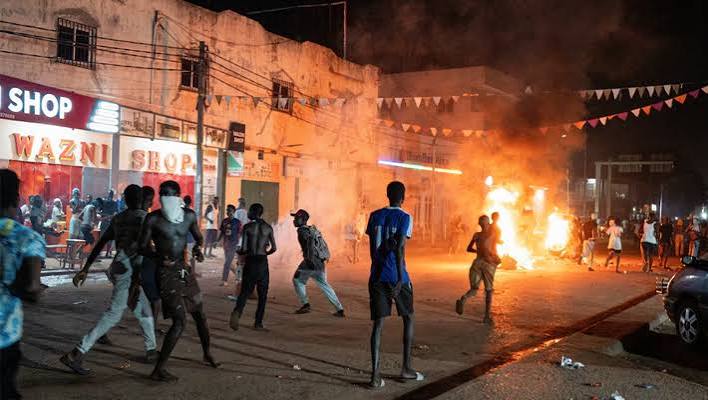
election. And it comes after nights of tear gas, burning tyres, and roadblocks in a country not known
for street unrest.
The trigger is simple: some Gambian communities have gone up to 48 hours without power in peak
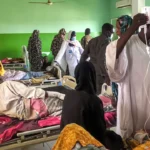
heat. Refrigerators, water pumps, small businesses, hospitals — all offline. Voters are furious, and
they are demanding Barrow step aside before December’s vote.
Barrow’s emergency decree unlocks fast-track procurement and bypasses several tenders. He
announced a 24-megawatt generation unit is being rushed in by end of October and pledged a
further 50-megawatt solar plant to follow. Whether either lands before the election is another
question entirely.
The energy shortfall has been years in the making. National electricity utility NAWEC has struggled
with aging infrastructure, unpaid subsidies, and dependence on imported heavy fuel oil whose price
has climbed sharply amid the ongoing Strait of Hormuz crisis. Recent generator breakdowns have
pushed the deficit past the point where load-shedding could hide the problem.
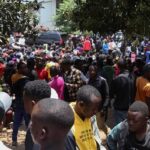
Police fired tear gas to disperse demonstrators in the Banjul area over the weekend, an unusual sight
in a country that has enjoyed relative calm since the peaceful transfer of power in 2017. Videos
circulating on Gambian social media show young men chanting “no light, no vote” while dragging
tyres onto main roads.
For Barrow, the political stakes could not be higher. He is seeking a third term. Opposition figures —
sensing an opening — have descended on the capital, framing the blackouts as evidence of
institutional decay under his National People’s Party.
For the broader region, Gambia’s crisis is a warning. West African grids from Freetown to Bissau are
running on the same aging generators, the same fuel-price exposure, and the same underfunded
utilities. Any of them could be next.
International lenders are watching. The African Development Bank has floated emergency financing
options, and Morocco — an increasingly active player in West African infrastructure — has quietly
offered technical assistance. Neither is a fix for the next 48 hours.
The emergency declaration also gives Barrow legal cover to negotiate directly with private power
producers without going through the slower legislative process. Expect a rush of memoranda in the
coming weeks.
The immediate question, though, is not economic. It is whether the streets calm down. If Banjul stays
hot after this announcement, the calculation in Barrow’s camp about whether he can survive
December’s vote begins to shift.