
The fragile new ceasefire between Israel and Lebanon was bleeding before it even took
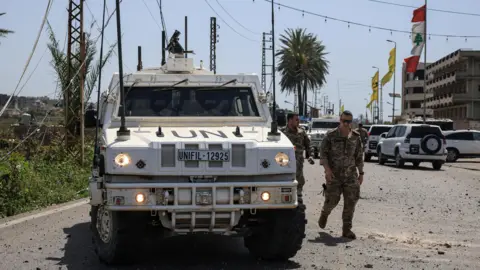
hold. A United Nations Interim Force in Lebanon (UNIFIL) peacekeeper died in the early
hours of Thursday from injuries sustained when mortar shells struck his position near
Marjayoun in southeastern Lebanon, the mission confirmed in a statement.
Two other peacekeepers were wounded in the same attack and are receiving treatment
at a UNIFIL medical facility. The critically injured soldier was airlifted to a hospital in
Beirut, where he succumbed to his wounds, the mission said.
The death lands at the worst possible moment. Hours earlier, Washington had
announced that Israel and Lebanon had agreed to implement a renewed ceasefire deal
meant to halt months of cross-border fighting between the Israeli military and Hezbollah.
Within the same news cycle, an international peacekeeper was dead.
UNIFIL said it has opened an investigation to determine where the shells originated,
stressing that deliberate attacks on peacekeepers are “grave violations of international
humanitarian law” and of UN Security Council Resolution 1701. Such attacks, the
mission warned, “may amount to war crimes.”
Neither Israel nor Hezbollah immediately claimed responsibility for the strike. But the
location of the impact, the timing relative to the ceasefire announcement, and the
continued exchanges of fire across the Blue Line have raised hard questions about
whether either side actually intends to honor the deal on the ground.
Lebanese President Joseph Aoun acknowledged in remarks earlier in the day that
Israeli strikes were still being recorded inside Lebanese territory, even as Lebanese
officials publicly accepted the truce framework. Israel, for its part, has continued to
argue that it retains the right to respond to what it calls Hezbollah provocations.
For diplomats, the killing of a peacekeeper is the kind of incident that can collapse a
ceasefire in 24 hours. UNIFIL has been bleeding personnel for months — Thursday’s
death is the latest in a string of peacekeeper casualties in southern Lebanon since the
war reignited last year. Each incident chips away at the political space leaders need to
keep their soldiers from shooting.
There are also wider stakes. The Lebanon ceasefire is one piece of a larger Trump
administration push to lower the temperature across the Middle East, even as parallel
talks with Iran remain in flux and the Pentagon launches a joint inspector general review
of the US war footing in the region. A failed truce in southern Lebanon would feed
straight into that uncertainty.
On the ground in Marjayoun, residents described a night of intermittent shelling that did
not feel like a ceasefire at all. Local officials said roads near the UNIFIL position were
sealed off through the morning as the wounded were evacuated. A spokesperson for
the mission, speaking from Beirut, said only that “the situation remains tense and we
are urging maximum restraint from all sides.”
The dead peacekeeper’s nationality has not been released, pending notification of
family. UNIFIL is a multinational force drawing personnel from dozens of contributing
countries, and a confirmed nationality will almost certainly trigger statements from that
government — and potentially fresh diplomatic pressure on whichever party is found to
be responsible.
For now, the test is brutally simple: can the new ceasefire survive its first sunrise? The
body of a UN soldier in a Beirut morgue suggests the answer is already in doubt. The
next 48 hours, with international monitors descending on the south and capitals
weighing their responses, will tell whether this truce becomes a turning point — or
another line on the long list of agreements that died on the Blue Line