

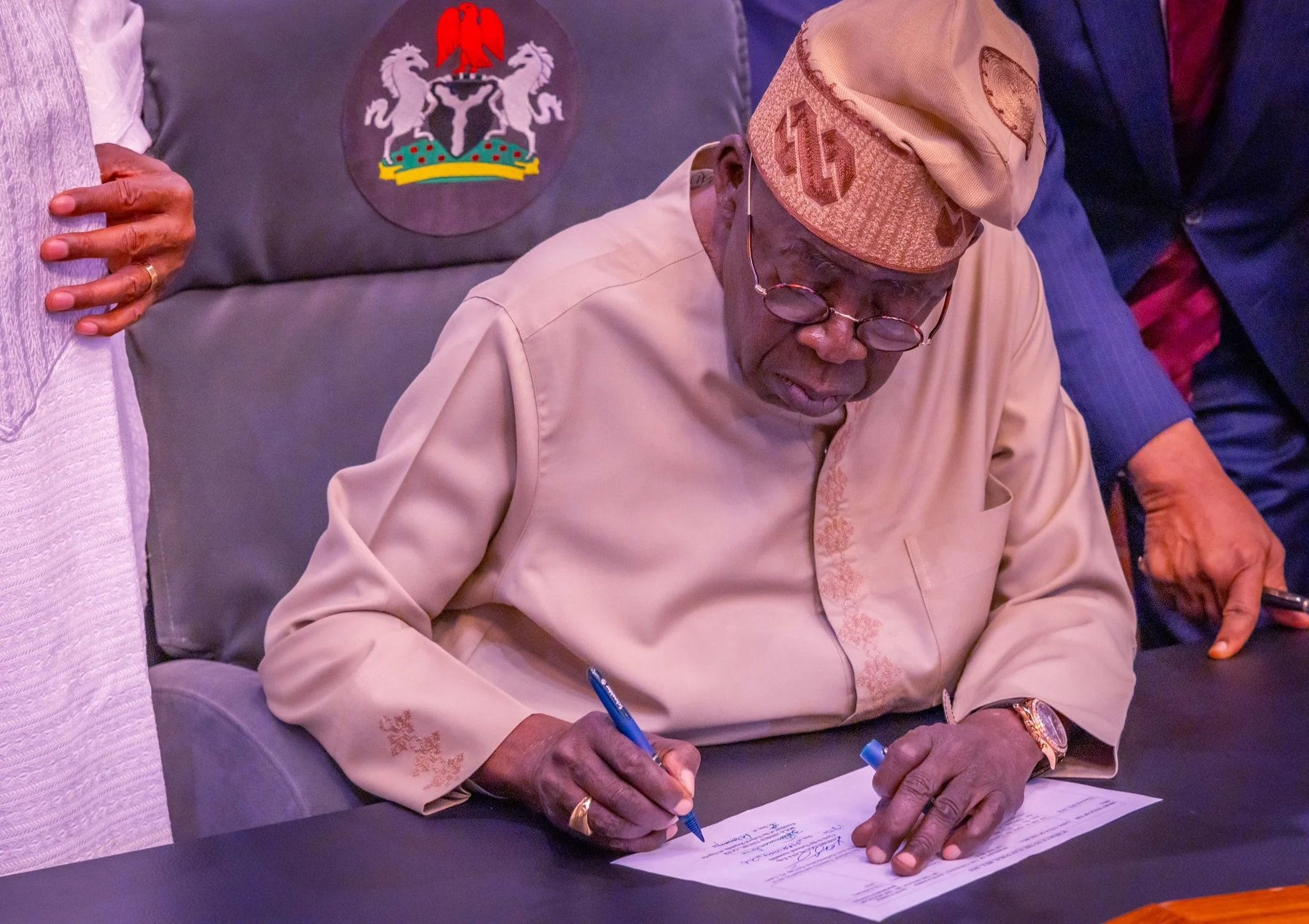
President Bola Tinubu has signed the Electoral Act Amendment Bill 2026 into law, a decision that has divided the country and drawn fierce criticism from civil society groups, opposition parties, and pro-democracy advocates who describe it as a setback for credible elections.
The legislation was passed through a chaotic National Assembly session, during which the House of Representatives rescinded an earlier clause mandating real-time electronic transmission of election results directly to INEC’s Result Viewing Portal (IReV). The final version retains a combination of electronic and manual systems, with physical forms serving as a fallback when electronic transmission “fails” — but the law does not define what constitutes failure, who certifies it, or what consequences apply to officials who declare or engineer such failures.
Police fired tear gas at protesters who had gathered at the National Assembly complex to demand mandatory electronic transmission. The House of Representatives later apologised, describing the incident as “regrettable.”
The Africa Democratic Congress called the signing a “death warrant on credible elections,” while Catholic Bishop Matthew Kukah and the civic organisation Yiaga Africa separately criticised the President’s swift assent. Supporters, including FCT Minister Nyesom Wike, argued the law puts an end to “unnecessary protests by individuals preparing excuses for electoral defeat.”
With INEC already releasing the timetable for the 2027 general elections, the stakes could not be higher. Analysts warn that the law’s undefined loopholes for electronic transmission failures effectively preserve the institutional discretion that made the disputed 2023 elections possible.