
Kenya is heading into one of the most politically charged weeks of President William
Ruto’s presidency, and his opening move has already backfired. Speaking this morning,
Ruto announced a Sh2 billion (around $15.5 million) compensation package for 1,100
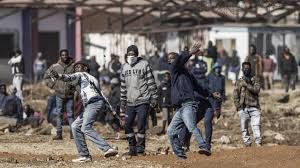
people affected by violent protests between 2017 and 2025, including the Gen Z-led
demonstrations that paralysed Nairobi in 2024. He stopped short of an apology, calling
the money “an acknowledgement that harm occurred.”
Within hours, families of the dead and injured were on television rejecting the offer.
“Peanuts,” said Gillian Munyao, whose son was killed during the June 2024 storming of
Parliament. “No accountability, no names of the officers who pulled the triggers, just
money to keep us quiet.” Lawyer Nick Karanja, who represents several victim families,
called the package “a smokescreen” timed to dilute the protest energy expected this
Thursday.
Thursday, June 25, marks the second anniversary of the day Kenyan youth, organised
almost entirely on TikTok and X, breached Parliament in protest of the Finance Bill
At least 60 people were killed in the security forces’ response, according to the
Kenya National Commission on Human Rights. Hundreds more were injured. Many
remain unaccounted for, with families still searching mortuaries.
Two years later, the wounds have not closed. And the political conditions that produced
the 2024 uprising are returning. Ruto’s ruling Kenya Kwanza coalition pushed the
Finance Bill 2026 through Parliament last week, and the document is now sitting on his
desk awaiting signature. The bill contains new VAT provisions, an expanded digital
services tax, and adjusted excise duties on alcohol and fuel that Gen Z organisers say
will once again squeeze the poor.
Memorial protests are scheduled in Nairobi, Mombasa, Kisumu, Eldoret and Nakuru on
June 25, with a larger Saba Saba rally planned for July 7. Organisers told local media
this morning that the compensation announcement, far from defusing the anger, has injected new energy into the mobilisation. “He thinks Sh2 billion buys our silence,” one
organiser told Citizen TV. “It buys nothing.”
Ruto’s political problem is structural. Polling by TIFA Research published this month
showed his approval rating at 22%, the lowest of any Kenyan president since polling
began. The coalition with Raila Odinga’s ODM, intended to broaden his base, has so far
failed to translate into popular support. Inside State House, advisers privately concede
that the compensation package was a defensive move designed to take the edge off the
Thursday protests, not a serious truth-and-reconciliation gesture.
The opposition has piled on. Former Chief Justice David Maraga, now widely seen as a
2027 presidential contender, said the announcement “insults the memory of every
Kenyan killed for daring to demand accountable governance.” Martha Karua, who has
been campaigning with civil society groups, said justice “cannot be priced at Sh1.8
million per life.” The Kenya Human Rights Commission demanded a formal public
inquiry and the prosecution of named officers.
International observers are watching. The UN Office of the High Commissioner for
Human Rights, the EU delegation in Nairobi, and the US State Department all issued
statements this morning urging Kenyan security forces to allow peaceful protest and
refrain from live ammunition. Memories of 2024, when officers were filmed shooting
unarmed demonstrators inside Parliament’s compound, remain raw in foreign
chancelleries.
Business is bracing. The Nairobi Securities Exchange opened slightly lower this
morning, with the all-share index down 0.6%. Major employers in Westlands and the
Upper Hill business district have already told staff to work from home on June 25.
Insurance companies are adding political-violence riders to commercial policies, while
the Central Bank is reportedly monitoring shilling liquidity in case of disruption.
Watch three things over the next 48 hours. First, whether Ruto signs the Finance Bill
2026 before Thursday. Signing it before the anniversary would be incendiary; sitting on
it could be read as weakness. Second, whether Police Inspector-General Douglas
Kanja issues a public commitment to non-lethal crowd control. Without it, organisers
say, they are preparing for the worst. Third, whether Raila Odinga, the veteran
opposition leader now inside government, breaks his silence. If he distances himself from Ruto’s protest response, the Kenya Kwanza-ODM coalition could fracture by week’s end.
Ruto came into office promising to be the president of the hustler nation. Two years
after Gen Z forced his predecessor’s playbook into the dustbin, he is being asked the
same question they asked then: are you listening? His Sh2 billion answer suggests he
still isn’t.