

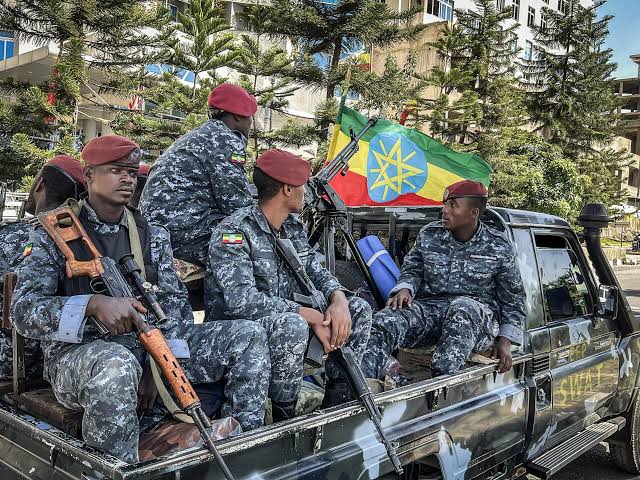
Russia has delivered a fresh batch of fighter jets to Ethiopia and agreed to sell Addis
Ababa an air defense package, in a move that is reshaping the balance of power on
the Red Sea in real time. The deal, which Russian officials have offered to pair with a
mediation role between Ethiopia and Eritrea, has surfaced in reporting this morning
and marks Moscow’s deepest military footprint in the Horn of Africa in a generation.
The timing is explosive. Ethiopian Prime Minister Abiy Ahmed has just put his
cabinet ministers through compulsory military training, framing it as a leadership
drill. Diplomats in the region read it as something else: a government putting its
civilian wing on a war footing while fighting continues in Tigray, Amhara and
Oromia, and tensions escalate with neighboring Eritrea.
At the same time, more than 50,000 Ethiopians have poured across the border into
Kenya’s Moyale over the past two weeks, fleeing clashes that the UN refugee agency
says are still intensifying. UNHCR has deployed an emergency team, Kenya Red
Cross is running six camps, and local host communities are showing the first signs of
strain.
What makes the Russian arms delivery so significant is the geography. Ethiopia is
landlocked and has been openly pushing for sea access through either Eritrean or
Somali coastlines, a demand that nearly tipped the region into open war last year.
New Russian jets and air defenses give Addis Ababa leverage it did not have twelve
months ago.
For Eritrea’s President Isaias Afwerki, Moscow’s offer to mediate reads as the fox
volunteering to guard the henhouse. Asmara maintains close security ties with the
UAE and, more quietly, with Egypt, both of which view a militarized Ethiopia with
alarm. Egypt in particular has not forgotten the Grand Ethiopian Renaissance Dam
dispute, and sees any Ethiopian hard-power upgrade as directly threatening to Nile
security.
Western capitals have gone quiet. Washington’s attention is split between Ukraine,
the Red Sea shipping crisis and the U.S. midterms. The African Union has not issued
a public statement on the Russian deliveries, and the UN Security Council has no
session scheduled on the Horn this week.
On the ground, the human cost is already piling up. Moyale residents in Kenya
report hearing sustained gunfire across the border through the weekend. Aid
agencies are appealing for roughly Sh1.16 billion, about 8.9 million U.S. dollars, to
feed, shelter and treat the new arrivals. The IOM has warned that if the pace of
displacement holds, local services will collapse within weeks.
The deeper worry is that this is only the opening move. If Russia follows jets with
ground-based advisors, as it has done in the Sahel, Ethiopia’s internal conflicts and
the Eritrea standoff could become proxy theatres in a wider Moscow-versus-the West competition that has already consumed Mali, Burkina Faso, Niger and the Central African Republic.
For now, the civilians running toward Kenya are the loudest signal on the map. The next one will likely come from the sky.