

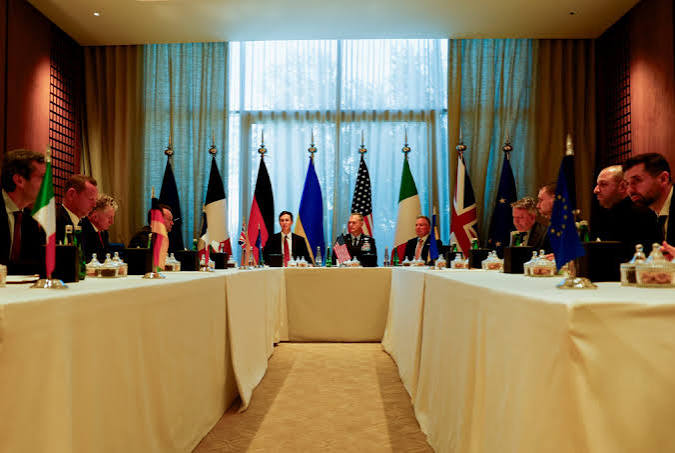
Delegations from Russia and Ukraine sat down again in Abu Dhabi on Wednesday for a second
consecutive day of US-mediated peace talks, the most sustained diplomatic engagement between the
two warring neighbours in nine months.
The talks, convened by Washington and hosted by the United Arab Emirates, opened on Tuesday and
are the first direct, multi-day negotiations since February. US envoys returned to the hotel venue in the
early hours of Wednesday morning, with both Moscow and Kyiv confirming within the last several hours
that discussions would continue.
On the agenda today: a fresh prisoner exchange, humanitarian corridors, and the thornier question of
long-term security guarantees for Ukraine. Officials familiar with the opening session say the two sides
spent most of Tuesday arguing over the sequence of any deal — whether a ceasefire must come before
territorial talks, or the other way around. That dispute has derailed earlier rounds.
A senior US official briefing reporters on condition of anonymity called the first day “productive” but
warned that “significant work remains.” The Kremlin publicly struck a similar note, with its spokesman
saying progress was possible but not guaranteed. Ukraine’s delegation, led by senior presidential staff,
has pushed for firm security commitments — ideally backed by Washington and European capitals —
before any concession on territory held in the east.
The backdrop is ugly. Overnight, Russian drones again struck energy infrastructure across several
Ukrainian regions, and Ukraine answered with a long-range strike on a refinery inside Russia. Neither
side appears willing to pause attacks while diplomats talk, a pattern that has haunted every previous
attempt at negotiation.
Still, the fact that the talks have survived into a second day matters. Earlier rounds in Abu Dhabi
collapsed within hours after procedural disputes. This time, US envoy Steve Witkoff reportedly pressed
both delegations to stay in the room, and Emirati hosts have provided back-channel shuttle diplomacy
between the two groups, who are not meeting face-to-face but through intermediaries.
Prisoner swaps may be the easiest early win. Previous Abu Dhabi talks produced a 314-prisoner
exchange in February, and officials from both sides have hinted a similar deal is close. Families of
Ukrainian service members held in Russia gathered in Kyiv on Tuesday evening, waiting for news.
The harder question is what any eventual deal would look like. Moscow continues to demand Ukrainian
withdrawal from the full Donbas region and formal neutrality — conditions Kyiv has repeatedly refused.
Ukraine wants a path to EU membership, Western weapons guarantees, and reparations.
European leaders are watching closely. Several have voiced concern about being sidelined by a bilateral
US-Russia track, with French and German officials pressing for a seat at any future table. In Washington,
the Trump administration has framed the Abu Dhabi process as proof its hands-on approach is working,
though critics in Congress argue the outcome still looks far away.
Analysts urge caution. “Two days of talking is not peace,” one European diplomat told reporters on the
sidelines. “It is a window. How wide it opens depends on what happens in the next 24 hours.”
Talks are expected to wrap by Wednesday evening local time, with a joint statement — or notable
silence — likely to signal whether a third round will follow.