
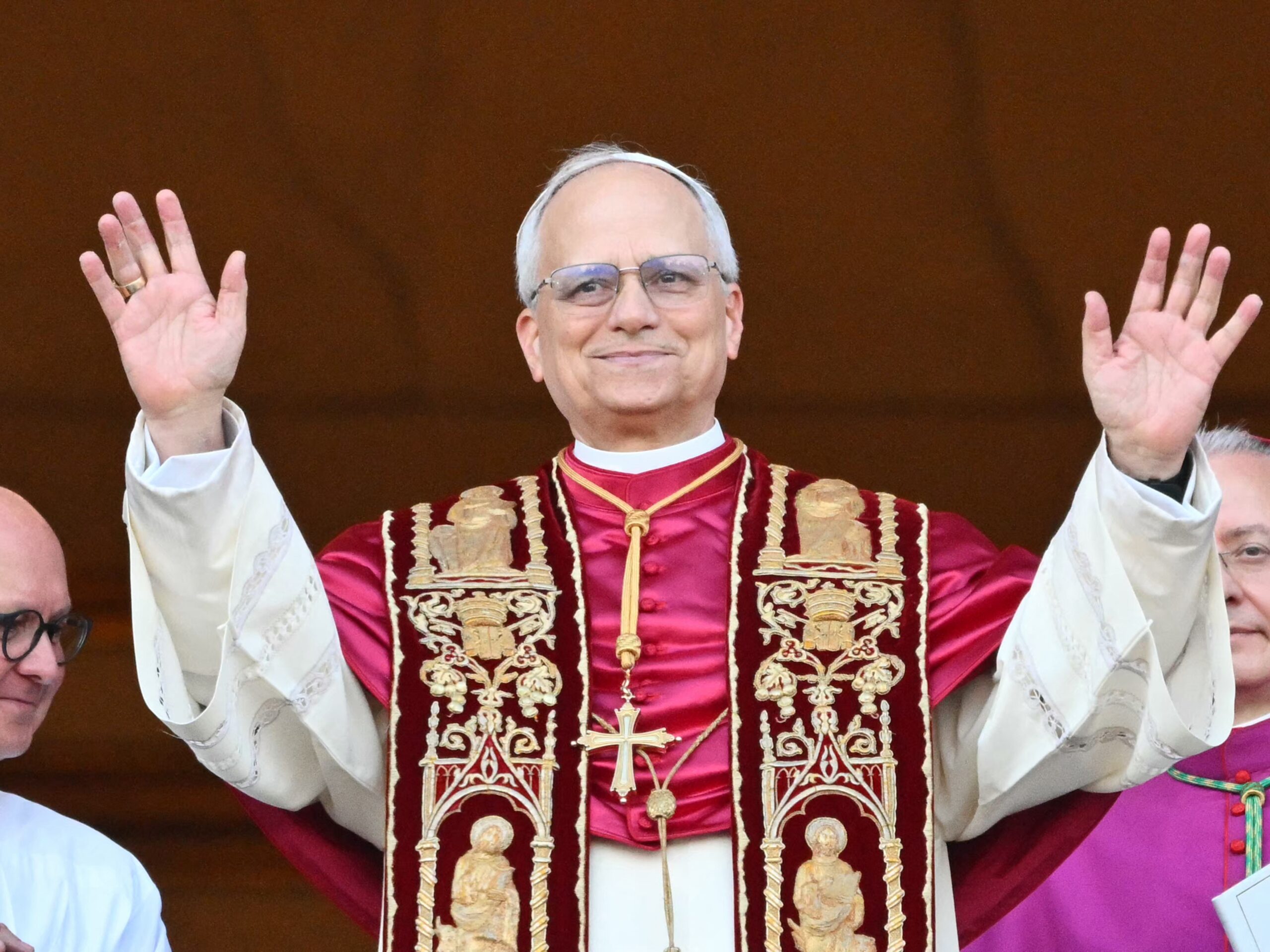
The Vatican announced today that Pope Leo XIV will embark on his first major overseas trip of 2026 – an ambitious 11-day apostolic journey across four African nations from April 13 to 23. The tour will take the 70-year-old pontiff through Algeria, Cameroon, Angola, and Equatorial Guinea, marking one of the most extensive papal travel itineraries in recent years.
It is a trip loaded with symbolism. Leo XIV, elected last May as the first American-born pope in history, will become the first pontiff ever to visit Algeria – a predominantly Muslim nation of 47 million people with only a few thousand Catholics. The stop carries deep personal significance for Leo, a member of the Augustinian religious order. Algeria is the birthplace and final resting place of St. Augustine of Hippo, the 5th-century theologian who remains one of the most influential figures in Christian thought and the patron saint of Leo’s order. The Pope will visit Algiers and Annaba during the April 13–15 leg.
From Algeria, the journey moves to Cameroon (April 15–18), where Leo will visit Yaoundé, Bamenda, and Douala. The inclusion of Bamenda, in Cameroon’s Anglophone northwest, is particularly notable. The region has been engulfed in a decade-long separatist conflict between government forces and armed groups seeking independence for the English-speaking minority. The Pope is expected to make direct appeals for peace and dialogue – a gesture that will resonate far beyond the country’s borders.
The tour then proceeds to Angola (April 18–21), with stops in Luanda, the sacred Marian shrine of Muxima, and the diamond-mining city of Saurimo. Angola last received a papal visit in 2009 under Pope Benedict XVI. The final leg takes Leo to Equatorial Guinea (April 21–23), the continent’s only Spanish-speaking nation, where he will visit Malabo, Mongomo, and Bata. It will be the first papal visit to the country in 44 years, since John Paul II in 1982.
Why Africa, Why Now?
The timing is deliberate. Africa is home to roughly 20% of the world’s 1.4 billion Catholics, and the continent represents the fastest-growing region for the Catholic Church globally. Eighteen African cardinals were among the 135 who voted in the conclave that elected Leo last May, underscoring the continent’s growing influence in global Church governance.
Unlike his predecessors, Leo XIV is described as the first pope in modern history with firsthand knowledge of Africa, having previously visited Eastern, Western, Southern, Northern, and Central Africa in person. Church observers say the journey is designed to spotlight countries that have experienced rapid religious growth but continue to face significant political and economic challenges.
The trip also comes at a moment of heightened geopolitical tension on the continent. U.S. aid cuts, rising Chinese investment, and ongoing security crises across the Sahel and Central Africa have reshaped the landscape. The Pope’s presence – and his expected calls for development, peace, and Catholic-Muslim dialogue – will carry weight well beyond the spiritual realm.
The Africa tour is just one piece of an extraordinarily busy first half of 2026 for the pontiff. Before heading to the continent, Leo will make a one-day visit to the Principality of Monaco on March 28 – the first papal visit to the microstate in modern history. In June, he heads to Spain for six days, including a stop in Barcelona to inaugurate the newest and tallest tower of the Sagrada Familia basilica.
A grand tour of Italy is planned for May, and later in 2026, the Pope is expected to visit Peru – where he served as a missionary and bishop for decades before his election. Notably, the Vatican has confirmed Leo will not visit the United States this year, even as the country marks its 250th independence anniversary on July 4. Instead, on that date, the Pope will be in Lampedusa, the Italian island that serves as the primary arrival point for African migrants crossing the Mediterranean.
After the 2025 Holy Year drew 33 million pilgrims to the Vatican, Leo XIV is now free to take his message on the road. And the message he is choosing to deliver first, to the world’s youngest and fastest-growing Catholic population, speaks volumes about where he believes the future of the Church lies.