

The Permanent Court of Arbitration in The Hague has dismissed Rwanda’s bid to
extract more than £60 million ($80 million) from the United Kingdom over the cancelled
Rwanda asylum deal, in a ruling that closes the last major legal chapter of one of
Britain’s most controversial migration experiments.
The three-judge panel ruled by majority on Monday that diplomatic notes exchanged in
November 2024 effectively settled the matter: Kigali, the tribunal found, had “agreed to
forgo any additional payments” by the UK in April 2025 and April 2026. In plain English,
Rwanda waived its right to more money — and cannot now claim it back.
For President Paul Kagame’s government, this is a blow. Kigali had been seeking at
least £60 million in residual compensation, and at one point pushed for as much as
£106 million, arguing that Britain still owed the balance of the original agreement even
after Prime Minister Keir Starmer’s Labour government tore it up on its first day in office
in July 2024.
For London, it is a quiet but significant win. Britain has already paid Rwanda roughly
$390 million to set up the scheme, even though only four asylum seekers ever travelled
there voluntarily before the plan collapsed. Tuesday’s ruling means no more public
money will flow under the deal — a politically valuable line for Starmer as the Reform
UK opposition continues to hammer Labour on migration.
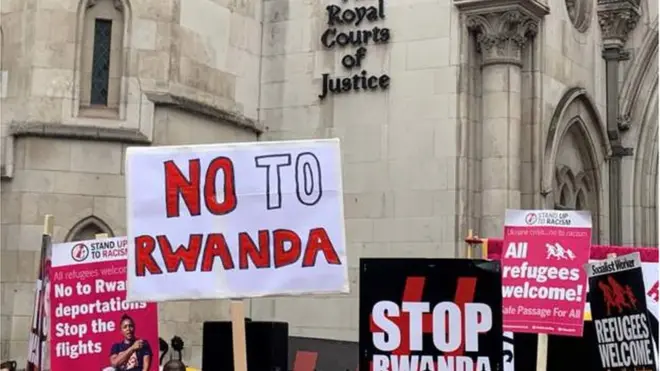
The Rwanda scheme, first signed under Boris Johnson in 2022 and pushed through
under Rishi Sunak, was always more political theatre than functioning policy. It was
struck down by the UK Supreme Court, revived by emergency legislation, then killed off
entirely by Labour. The Hague case was Kigali’s last shot at recouping value from a
partnership that was supposed to position Rwanda as a regional migration hub.
Reaction from Kigali was measured. Government officials said they would study the full
judgment before commenting, but pointed out that the tribunal did not find Rwanda had
acted in bad faith — it simply held Kigali to the wording of its own diplomatic notes.
Opposition figures inside Rwanda, mostly based abroad, were less restrained, calling
the ruling a humiliation for a government that had bet heavily on the UK relationship.
The verdict also lands at an awkward moment for the African Union, which has spent
the past year trying to push back against “externalisation” deals in which European
states pay African governments to handle their asylum problems. AU officials in Addis
Ababa privately welcomed the ruling on Monday night, telling reporters it sends a
warning to other capitals tempted by similar arrangements: the cheques can stop
flowing the moment European politics shifts.
For Britain, the broader question is what comes next. Starmer’s government has been
quietly exploring “return hubs” in the Western Balkans and is under pressure from
Reform UK to revive an offshore scheme of some kind. The Rwanda ruling makes one
thing politically easier: ministers can now point to a clean legal exit rather than an openended liability.
And for the four people who actually ended up in Kigali under the original deal? Their
stories largely fell out of the headlines long ago. The legal fight that followed them has
finally ended — not with a triumphant return, and not with a vindication of the scheme,
but with a Hague tribunal quietly telling Rwanda that the money is not coming.