
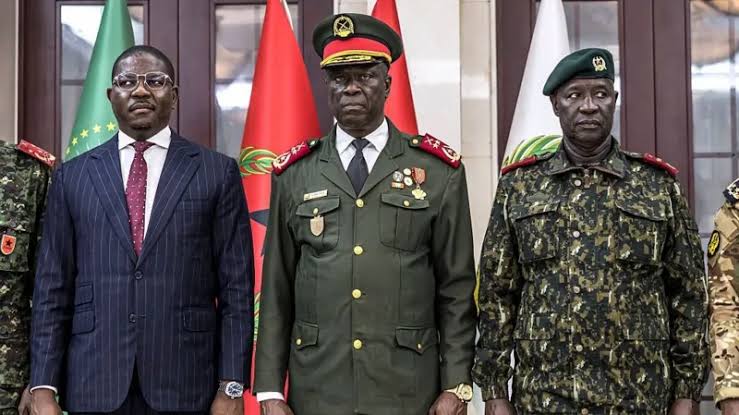
Guinea-Bissau’s military leaders have pushed the country’s long-promised elections back by
nearly two years, extending their rule until November 2028 and rewriting what was already
a fragile transition timeline.
A decree signed by the transitional presidency, confirmed in the past few hours, replaces
the December vote with one now scheduled for 26 November 2028 — essentially doubling
the length of military rule since the junta seized power last November. Officials cited “lack of
resources” and logistical shortfalls as the official reason, but few people in Bissau or in
regional capitals are buying that.
The move is a direct snub to ECOWAS. The regional bloc had publicly urged the junta to stick
to the one-year transition timetable and return the country to civilian democratic rule.
Diplomats in Abuja and Accra had been quietly warning for weeks that a slippage was
coming — but a two-year extension is on the severe end of what observers expected.
Guinea-Bissau’s instability is not new. The small West African state has endured roughly a
dozen attempted or successful coups since independence from Portugal in 1974. The latest
came last year, when the army removed Umaro Sissoco Embalo, who was seeking another
term in office. Since then, the transitional government has governed by decree, suspended
several political parties from activity, and cracked down on opposition media.
The opposition reaction has been immediate and furious. Leaders of the main prodemocracy coalition called the decree an “unconstitutional power grab” and demanded
ECOWAS impose targeted sanctions. Civil society groups have signalled protests in the
coming days, though the junta has already banned gatherings of more than 50 people in the
capital.
ECOWAS itself is in a tight spot. Its ability to punish juntas has been badly weakened by the
exits of Mali, Burkina Faso and Niger, which formed their own Sahel bloc after their own
coups. A hardline response to Bissau risks pushing it toward that camp. A soft response
signals that military takeovers in the region carry no real consequences. Expect an
emergency ECOWAS summit within days.
The economics make the picture more complicated. Guinea-Bissau’s cashew-dependent
economy — cashews account for roughly 90 percent of the country’s exports — is already
struggling with price volatility and smuggling. An extended political freeze will chill the little
foreign investment the country attracts, and donor patience is thin. The IMF package that
was being negotiated before the coup remains suspended.
Regional observers also note the timing. Guinea-Bissau sits uncomfortably close to the
Sahel’s expanding instability, and its coastline is a known transit zone for cocaine flowing
from Latin America into Europe. A longer period of unaccountable military rule, with
weakened civilian oversight, raises the risk that the country’s security services become
further entangled with trafficking networks — a problem that long predates the current
junta but which no civilian government has managed to break.
The United Nations Office for West Africa and the Sahel is expected to issue a formal
statement within hours. The African Union has been markedly quieter on recent West
African coups than it used to be, and today’s decree is a fresh test of whether it still has the
appetite to defend constitutional order.
For ordinary Bissau-Guineans, the practical message is bleak: the political pause continues.
Schools and hospitals, already under-funded, will see no new elected mandate to push
reform. Diaspora communities in Lisbon and Dakar — which had been preparing to mobilise
for a December vote — are reorienting overnight.
The junta insists the postponement is temporary and technical. But in a country where
“transitional” has a habit of becoming permanent, few are reassured.