
Africa’s richest man has offered Kenya, Uganda and Tanzania a 650,000-barrel refinery in Tanga — and the Iran war just made him impossible to ignore.
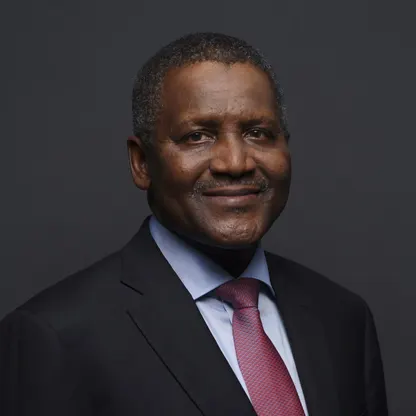
Aliko Dangote has done it again. At the inaugural Africa We Build Summit in Nairobi this week, Africa’s richest man stood in front of East African heads of state and offered to build them a crude oil refinery the size of his Lagos plant — 650,000 barrels per day, a four-to-five year delivery timeline, and a pipeline running from Mombasa to a new deepwater industrial complex in Tanga, Tanzania.
Kenya’s President William Ruto confirmed Friday that his government and Uganda’s are already in active discussions with the Dangote Group to make it happen. Tanzania, where the plant would actually sit, is expected to formally join the talks within weeks. If the deal crosses the line, it would be the single largest industrial investment in East African history.
The timing is not an accident. For the last two months, the US-Iran war has torn the normal East African fuel supply chain apart. The Strait of Hormuz remains closed to commercial traffic. Refined product shipments from the Gulf and from European refineries — which Kenya, Uganda, Tanzania and even parts of the DRC depend on — are backed up, rerouted or priced into the stratosphere. Brent is above $106 a barrel. Pump prices from Nairobi to Kampala have climbed for eleven straight weeks.
In that environment, Dangote’s pitch basically sells itself. The proposed Tanga complex would be designed to refine crude from the Democratic Republic of Congo, South Sudan, Kenya and Uganda — all landlocked or near-landlocked producers that currently ship raw crude out and import refined product back in at a massive premium. A single coastal refinery, fed by regional pipelines, would close that loop.
For Dangote personally, this is Round Two of an argument he has been making for a decade. His 650,000 bpd Lekki refinery in Nigeria, which finally hit full operating capacity in 2025, has turned Nigeria from a net importer of petrol into a modest net exporter — 44,000 barrels of gasoline shipped out per day in March, according to Vitol data. The business case he is now pitching to East Africa is: you have the crude, we have the playbook, copy what worked.
But there is a political layer underneath the business case. Kenya has been quietly steering away from dependence on refineries in the Gulf since the start of the Iran conflict. Tanzania’s President has openly talked about East Africa’s ‘Hormuz exposure.’ The DRC, flush with a fresh $1.25 billion Eurobond priced this week, is looking for its first downstream partnership. Every piece on the board is nudging the same direction.
The obstacles are real. A multi-country refinery needs a multi-country equity structure, a multi-country regulatory framework and a cross-border pipeline concession — a category of deal that East Africa has historically failed to execute. The East African Crude Oil Pipeline between Uganda and Tanzania took almost fifteen years of wrangling and only broke ground after a chain of compromises that still irritates all three governments. Dangote is asking for something bigger and faster.
There is also the question of where the money comes from. $18-$22 billion in project financing, some of it likely from the Africa Finance Corporation that hosted the summit, some from Gulf sovereigns ironically fleeing their own instability, and possibly a tranche from Chinese policy banks. Dangote’s own group would take the equity lead but he has been explicit: three or four regional governments need to be co-signers before ground breaks.
For African audiences watching this on TikTok and Facebook, the story is simple. A Nigerian billionaire just offered East Africa an exit ramp off the Middle East oil rollercoaster, and the region’s presidents are actually saying yes in public. Whether it becomes steel in the ground or dies in a committee meeting is now the real question of 2026.
One more detail worth noting: Dangote set a four-to-five year timeline. That puts first oil at Tanga right around 2030 — a date that is already starting to feel, quietly, like the decade every African resource economy was racing toward.