
President Donald Trump declared the war with Iran “effectively over” in remarks delivered this morning
in Washington, only for Tehran to publicly deny within hours that any negotiations or ceasefire
framework had been agreed. The contradictory statements — issued less than six hours apart — left
capitals across the Middle East, Europe and Asia scrambling to work out what, if anything, has actually
changed.
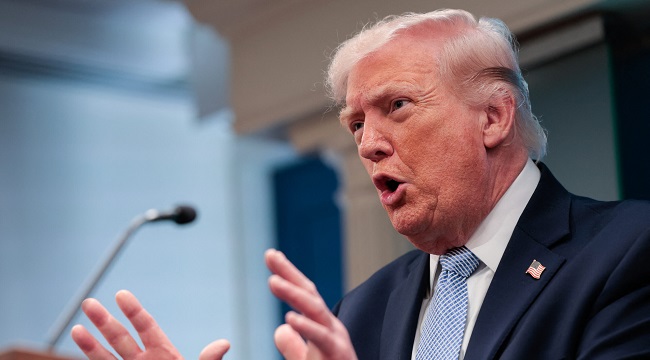
Trump made the comments to reporters on the White House South Lawn on his way to a separate
event, saying the United States had “fixed” the Iran problem and that Tehran was now “ready to talk.”
He offered no detail on who was negotiating, what the terms would be, or how a deal would be verified.
He added, characteristically, that the agreement would be “the greatest ever.”
Iran’s foreign ministry responded with a terse statement carried on state media. A spokesman said no
talks had been scheduled with Washington, no envoys had been dispatched, and no understanding had
been reached. Supreme National Security Council chief followed up with a stronger line, insisting that
Iran would not permit any enriched nuclear material to leave its territory under any arrangement,
current or proposed.
The gap between the two statements is more than semantic. Oil prices, which had briefly fallen on
Trump’s remarks, bounced back once the Iranian denial landed. European foreign ministries, already
preparing contingency papers for a possible renewed strike exchange, paused their work mid-draft.
Israeli officials, caught off guard, requested urgent clarification from Washington.
The confusion reflects a wider truth about the Iran file under this second Trump administration: policy is
often announced before it is agreed. In June, a limited US-Israel strike on Iranian nuclear sites was
followed by weeks of rhetorical back-and-forth that produced, eventually, a shaky de-escalation. The
President has referred to that episode as a win. Tehran, for its part, maintains the strikes damaged its
program only marginally and insists enrichment has resumed.
What appears to have prompted this morning’s comments is a meeting earlier in the week between
Trump and Qatar’s prime minister, Sheikh Mohammed bin Abdulrahman al-Thani, at the White House.
Doha has quietly been passing messages between Washington and Tehran for months. According to people familiar with the exchanges, the Qataris believe a narrow framework for dialogue is possible,
though they stop well short of calling it a deal.
Inside Iran, hardliners seized on Trump’s statement as proof of US overreach. Reformists, who have long
argued for engagement, found themselves awkwardly aligned with a denial they would normally resist.
The Iranian currency, the rial, which had briefly strengthened on reports of possible US-Iran dialogue,
lost ground again in Tehran’s open market.
European officials are frustrated. France, Germany and the UK — the so-called E3 — have spent much of
this year trying to keep the IAEA engaged with Iran and are unwilling to accept a separate, bilateral deal
that cuts them out. A joint statement from the three foreign ministries is expected later today.
Analysts urge treating Trump’s comments as a signal rather than a fact. “He is saying what he wants to
be true,” said one former US State Department official. “It is not necessarily what has been agreed, and
in this administration those two things are often weeks apart.”
Still, there is something to the signal. US-Iran dialogue, even indirect, is being taken more seriously than
at any point since the early summer strikes. Whether it produces a deal, a ceasefire framework, or
merely a quieter autumn, will become clearer in the coming days. For now, the official position of one
side is that the war is over. The official position of the other is that there is nothing to end.