

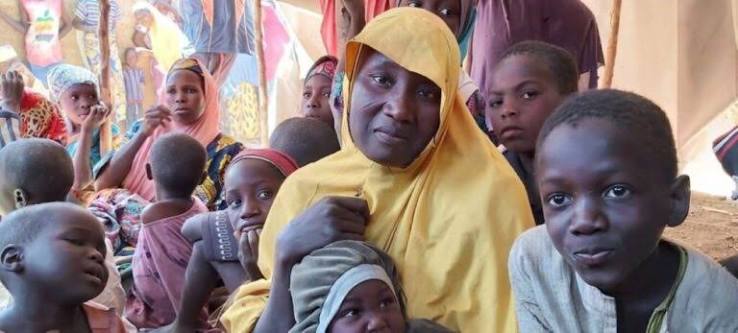
More than 64,000 Nigerians have fled escalating violence in the country’s north and crossed into
neighbouring Niger, with several hundred more arriving in Benin, the United Nations refugee agency
said in a fresh appeal released this morning.
The UNHCR said it urgently needs $11.4 million to meet the humanitarian needs of the new arrivals and
host communities, and warned that only about five percent of this year’s Nigerian arrivals have been
formally registered. Without registration, families cannot access food rations, medical care, identity
documents, or legal protection.
The appeal, issued within the last several hours, lands at a politically combustible moment. President
Bola Tinubu’s administration is under rising pressure over insecurity, and a United States congressional
hearing on attacks on Christians in Nigeria is scheduled for Thursday in Washington — an event that
could reshape the diplomatic conversation around aid and sanctions.
UNHCR officials said the surge of arrivals has been driven by a combination of jihadist attacks, bandit
raids and inter-communal violence across Borno, Zamfara, Sokoto and Katsina states. Many of those
fleeing describe walking for days with children and whatever possessions they could carry, crossing
poorly marked bush borders into communities that are themselves among the poorest on earth.
Niger, already hosting more than 300,000 refugees from across the Sahel, is struggling to absorb the
new wave. The government in Niamey, isolated diplomatically since its 2023 coup, has said publicly that
it welcomes fleeing Nigerians but has quietly told aid agencies it cannot pay for schools, water or
shelter.
Benin, further to the south-west, has seen smaller numbers but a sharp recent uptick. Local officials in
the border town of Malanville reported dozens of families arriving in the past week alone, several with
gunshot wounds.
Inside Nigeria, the response has been muted. Information Ministry officials point to ongoing military
operations in the north-east and north-west, and insist the security situation is “stabilising.” But civil
society groups and former officials disagree. Former President Olusegun Obasanjo, in sharp remarks that
drew attention overnight, said the Tinubu administration had “failed Nigerians” and urged voters not to
re-elect him in 2027.
For families on the move, politics is a luxury. “We left at night,” one mother told aid workers at a
reception centre near Maradi, Niger. “They came on motorbikes. They burned the houses. I don’t know
where my husband is.”
The UNHCR warned that if the $11.4 million gap is not closed, protection operations could be scaled
back in the coming weeks, just as the dry season — historically the peak period for cross-border attacks
— begins. A reduction in services would push unregistered families further into the informal economy,
where they are vulnerable to trafficking and forced recruitment by armed groups.
International donors have so far been cautious. Attention and funding have been drawn to Sudan, Gaza
and Ukraine, leaving West Africa competing for the scraps. Diplomatic sources in Abuja say the US
congressional hearing on Thursday could unlock new American attention — or, depending on how it
plays, new punitive measures against the Tinubu government.
What is clear this morning is that the 64,000 figure is already outdated. UNHCR officials expect it to rise
sharply through November. Whether Nigeria’s neighbours — and the wider world — have the will to
respond is an open question.