
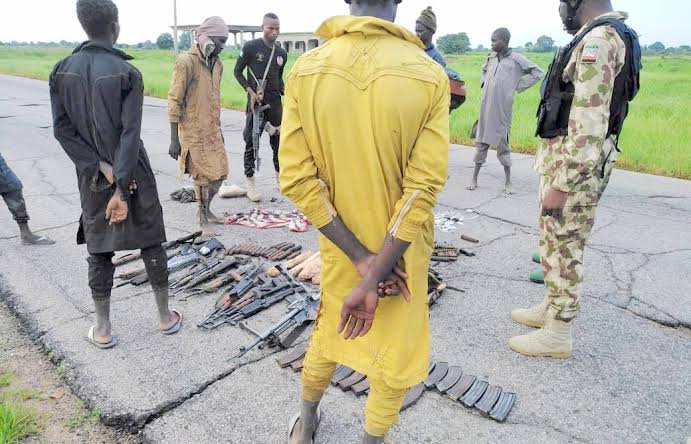
Nigeria’s military has publicly ruled out any ceasefire with Boko Haram or the Islamic State
West Africa Province (ISWAP), signalling that the sustained offensive across the North-East will
continue despite months of speculation about back-channel talks. The position was made clear
during an intelligence briefing in Abuja, with Major-General Samaila Uba, the military
spokesperson, delivering what officers described as the firmest public rejection of negotiations in
recent memory.
The statement lands against an unusually sensitive backdrop. Earlier this year, reporting from
international outlets alleged that elements of the Nigerian government had quietly agreed a threemonth truce with a faction of Boko Haram, a claim Abuja never fully addressed. Today’s
position from Defence Headquarters appears designed to kill that narrative at the root: officially,
there is no ceasefire, there will be no ceasefire, and operations will not pause.
Military commanders argue that the groups have been battered in recent months, with fighters
pushed deeper into the Lake Chad fringes and key logistical nodes disrupted. Troops have
intensified ground and air operations in Borno, Yobe and parts of Adamawa, and senior officers
insist the momentum is finally running in the army’s favour. A truce now, they say, would hand
the insurgents the one thing they need most — time.
The political calculation is just as sharp. President Bola Tinubu is in Akwa Ibom today to
commission projects, with an APC rally scheduled in Rivers State on Saturday. Any suggestion
that his administration is softening on terror groups would be politically toxic, particularly as the
2027 election cycle begins to take shape and opposition figures are already circling the security
record.
Still, the picture on the ground is messier than the official line suggests. ISWAP continues to
stage raids across the Lake Chad basin, while Boko Haram factions have been reported to be
regrouping under new leadership alignments. Civilians in affected communities say that while
large-scale attacks have dipped in some corridors, kidnappings, extortion and night-time raids
remain a daily reality.
Humanitarian agencies are watching the rhetoric nervously. A no-ceasefire posture, they argue,
must still allow for limited humanitarian corridors — safe passage for food, medicine and
displaced persons — or else the civilian toll of the conflict will keep climbing. The United
Nations has flagged funding gaps that could shutter clinics serving tens of thousands in the
region within weeks.
For the military, the message today is one of resolve. For the insurgents, it is a warning that any
assumption of a negotiated breather has been pulled off the table. And for the millions of Nigerians living in the shadow of the insurgency, it is a reminder that the war in the North-East
is nowhere near over — even if it has slipped off the front pages.
What happens next will depend on whether operations on the ground match the firmness of the
rhetoric in Abuja. The army has promised more offensives in the coming weeks, with joint task
forces deployed across multiple sectors. The insurgents, as ever, will answer with their own
calendar.