
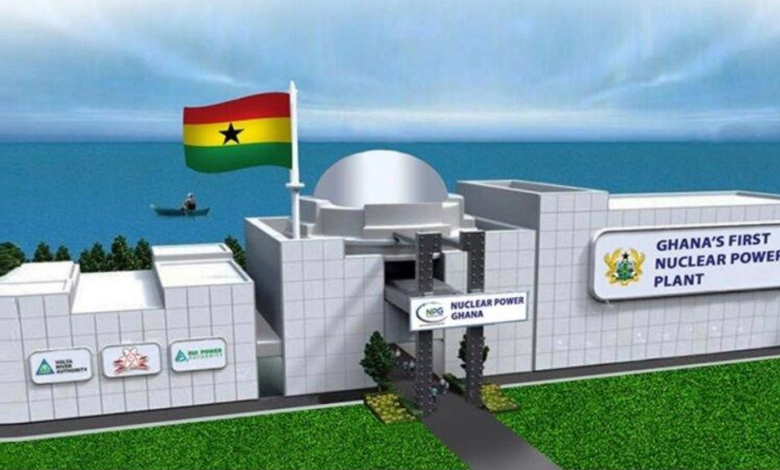
ACCRA — Ghana has signed a landmark agreement with Russia’s state nuclear corporation
Rosatom to build the country’s first-ever nuclear power plant, with construction targeted to
begin as early as 2027. The deal, confirmed overnight by Ghanaian Foreign Minister Samuel
Okudzeto Ablakwa, is the most concrete outcome yet of the Russia-Africa Summit held in
Moscow last week — and it instantly reshapes the energy politics of West Africa.
For Ghana, the stakes are existential. The country has been living with chronic power
rationing — locally nicknamed “dumsor” — for more than a decade, and its hydroelectric
backbone, the Akosombo Dam, is increasingly stressed by shifting rainfall patterns on the
Volta. A large-scale baseload nuclear plant would, for the first time, give Accra the ability to
plan industrial expansion without blackout risk as the ceiling.
For Rosatom, this is strategic gold. The Russian nuclear giant has been shut out of large
stretches of Europe since the invasion of Ukraine, and Africa is now its most important
growth market. Reuters has confirmed that Rosatom is simultaneously in talks to build large
power plants in Uganda, Ethiopia and Egypt — the Egyptian El Dabaa project is already
under construction. The Ghana deal gives Moscow a West African anchor to pair with its
North and East African footprints.
The commercial terms were not fully disclosed overnight, but industry sources briefed on the
memorandum say the arrangement will follow Rosatom’s standard “build, own, operate”
model, under which Russia finances and operates the plant and sells the power back to the
host country on a long-term offtake agreement. That structure allows cash-constrained
governments like Ghana’s to avoid the upfront capital burden, in exchange for decades of
foreign operational control over critical infrastructure.
That tradeoff is already generating pushback. Ghanaian civil society groups were up by dawn
warning about sovereignty implications, nuclear waste storage and the geopolitical optics of
locking in Moscow as a multi-decade partner at the exact moment Washington is pressuring
African governments to pick sides. The US ambassador’s office in Accra declined to
comment overnight; analysts expect a State Department statement before the end of the week.
Regional neighbours are watching closely. Côte d’Ivoire and Senegal have both signed
preliminary nuclear memoranda with Rosatom in the last eighteen months, but neither has
moved to a construction agreement. If Ghana can get first concrete poured on schedule, it will
become the second sub-Saharan African country after South Africa to operate nuclear power
— a status with huge implications for industrial investment flows.
The timing is pointed. The announcement lands just as Washington is preparing to strip South
Africa and Rwanda of duty-free AGOA access, a move that has hardened the sense across
African capitals that the American alliance is no longer reliable. Russian, Chinese and Gulf
capital is rushing to fill the gap.