
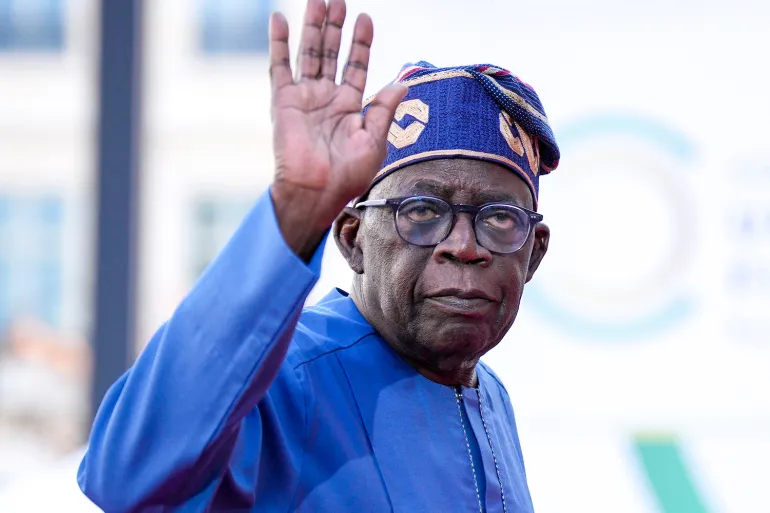
President Bola Ahmed Tinubu has asked the National Assembly to approve a fresh
external borrowing plan worth about $20.52 billion and €1.05 billion, in a request
now generating heated debate on the floor of the Senate and across Nigeria’s
political commentariat.
The request was contained in a letter addressed to Senate President Godswill
Akpabio and read during plenary earlier this week. According to Nairametrics, the
proposed loans are meant to fund the 2026-2027 supplementary borrowing
programme, with the funds earmarked for infrastructure, power, transportation,
healthcare, agriculture, education, water supply, security and employment
generation.
Sahara Reporters and Leadership newspaper reported the request as coming less
than 100 days before Nigeria’s scheduled January 16, 2027 general election – a
timing that opposition lawmakers and civil society groups have seized on. Critics say
the scale of the fresh commitment, so close to the polls, binds a future
administration to debt-service decisions it had no hand in making.
The Tinubu administration’s defenders counter that Nigeria cannot afford to pause
capital spending in a year of fragile growth. Finance ministry officials point to recent
oil price volatility and foreign-exchange earnings pressures as reasons the country
needs concessional external borrowing rather than more expensive nairadenominated issuance.
The arithmetic is uncomfortable. Nigeria’s total public debt has climbed sharply
over the past three years, driven by naira devaluation, subsidy-related arrears and
foreign-currency borrowing. Debt-service costs now consume a punishing share of federal revenue, and the IMF has repeatedly flagged the trajectory as unsustainable
without aggressive revenue mobilisation.
In July 2025, the Senate approved a prior $21.5 billion plan with limited public
pushback. But this time around, lawmakers from both the ruling APC and opposition
parties have voiced concerns about transparency and the end-use of previously
approved funds. Senators from the North-East and South-South have asked for a
project-by-project breakdown before any approval is granted.
The Debt Management Office has not yet published the full list of projects attached
to the new request. According to Sahara Reporters, the letter outlines broad sectoral
allocations but defers details to a schedule that is still being finalised with
multilateral lenders.
The proposed external creditors, people familiar with the matter say, are likely to
include the World Bank, the African Development Bank, the Islamic Development
Bank, the French Development Agency and a syndicate of Chinese policy banks. That
mix of financiers would carry a blend of concessional and semi-commercial terms,
which Nigeria’s officials argue is cheaper than the Eurobond market.
Still, the politics is explosive. Peter Obi and other opposition figures have been quick
to characterise the request as fiscal recklessness, and labour unions – already restive
over inflation and fuel pricing – are threatening protests if the plan is approved
without a public hearing.
The Senate’s finance committee is now expected to schedule hearings in the coming
days. Analysts at Lagos-based firms say approval is likely but not guaranteed, and
could come with conditions attached – such as quarterly reporting on disbursements
and a prohibition on using the funds to cover recurrent expenditure.
What is already clear is that the request has placed Nigeria’s debt debate back at the
centre of the political conversation less than three months out from a presidential
election.