
The transatlantic alliance woke up to a political earthquake on Monday. In the space of a few
hours, President Donald Trump unveiled a direct deal with Vladimir Putin to pump Russian
diesel into American and global markets, declared an “energy ceasefire” between Moscow and
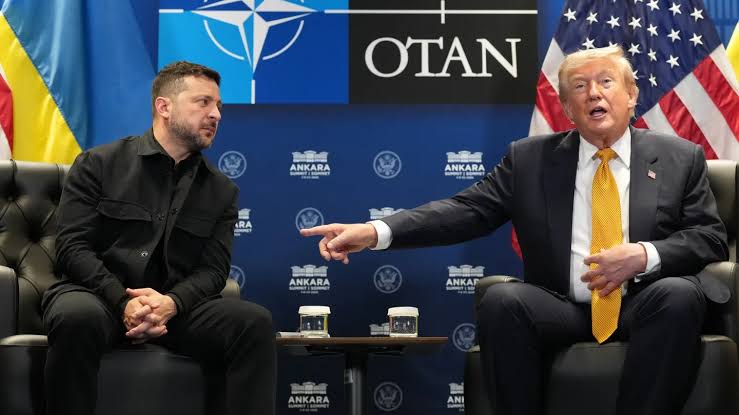
Kyiv, and then torched any goodwill from Kyiv by publicly suggesting Volodymyr Zelenskyy
should step aside and hold elections.
The sequence — a fuel pact, a ceasefire announcement, and a demand for Ukraine’s president to
go — landed within the same news cycle, and the backlash was immediate.
Trump framed the diesel arrangement as a cure for stubbornly high U.S. pump prices, telling
reporters the deal would “bring prices back to where they belong.” Within an hour, a bipartisan
group of senators issued a joint statement demanding he “immediately reverse course,” warning
that buying Russian fuel at scale would funnel billions back to the Kremlin’s war machine and
gut three years of sanctions architecture.
Zelenskyy’s response was blunt. The Ukrainian president called the arrangement “not fair and not
honest” and said it was “a gift to Putin at the moment he is losing on the battlefield.” Trump’s
retort, posted shortly after, was sharper still: “I think it’s time for Ukraine to get a new president.
He should hold elections.”
The “energy ceasefire” piece of the announcement is already fraying. Trump insisted “both
parties have agreed” and warned, “Do not break it!” But Ukrainian air defence units reported
Russian Shahed drones over multiple cities throughout the night, and the Kremlin had not
publicly confirmed the terms by midday Kyiv time. Analysts in Brussels and London are openly
asking whether a ceasefire exists at all, or whether the White House announced a deal that was
never fully signed.
European capitals scrambled to respond. Germany, France and Poland convened an emergency
call of foreign ministers, and the EU’s energy commissioner said the bloc “will not join any
arrangement that rewards aggression.” Oil markets whipsawed on the news, with Brent crude
falling nearly three percent in early trading before clawing back most of the loss as traders
digested the ceasefire uncertainty.
The deeper story is political. Trump’s calculation appears to be domestic: cheaper diesel ahead of
winter heating season and a visible “peace” headline. But the cost is a frontal clash with his own
party on Russia policy, a public break with Kyiv, and a signal to Beijing and Tehran that U.S.
sanctions can be unwound in a single tweet.
Zelenskyy has survived worse mornings. Trump’s election comment carries no constitutional
weight in Ukraine, where martial law legally suspends polls. But the words will echo. Russian
state media led with Trump’s line within minutes, and MPs loyal to Zelenskyy spent the morning
on television calling the suggestion “an attempted coup by press release.”
What to watch over the next 24 hours: whether the Kremlin confirms the ceasefire in writing,
whether Senate Republicans move to block the diesel deal legislatively, and whether European
leaders issue a joint statement distancing themselves from Washington. By tonight, the shape of
the transatlantic alliance in the Trump era may look very different than it did at breakfast.