
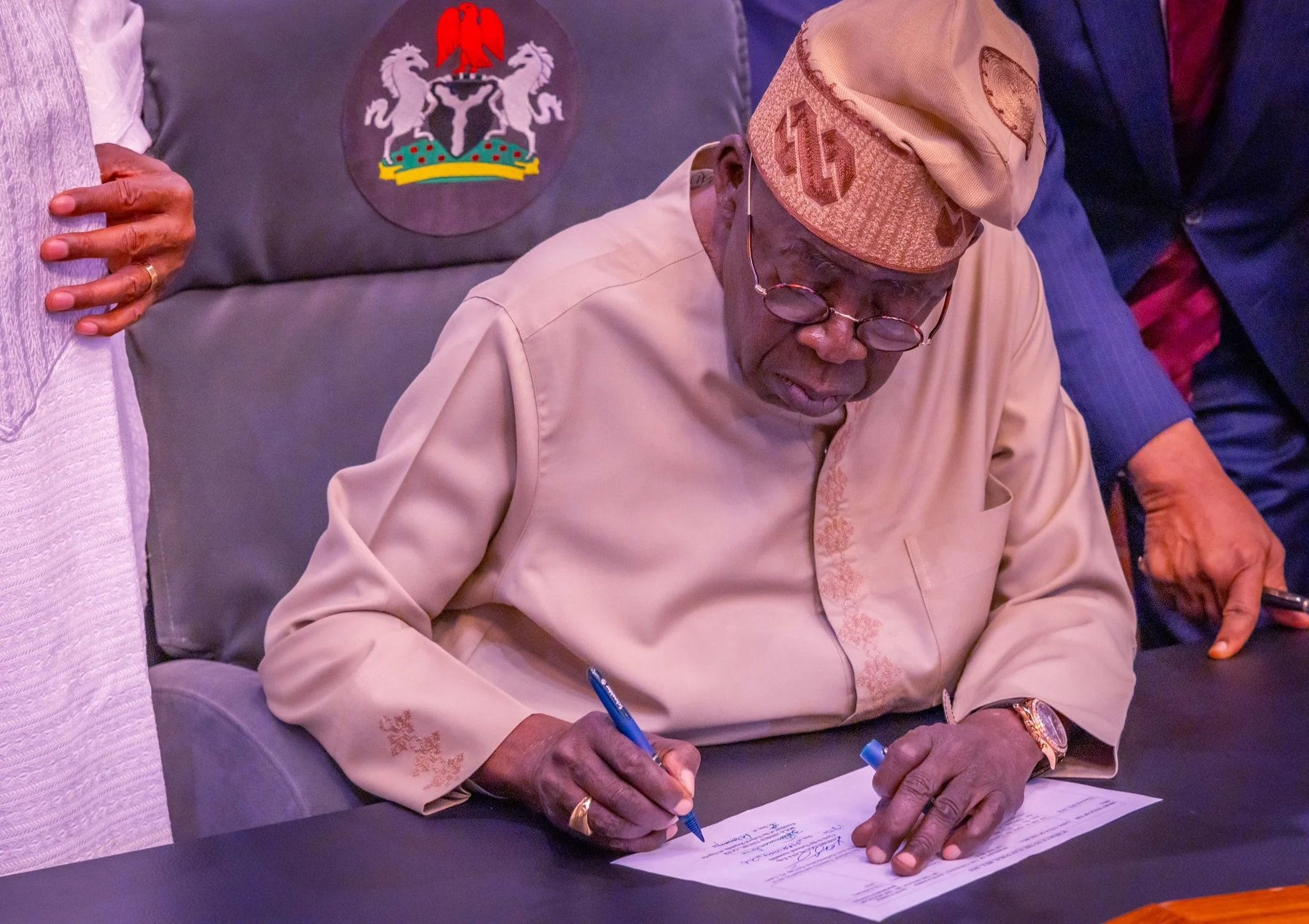
President Bola Ahmed Tinubu used the sidelines of the 81st United Nations General Assembly
to deliver one of the sharpest interventions of the week from an African leader, calling on the
continent to stop exporting raw minerals to global industries and to start capturing the value at
home.
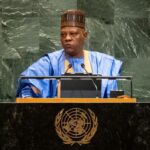
Speaking through Vice-President Kashim Shettima – who is representing him in New York while
the president completes an extended working trip in Europe – Tinubu addressed the third High Level Roundtable of the Africa Minerals Strategy Group (AMSG), held under the theme: “From
Resources to Wealth: Continental Cooperation for Mineral Value Addition, Data Sovereignty,
Innovative Financing and Critical Minerals Security.”
The message was blunt. Africa, Tinubu said, can no longer afford to be the world’s mine while
its own citizens live without the jobs, infrastructure or income those minerals generate. He
called for what he described as “an aggressive alliance” of African states to move the continent
from a supplier of raw materials to a hub for processing, refining and manufacturing.
For Nigeria specifically, and for a continent sitting on an estimated 30 percent of the world’s
critical mineral reserves – lithium, cobalt, copper, rare earths – the argument is a familiar one.
What is new is the vehicle. AMSG is being positioned as Africa’s answer to OPEC for minerals: a
coordinated bloc that sets rules, negotiates as a group, and forces value-addition clauses into
every major offtake deal.
Tinubu proposed three concrete moves. First, the establishment of a continental critical
minerals data platform so African governments negotiate with the same information as their
buyers – ending what he called “a century of information asymmetry.” Second, the aggressive
deployment of sovereign wealth funds and innovative financing instruments to build local
exploration, processing and refining capacity. Third, a common continental framework on
export permits so no single African country undercuts another. The politics behind the speech are as important as its content. Tinubu’s absence from Nigeria
has stretched into its fourth week – he left Abuja on August 30 for London, then moved on to
Paris for meetings with French President Emmanuel Macron and industrialist Vincent Bollore.
The opposition African Democratic Congress spent Monday demanding to know who is
constitutionally in charge with both the president and vice-president abroad. The New York
speech is, in part, an answer: the presidency is at UNGA, doing the work.
It also lands at a delicate moment for Nigeria’s own minerals story. The government has spent
the last 18 months trying to formalise the lithium boom in Nasarawa and Kaduna, cracking
down on illegal Chinese-linked mining operations and pushing foreign investors to commit to incountry refining as a condition of licences. A high-profile lithium processing plant near
Nasarawa is due on stream next year, and officials in Abuja want to use it as the poster child for
the new pan-African line.
Reaction from other African delegations in New York was cautiously supportive. Nigerian
officials briefed reporters that South Africa, Zambia, the Democratic Republic of Congo and
Zimbabwe – the continent’s minerals heavyweights – had all sent senior representatives to the
AMSG roundtable, and that a joint communique is expected before the end of high-level week.
Domestically, the speech gives Tinubu a business-friendly headline at a moment when his
economic scorecard is under intense scrutiny. Central Bank data on Monday put the naira at
1,329.80 to the dollar at the official window – a marginal improvement on the previous session,
but well off the highs of earlier in the year. Inflation, unemployment and the cost of subsidy
removal remain the top three pain points Nigerians raise in every poll.
None of that goes away because of a New York speech. But the pitch is coherent: if Africa can
add value to its own minerals, the argument goes, the foreign exchange, the jobs and the
industrial base follow. For Nigeria – which is trying to move from being an oil-and-gas story to a
broader industrial one – it is exactly the narrative Tinubu needs.
The test now is enforcement. African governments have made continental promises on trade,
on movement of people, on industrialisation for the better part of two decades. Turning a
UNGA speech into an export ban on unprocessed lithium is a very different exercise. Watch
what comes out of AMSG’s next meeting – and whether Nigeria is willing to be the first to move.